Best Unlimited eSIM Thailand Plans: Avoid Overpaying
Thailand offers countless eSIM plans, but an expensive unlimited option may give you far more data than needed.
The best unlimited eSIM Thailand plan depends on your actual habits, not the word “unlimited.”
Compare your expected daily use, total trip length, high-speed limits, and tethering rules before buying.
Hotel Wi-Fi may cover plenty of browsing, while maps, messaging, streaming, and hotspots can quickly change your needs.
Start by matching your daily data use with your trip length, then check what each plan’s unlimited promise includes.
Thailand eSIM Data Sizing: Match Your Plan to Daily Use
The best unlimited eSIM Thailand plan depends on how you use your phone each day. Start with your habits, then choose the plan format that protects your speed and budget.

| Travel profile | Typical daily use | Best plan format | Technical advantage |
|---|---|---|---|
| Light user | 500MB to 1GB | Fixed 3GB to 5GB bundle | You pay for the data you actually need. |
| Moderate user | 1.5GB to 2.5GB | Fixed 10GB to 15GB bundle | You keep full-speed access without daily throttling. |
| Heavy user | 5GB or more | High-cap or truly unlimited plan | You get continuous access for streaming and laptop work. |
Light users need less data than they think
Light users mainly check maps, send messages, book rides, and browse short web pages. A 3GB to 5GB fixed bundle usually covers a week of this routine.
Google Maps navigation uses far less data than video streaming. Text messages also consume very little data, especially when you avoid sending large videos. For a closer look at how much mobile data different travel activities require, see this Thailand eSIM data usage guide.
A fixed bundle gives you a lower total cost and full-speed access until the allowance ends. Why pay for unlimited data when hotel Wi-Fi can handle your evening browsing?
Moderate users should protect their high-speed allowance
Moderate users scroll through social media, upload travel photos, join occasional video calls, and use maps throughout the day. Their usage often reaches 1.5GB to 2.5GB daily.
A 10GB to 15GB fixed plan gives you room for photos, messaging, and several short calls. It also avoids the frustrating speed drop that many cheap unlimited plans apply after a small daily allowance.
Full-speed access matters when you upload several photos or make a video call. Video calls can use hundreds of megabytes per hour, depending on video quality and call length. Check this Thailand eSIM data usage guide to estimate your daily needs before choosing an allowance..
Heavy users need capacity, not clever wording
Heavy users stream video, upload large files, join long video calls, or connect a laptop through mobile hotspot. One hour of HD streaming can use 2GB to 3GB, so a 5GB daily minimum disappears quickly.
Choose a high-cap plan when you need predictable full-speed data. Choose truly unlimited data when you work online for hours and cannot rely on Wi-Fi.
Check the plan’s tethering rules before buying. Some unlimited passes cover phone use but block laptop hotspots, which makes them a poor fit for remote work.
Four Rules for Sizing a Thailand eSIM Plan Without Overpaying
An “unlimited” label doesn’t tell you how much high-speed data you get. Check the fine print, calculate your real usage, and match the plan to your travel routine.
Check the Fair Usage Policy Before Choosing an Unlimited Plan
The marketing trap is simple: unlimited sounds like endless full-speed data. In reality, many plans include a daily high-speed allowance before reducing your connection.
You may get full speed for the first 1GB or 2GB, then drop to a much slower rate. That reduced speed can make video calls, uploads, and even image-heavy websites frustrating.
Look for four details in the plan terms:
- The daily high-speed data threshold.
- The reduced speed after you reach it.
- The time the allowance resets.
- Any network management or Fair Usage Policy wording.
If you search for the best unlimited eSIM Thailand options, compare high-speed limits first. Total validity matters less when the plan throttles you every afternoon.
A fixed-volume plan may suit moderate users better. You keep full speed until you use the allowance, instead of accepting a daily speed cap that resets overnight.
Calculate Your Real Price Per Gigabyte
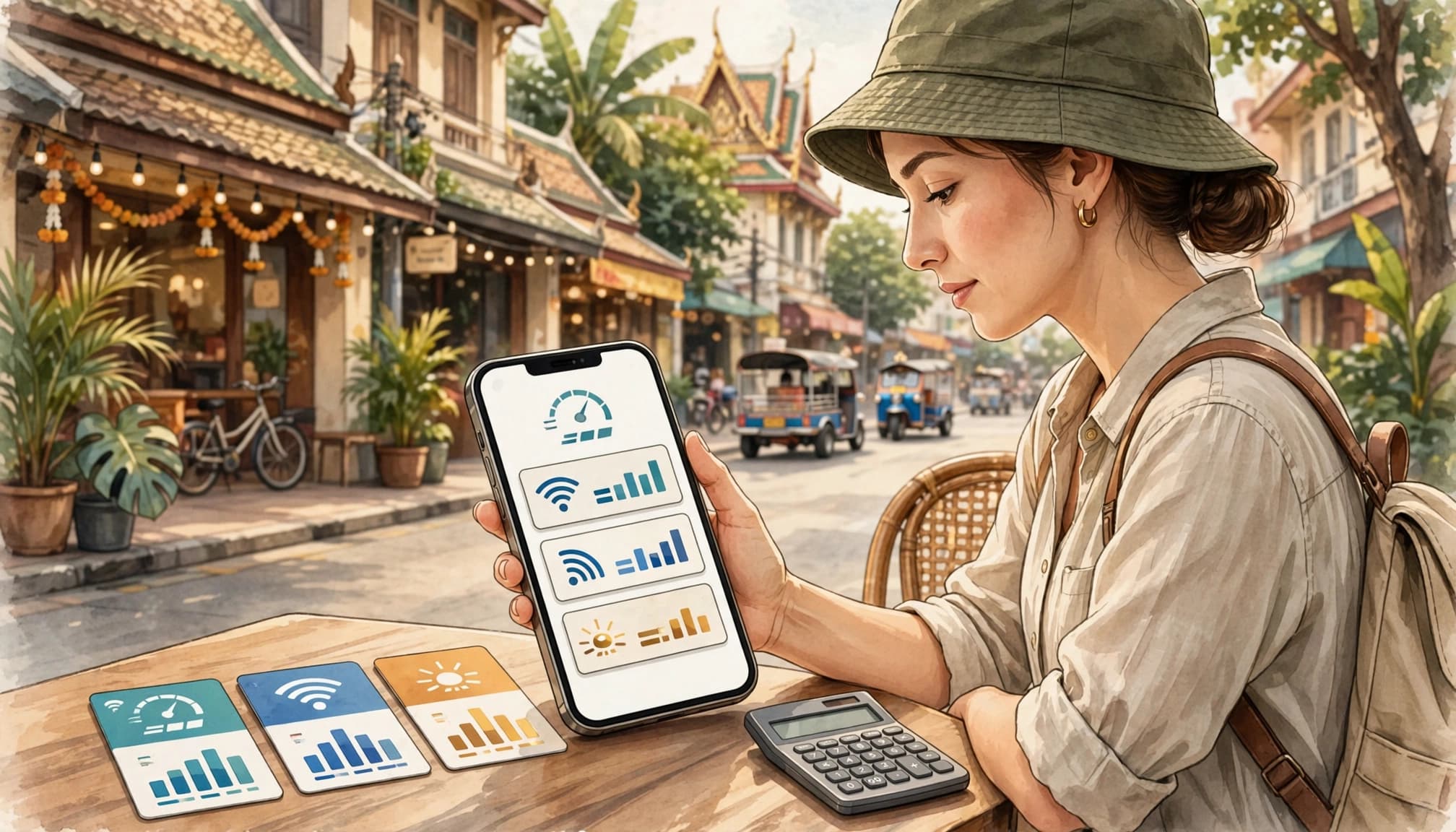
An unlimited plan can look affordable when you compare only its daily price. The better test divides the total cost by your expected total usage.
For example, imagine paying $25 for a plan and using 5GB during your trip. Your real cost equals $5 per gigabyte.
Now compare that figure with a fixed 10GB or 15GB package. A fixed plan may offer more usable data at a lower total price, especially when you spend evenings on Wi-Fi.
Use this simple calculation before buying:
Total plan price / expected total usage = real price per gigabyte
Don’t assume unlimited always wins. A fixed plan often gives moderate users better value and more predictable speeds.
Unlimited still makes sense when you stream heavily, use frequent hotspot connections, or work remotely. In those cases, your usage can rise quickly, and a small fixed bundle may run out before your trip ends.
Subtract Hotel, Cafe, and Co-Working Wi-Fi From Your Estimate
Many travelers estimate mobile data as if their phone stays on cellular service all day. That usually inflates the plan size.
Reliable hotel, cafe, and co-working Wi-Fi can handle evening browsing, app updates, photo backups, and long video calls. Keep your eSIM data for time spent outside those places.
Your cellular use will mainly cover:
- Maps and turn-by-turn directions.
- Ride-hailing apps and booking confirmations.
- Messaging and translation tools.
- Outdoor browsing and quick social media checks.
Public Wi-Fi can reduce your data needs, but don’t use it for banking or sensitive accounts. Use your cellular connection for financial apps, password managers, and important logins.
Estimate your trip in two parts. Count expected Wi-Fi hours at your accommodation, then estimate mobile use during sightseeing, transport, and outdoor meals. This approach gives you a more realistic number than guessing from your total travel days.
For a faster estimate, use this Thailand travel data calculator.
Confirm Hotspot and Tethering Rules Before You Buy
The hotspot trap catches travelers who assume unlimited data works across every device. Some low-cost plans allow phone data but block tethering completely.
That restriction matters when you need a laptop for work, a tablet for entertainment, or a connection for a travel companion. One blocked hotspot can turn an attractive plan into a poor purchase.
Check the terms for three things before paying:
- Whether hotspot or tethering is allowed.
- How many devices can connect.
- Whether the provider applies a separate hotspot limit or charge.
A plan might offer unlimited phone data but include only 5GB of hotspot data. After that, speeds may fall or sharing may stop.
If you work while traveling, review eSIM hotspot options for remote work before choosing a plan. Confirm that your phone, laptop, and tablet can connect without extra fees.
The right plan isn’t the one with the biggest headline. It’s the one that keeps your actual devices online at a price you can justify.
Choose the Right Thailand eSIM Size for Your Trip Length
Your itinerary matters as much as your daily habits. A week-long beach trip needs less data than a month of remote work.
A Seven-Day Trip Usually Needs 5GB to 8GB
A seven-day Thailand getaway usually fits within 5GB to 8GB. Maps, Grab rides, messaging, restaurant searches, and light social media use very little data.
A light user can choose 5GB with confidence. That allowance covers directions, booking confirmations, short browsing sessions, and occasional photo uploads.
Choose 8GB if you upload photos daily or spend more time outdoors. The extra space gives you a useful safety margin without paying for unlimited data.
Daily streaming changes the calculation quickly. Even short video sessions can push you beyond this range, especially when you stream music or video away from Wi-Fi.
A Fourteen-Day Vacation Often Fits 10GB to 15GB
A two-week vacation usually needs 10GB to 15GB. Photo backups, FaceTime calls, web browsing, social media, and navigation all add up.
Ten gigabytes suits travelers who use hotel Wi-Fi each evening. You can upload photos, make occasional calls, and browse while sightseeing.
Moderate users should choose 15GB instead. This higher allowance helps when you make frequent video calls, upload large photo sets, or stream during long transfers.
Hotel Wi-Fi can reduce cellular use at night. Use it for backups and longer calls, then save your eSIM data for daytime travel.
A Thirty-Day Stay May Need 20GB to 50GB or a Renewable Plan
A thirty-day stay can require 20GB to 50GB, especially for digital nomads and long-stay travelers. Streaming, video meetings, cloud backups, and hotspot use consume data fast.
Choose 20GB for lighter work and regular Wi-Fi access. Pick 50GB when you work online daily or share data with another device.
Unlimited access may offer better value than repeated small bundles. This applies when you stream often, join long meetings, or cannot rely on stable Wi-Fi. A Thailand-compatible Asia travel eSIM may also suit multi-country trips.
Check the renewal date before purchasing. Also confirm whether unused data rolls over, expires, or disappears when the plan renews.
Compare Thailand eSIM Plans by Speed, Coverage, and Total Cost
The best unlimited eSIM Thailand plan is not automatically the cheapest daily pass. Compare the host network, usable speed, coverage, and complete trip price.
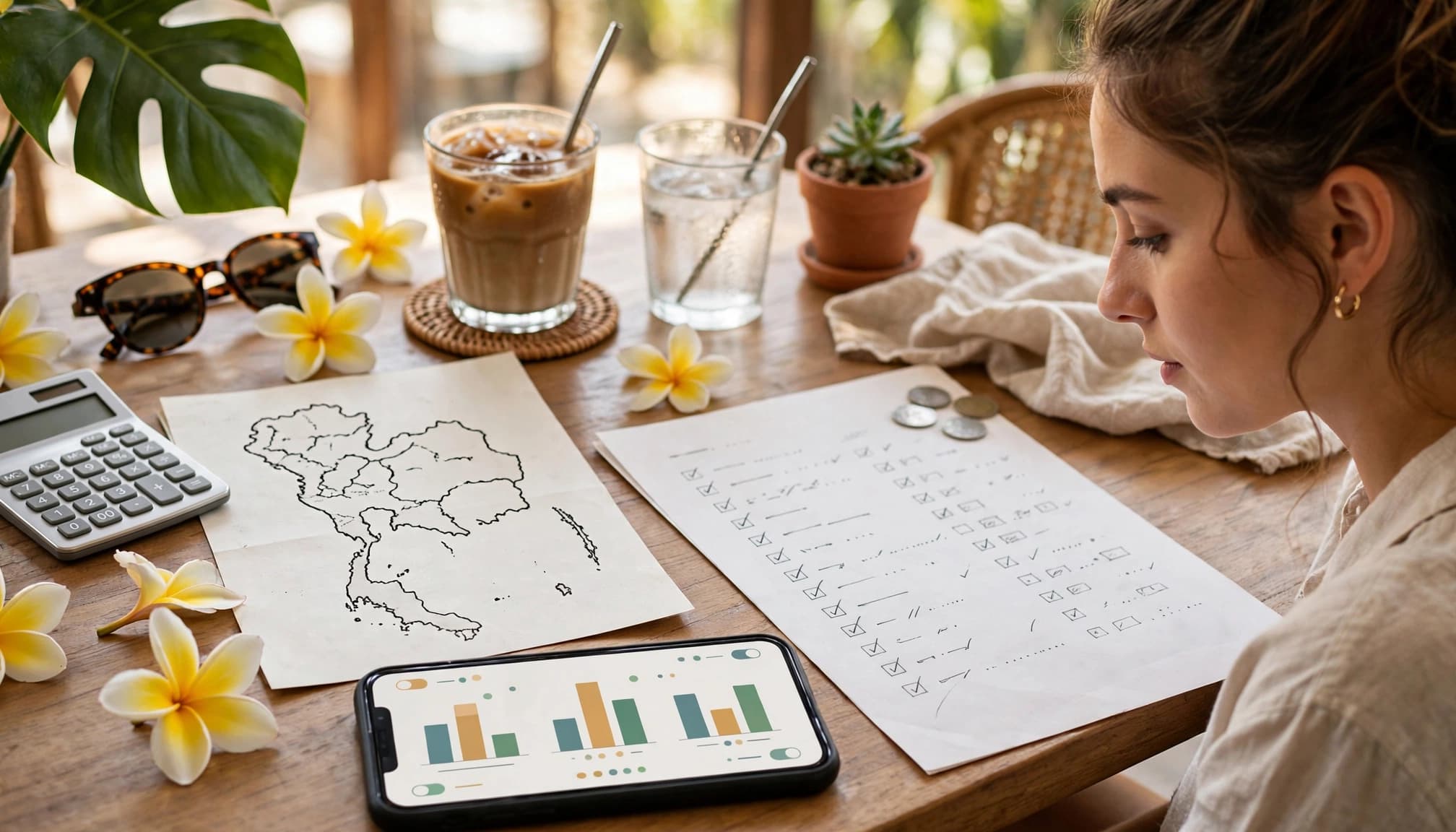
Check the Network Behind the eSIM
Your eSIM provider usually rents access from a Thai mobile network. Check that network before you judge the advertised data allowance.
Major Thai networks provide strong 4G LTE coverage in Bangkok and other busy tourist areas. Many plans also offer 5G access in Bangkok, Chiang Mai, and Pattaya.
Island coverage needs closer attention. Phuket and Koh Samui usually have solid service, while smaller islands can produce weaker signals. Northern mountain routes and rural roads may also rely on LTE instead of 5G.
Use the Thailand coverage map to inspect expected service near your itinerary. Also check whether the plan connects to more than one local network.
A 5G icon means little if your eSIM uses a weak host network outside major cities.
Full-speed data supports video calls, uploads, navigation, and streaming. Throttled data may still handle messages, but websites and videos can load painfully slowly.
Compare the Full Trip Cost
Daily pricing can make an unlimited plan look like a bargain. Calculate the total cost for every travel day instead.
Use this checklist before purchasing:
- Compare the total price for your complete trip.
- Check the included high-speed data allowance.
- Confirm the plan’s validity period.
- Find the Fair Usage Policy threshold.
- Verify hotspot and tethering access.
- Check when activation begins.
- Review top-up options and expiration rules.
- Confirm customer support availability.
A seven-day plan may cost less than two separate passes. However, a fourteen-day plan can offer better value for longer stays.
Check the plan’s activation timing carefully. Some plans start when you install the eSIM, while others begin after network connection.
You can also review this travel eSIM setup guide before buying. Install the profile early, but avoid activating the data period before departure.
For a final data estimate, use a travel eSIM for Thailand that matches your actual trip habits. A lower-capacity fixed plan often beats unlimited data when Wi-Fi handles most evening use.
Set Up Your Thailand eSIM Before Departure
Set up your Thailand eSIM at home, not in an airport queue with weak public Wi-Fi. A few checks now can prevent activation problems, roaming fees, and last-minute stress.
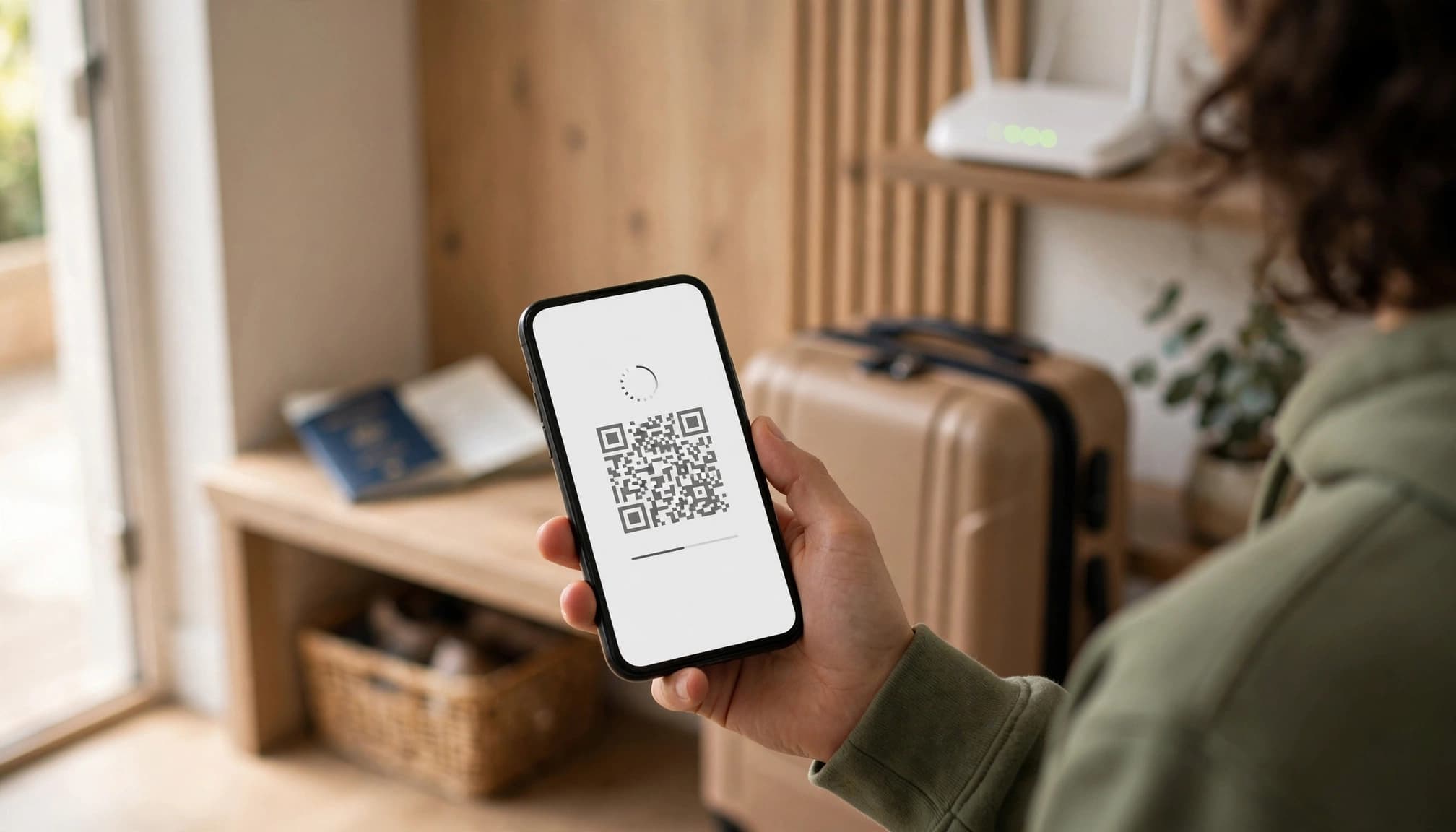
Complete These Checks Before Flying
Use this short checklist before you leave:
- Open your phone’s cellular settings and confirm it shows “No SIM restrictions.” A carrier-locked phone may reject your Thailand eSIM.
- Confirm your phone supports eSIM technology. Dial
*#06#and look for an EID number, or check your device specifications. This QR code eSIM setup guide explains both checks. - Read the provider’s activation instructions before scanning anything. Some plans begin validity during installation, while others start after network connection.
- Connect to stable home Wi-Fi and scan the QR code several hours before departure. Keep the installation email available if your provider requests confirmation.
- Label the new profile “Thailand Travel” or “Travel Data.” Clear labels prevent mistakes when you manage two lines.
- Select the travel eSIM for mobile data. Keep data roaming turned off on your home line to avoid expensive roaming charges.
- Keep your primary SIM active for banking OTP texts and important calls. Disable its cellular data, while leaving the line available for messages.
Your travel eSIM may require data roaming to work, depending on the provider. Turn roaming on for the travel line only, then test the connection after landing.
Check the activation policy before installation. Scanning the QR code can start the plan immediately, even if you haven’t boarded your flight.
Conclusion
Start with your daily data use, then multiply it by your trip length. Subtract reliable hotel, cafe, and co-working Wi-Fi from that estimate.
Add a small safety margin, but don’t pay extra for an unlimited label you won’t use. Check FUP limits, hotspot rules, network coverage, activation details, and the true price per gigabyte before buying.
Your plan should match your actual routine, whether you need a small fixed bundle or heavy-use capacity. Calculate your needs with real usage, then choose a travel eSIM for Thailand that fits your itinerary and budget.