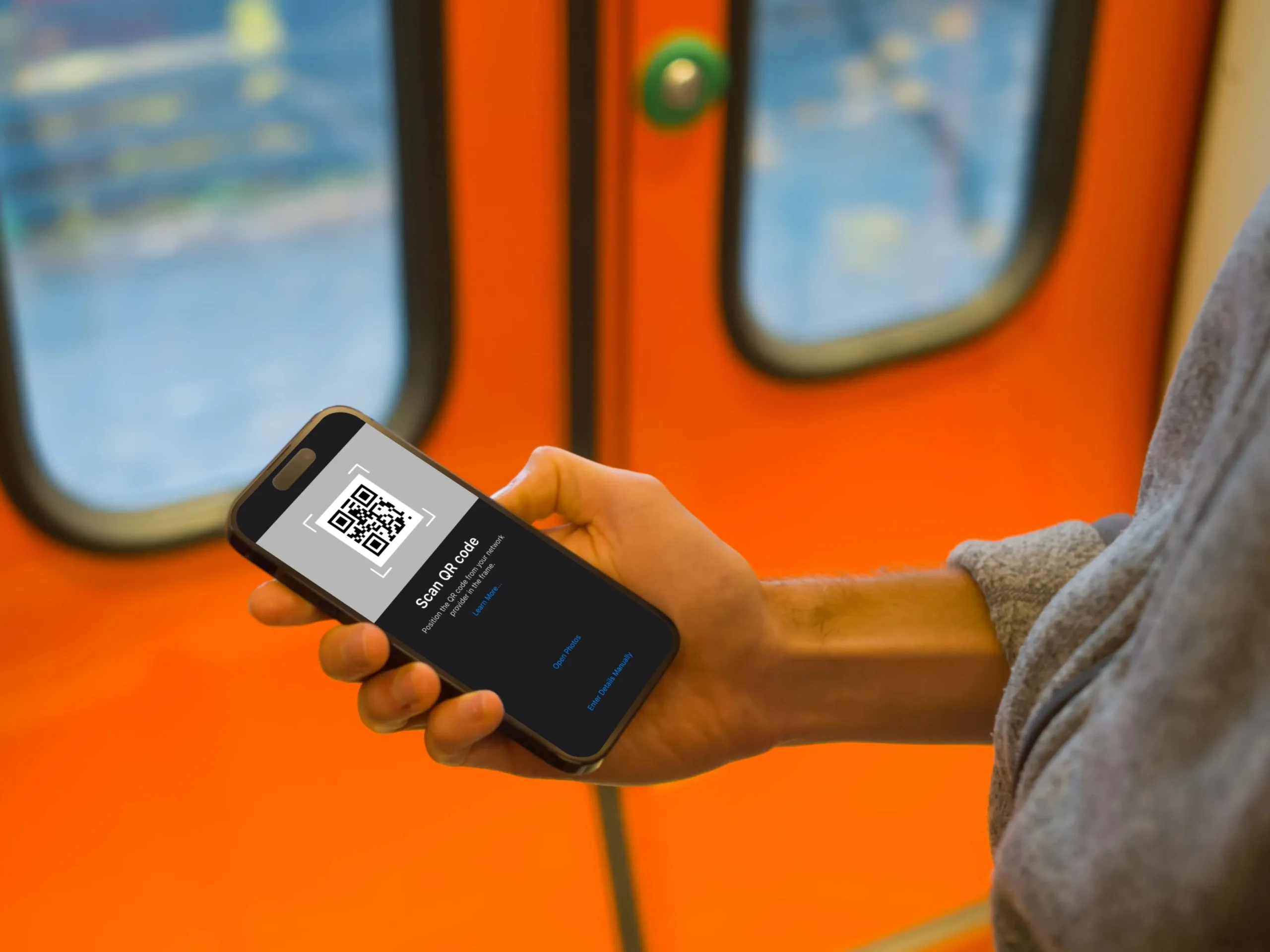
Best eSIM For Emergency Backup Internet: A Traveler’s Guide To Staying Connected 2026
Ever found yourself lost in a foreign city with a map that won’t load or a ride-share app that keeps spinning? It’s a traveler’s worst nightmare. While a primary data plan usually does the trick, network outages or “dead zones” can happen anywhere, leaving you stranded without a way to communicate or navigate.
A backup eSIM is a secondary digital SIM profile stored on your phone specifically for internet redundancy. Think of it as a spare tire for your connectivity; you keep it installed and ready, but you only toggle it on if your main provider fails. In 2026, most modern smartphones allow you to store multiple profiles, making it easier than ever to carry an “emergency spare” in your pocket.
Travelers should treat a backup plan like travel insurance because it provides immediate peace of mind for a very low cost. Typically, a small global data pack stays valid for up to a year, ensuring you satisfy the “always-on” requirement of modern travel. This guide explores how to choose the right one, focusing on key attributes like multi-network coverage, instant activation, and cost-effectiveness.
Whether you’re a digital nomad or a casual tourist, having a secondary line ensures you can always access translation tools or safety apps. If you are looking for the best eSIM for international travel, it’s smart to pick a provider that offers high-speed 5G and reliable customer support for those “just in case” moments.
This post breaks down the top choices for emergency data to help you stay connected, regardless of where your adventures lead. From technical compatibility to the best value regional packs, you’ll learn exactly how to build a Bulletproof connectivity setup for your next trip.
Why Every Traveler Needs An Emergency Backup Internet Plan
Relying on a single source of connectivity while navigating a foreign country is like hiking without a compass; it works perfectly until the moment it doesn’t. We often assume our primary roaming plan or a local SIM will be foolproof, yet network congestion, server outages, or hardware glitches frequently prove otherwise. In 2026, the transition to pure 4G and 5G networks has eliminated the “safety net” of older 3G signals, meaning when a modern network drops, the isolation is total.
A backup plan isn’t a luxury; it’s a fundamental safety net that ensures you aren’t left stranded when your primary line hits a snag. Whether it’s a local fiber cut affecting a specific carrier or a simple “dead zone” in a rural area, having a secondary eSIM from a different provider allows you to switch networks in seconds. This redundancy keeps your digital life moving, preventing a minor technical hiccup from turning into a full-scale travel disaster.
Real Situations Where Backup Internet Saves Trips

Navigating the winding alleys of an old European city or the sprawling subway systems of Tokyo requires real-time data. While you might have a beginner guide to eSIMs bookmarked, that information only helps if you can actually get online to use it. Imagine your primary plan suddenly loses signal just as you need to find your hotel or call a ride-share; without a backup, you’re effectively blind in an unfamiliar environment.
The stakes are even higher during international transit or emergencies where every second counts. Here are several scenarios where a secondary data source proves its worth:
- Airport Wi-Fi Failures: Most airport networks are notoriously unreliable or require a local phone number for SMS verification. A backup eSIM ensures you can pull up your digital boarding pass or immigration QR codes even when the terminal’s “free” internet refuses to connect.
- Emergency Communication: If you find yourself in a medical or safety situation, you cannot afford to wait for a network to reboot. A secondary line allows you to reach local emergency services or contact your insurance provider immediately.
- VoLTE Handshake Issues: In 2026, many travelers face “silent” outages where data works but voice calls fail due to roaming glitches. Having a secondary data line allows you to use VoIP apps like WhatsApp or Skype to make those critical calls to your hotel or airline.
- Authentication Hurdles: Accessing your banking app or confirming a credit card purchase often requires a stable connection for a “push” notification. If your main line is sluggish, a quick toggle to your backup eSIM prevents you from being locked out of your funds at a checkout counter.
By keeping an “emergency spare” active on your device, you bypass these frustrations. For those visiting the States, knowing how to check device eSIM compatibility and having a secondary plan is a smart move, especially when dealing with the high data demands of modern travel apps. If you frequently visit North America, securing affordable eSIM plans for USA before you land adds an extra layer of security to your trip.
What Emergency Backup Connectivity Really Means
Emergency backup connectivity is a dedicated secondary internet source designed to activate only when your primary network fails. It functions as a digital insurance policy, ensuring that critical travel tools like GPS, translation apps, and communication channels remain functional during a service disruption. While a primary plan handles the heavy lifting of your daily browsing and streaming, the backup exists to bridge the gap during “dead zones,” carrier outages, or unexpected roaming glitches.
In 2026, the shift toward 5G networks and the phasing out of older signals mean that when a network goes down, you are often left in total isolation. A proper backup strategy involves choosing a provider that operates on a different network infrastructure than your main line. This creates true redundancy; if a specific cellular tower or carrier backbone experiences a technical failure, your secondary line is unaffected because it routes through an entirely different system.
Backup Vs Primary Travel eSIM Explained
A primary travel eSIM is your workhorse. This is the plan you buy for the bulk of your trip, typically featuring high data caps (20GB to unlimited) and 5G speeds. You use this for everything from Instagram uploads to joining Zoom calls from a cafe. It is your main gateway to the world, and most travelers choose it based on the best price-per-gigabyte for their specific destination.
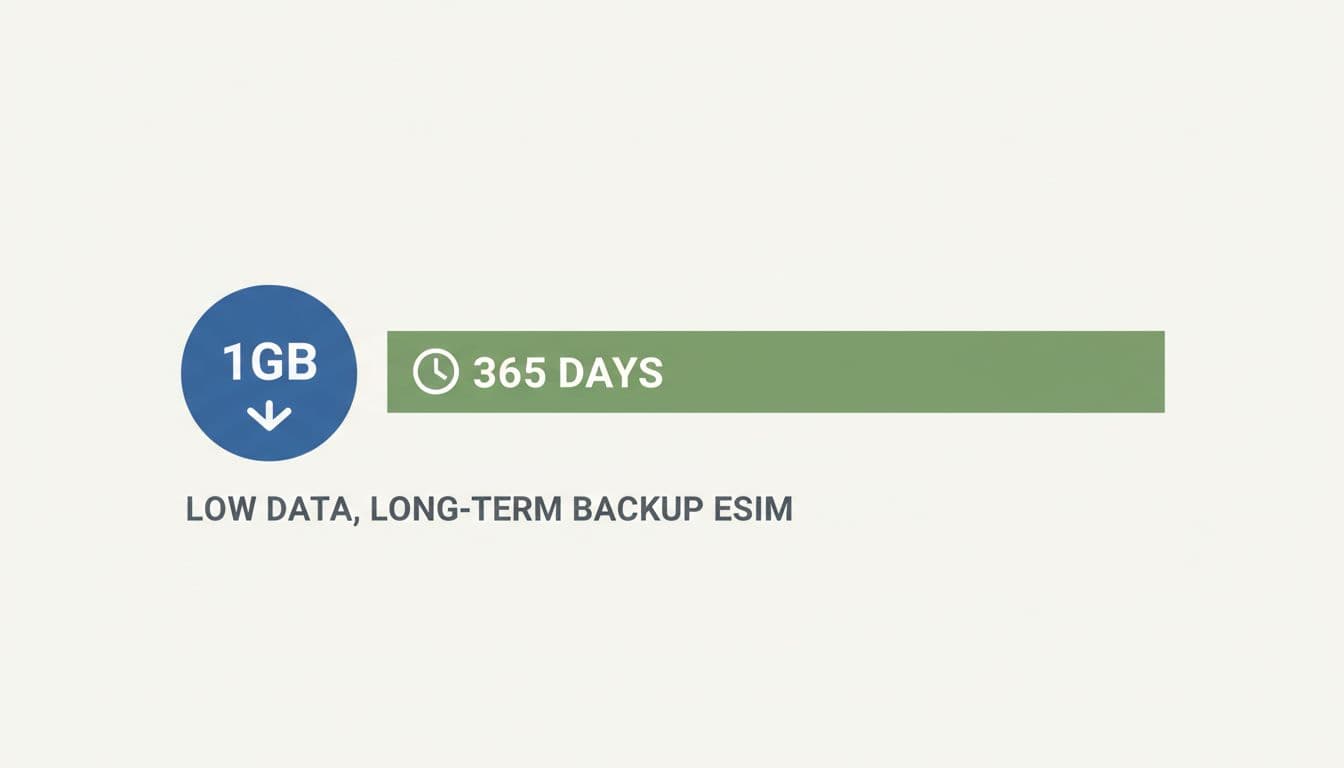
A backup eSIM, however, is a lean, highly specific tool. Instead of focusing on volume, a backup plan prioritizes longevity and wide-reaching network access. These are often small data packages (1GB to 3GB) with long validity periods, sometimes lasting up to 365 days. You keep this profile installed and dormant on your device, ready to be toggled “On” in your cellular settings the moment your primary signal bars disappear.
To help you visualize the strategic differences, the following table compares these two types of connectivity:
| Feature | Primary Travel eSIM | Backup Emergency eSIM |
|---|---|---|
| Data Allowance | High (10GB – Unlimited) | Low (1GB – 3GB) |
| Primary Use | Daily browsing, streaming, work | Critical navigation, SOS, 2FA |
| Validity | Short (7 – 30 days) | Long (90 – 365 days) |
| Cost Focus | Best price per GB | Lowest cost for “always-on” status |
| Network Choice | Best local speed | Different carrier than primary |
True redundancy requires a dual SIM setup for backup that utilizes two different network providers. If your main plan uses National Carrier A, your backup should ideally connect through National Carrier B. This ensures that a localized outage affecting one company’s towers won’t leave you completely offline. By using eSIM and physical SIM together, or leveraging two eSIM profiles simultaneously, you create a fail-safe environment where your phone can hunt for the best available signal Regardless of carrier drama.
For those planning to stay in a single location for a while, it’s worth checking out a long-term eSIM cost comparison to see how to balance these two plans without overspending. Keeping a “dormant” global eSIM as your secondary line is often the most cost-effective way to handle this, as it can follow you across borders even if you switch your primary local SIM in every new country.
What Makes These Digital SIMs Good For Emergency Use
When your primary connection drops in a foreign country, you don’t just lose the ability to post photos; you lose your lifeline to navigation, safety, and local services. Emergency backup eSIMs are specifically designed to fill this void by prioritizing connection resilience over raw data volume. These digital profiles act as a silent protector, remaining dormant on your device until a crisis occurs.
The true strength of an emergency eSIM lies in its ability to operate independently of your main provider. Because they often use different roaming agreements and local partners, they can maintain a signal even when a massive carrier outage affects your primary line. This independence is what transforms a simple data plan into a genuine safety tool for 2026 travelers.
Reliable Network Switching And Stability
A high-quality backup eSIM must provide automatic network switching to ensure you aren’t left in a digital “dead zone.” When your primary carrier fails, a well-configured secondary eSIM immediately begins a background search for the strongest available signal within its partner network. This process happens at the device level, allowing your phone to hop between different local towers until it finds a stable handshake.
Stability is the most important factor when you are trying to troubleshoot eSIM activation errors or call for help during an outage. In 2026, the density of 5G networks and increased solar activity have made signals more prone to sudden drops. A reliable backup plan mitigates these risks by connecting to multiple tier-one providers in a single country, rather than being locked to just one.
The technical logic behind this stability includes several key features:
- Multi-Carrier Roaming: The eSIM identifies every available mobile network in its vicinity and selects the one with the lowest latency and highest signal strength.
- Failover Priority: Once the primary line’s signal drops below a functional threshold, the device initiates a handover to the secondary data profile without requiring a manual reboot.
- Signal Persistence: Unlike many budget plans that constantly drop to save power, emergency-grade eSIMs maintain a consistent heartbeat with the tower to stay ready for instant data requests.
By leveraging this technology, you can navigate stressful situations with confidence. Whether you are dealing with a solar flare disruption or a localized power outage, the ability to switch providers on the fly keeps your essential apps running. If you are curious about the technical setup, understanding the speed of eSIM vs physical SIM can help you appreciate how quickly these digital profiles can restore your sanity when things go wrong.

Best eSIM Brands For Emergency Backup In 2026
Choosing a backup eSIM is a strategic move that guarantees you never lose access to essential travel tools like maps, translation, and communication. In 2026, the market offers highly specialized options designed to sit dormant on your phone until the moment your primary carrier fails. Whether you are navigating the high-tech streets of Tokyo or exploring rural landscapes, having a secondary provider ensures you stay connected during network outages or regional dead zones.
The best brands for emergency use distinguish themselves through long validity periods and broad multi-network coverage. You aren’t necessarily looking for the highest data volume here; instead, you want a reliable “digital spare” that works across various countries without needing a new purchase every week. By keeping one of these profiles active, you create a fail-safe environment that protects your safety and your travel plans.
When To Choose Unlimited Data Backups
Selecting an unlimited data backup is the smartest move if your emergency scenario involves more than just a quick map check. While a 1GB “lite” plan is great for sending an SOS text, it won’t help if your hotel Wi-Fi dies and you need to lead a three-hour video conference for work. In these cases, a provider like Holafly becomes your best friend because they specialize in removing the “data anxiety” that comes with traditional capped plans.
If you find yourself in a situation where your primary home or hotel fiber connection is severed, an unlimited backup transforms your smartphone into a robust workstation. This is particularly vital for digital nomads who cannot afford a day of downtime. Instead of counting megabytes while you upload large files or stream critical updates, you can simply toggle on your backup and proceed as if nothing happened.
Holafly is a top-tier choice for this specific “heavy lifting” backup role for several reasons:
- Continuous Productivity: You can run data-heavy applications, from cloud backups to high-definition video calls, without hitting an abrupt service cutoff mid-sentence.
- Worry-Free Hotspotting: While many providers limit tethering, having an unlimited plan ensures that even if you share data with your laptop, your phone remains fully functional for its own background tasks.
- Simplified Economics: You pay a flat rate for a set number of days; there are no top-ups to manage and no risk of running out of balance in the middle of a remote area.
For travelers visiting regions with complex network landscapes like Europe, having a high-capacity backup is a game-changer. For example, if you’re using a best eSIM for Greece travel plan as your primary, pairing it with an unlimited global backup ensures that even if a local island tower goes offline, you have the bandwidth to stay productive. It turns a potential travel disaster into a mere footnote in your journey.

How Much Data Do You Actually Need For Emergencies
When you are putting together a backup plan, the goal is not to replicate your home internet experience; it is about maintaining a lifeline. You need enough data to handle essential tasks like navigating a new subway system, translating a menu, or messaging a loved one if your primary line cuts out. In 2026, data consumption for these basic tasks remains relatively low, meaning you do not need to overpay for a massive plan just to stay safe.
For most travelers, a small data allowance is more than enough to bridge the gap during a temporary network failure. A light package allows you to keep the profile active on your phone without a significant upfront investment. If you are looking for a safety net, 1GB to 3GB is the “sweet spot” for emergency use, providing several hours of GPS navigation and hundreds of instant messages.
Global Vs Regional eSIMs For Maximum Peace Of Mind
A global eSIM plan is the ultimate insurance policy for travelers who value simplicity and total coverage over the lowest possible price. While regional plans cover specific blocks of countries, a global plan ensures your backup is ready to work the moment you touch down in a new territory, even during a surprise layover. This eliminates the stress of wondering if your “Europe Pack” covers a quick stop in Turkey or an unexpected detour through Switzerland.
The primary benefit of a global backup is its versatility during border crossings or transit hiccups. In my experience, the reliability of a single, always-active profile far outweighs the few dollars you might save by buying separate regional packs. For a truly robust setup, compare eSIM backup coverage for international travel to see how different providers handle multi-country transitions.
When deciding between a global and a regional plan for your backup, consider how your travel itinerary might shift. If you are a frequent flyer or a digital nomad, a global plan is a no-brainer because it remains dormant but functional across hundreds of networks worldwide.
- Seamless Layovers: If your flight is diverted or you have a long wait in a connecting country, a global eSIM activates instantly without needing a new purchase.
- Wider Network Access: Global providers often have roaming agreements with multiple carriers in each country, increasing the odds that you can find a signal in rural areas.
- Longevity and Value: Many global plans offer longer validity periods, sometimes up to a full year, which fits the “set it and forget it” nature of emergency connectivity.
- Reduced Admin Stress: You only have one account and one eSIM profile to manage, which is exactly what you want when you are in the middle of a travel crisis.
For some, an comprehensive Airalo app evaluation 2025 shows that while regional plans are cheaper for long stays, the global option is much better for those who bounce between continents. If you want peace of mind, having one global profile that “just works” wherever you go is the gold standard for 2026 travel.
How To Set Up Your Emergency Backup Correctly
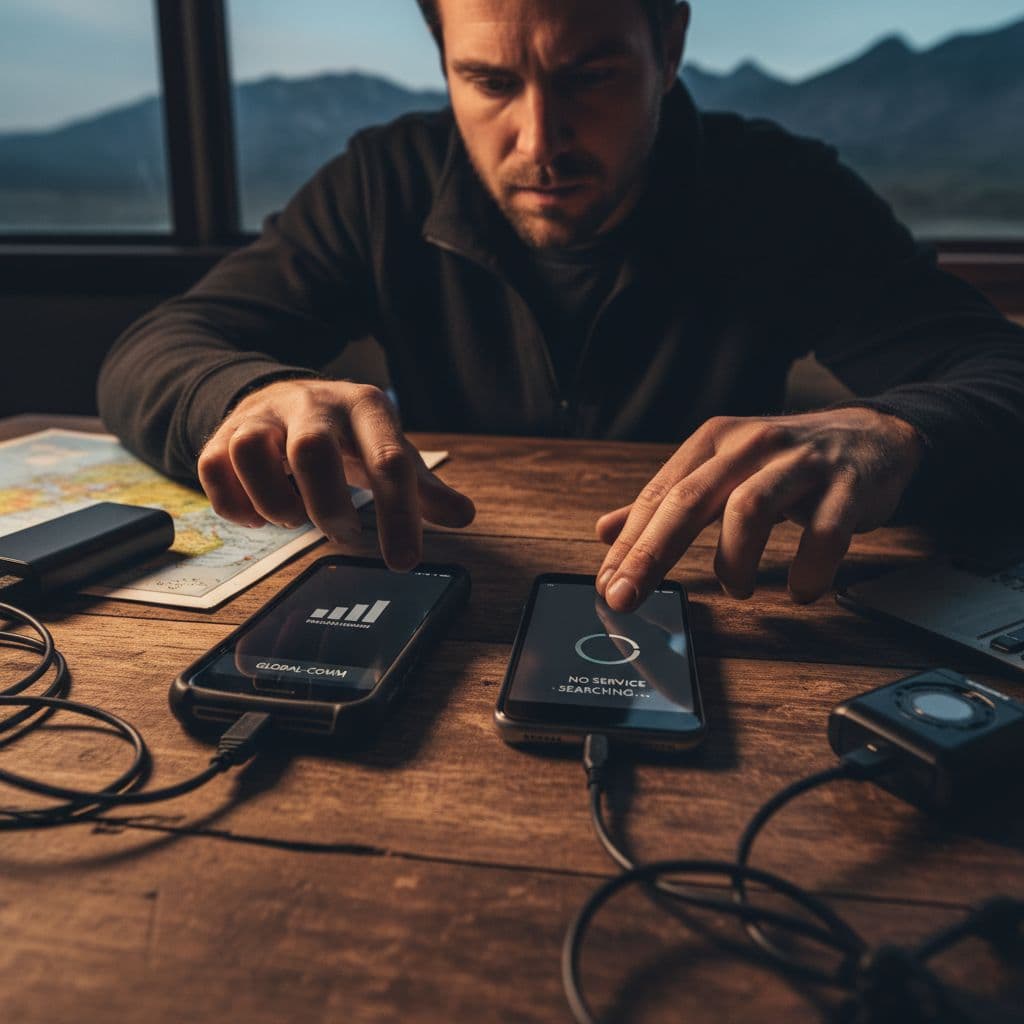
Setting up an emergency backup is about more than just buying a random data plan; it requires a logical approach to ensure the system actually works when your primary network fails. You must treat this setup like a fire drill where every second and every configuration detail matters. If you wait until you are already standing in a rainstorm without a signal to start your installation, you have already lost the battle.
A proper emergency setup involves choosing a secondary provider, installing the profile, and testing the toggle before you even pack your bags. In 2026, the complexity of 5G handovers means that simply having the eSIM “available” isn’t enough; you must ensure it remains in a state of ready-dormancy. This means the eSIM is downloaded and verified, but the cellular data toggle is switched to your primary line for daily use.
Common Mistakes To Avoid With Backup Plans
One of the most frequent errors travelers make is waiting until they have no internet to try and download the provider’s app. This is a classic “catch-22” situation; you need data to download the app that provides the data. You should always install the eSIM app and download your digital profile while you are still on your home Wi-Fi or using a stable domestic connection. This ensures the heavy lifting of the installation is finished while you have a guaranteed link to the server.
Another massive oversight is forgetting to verify that the phone is carrier-unlocked. Many travelers assume that because their phone supports eSIM technology, it is ready to accept any plan. However, if your device is still under a payment plan or locked to a specific home provider, it will reject any third party eSIM profile you try to install. Always call your current carrier or check your settings under “Provider Lock” to ensure you have the freedom to add secondary lines.
To keep your backup strategy airtight, keep these common pitfalls in mind:
- Manual Data Switching: Many people forget to disable “Cellular Data Switching” in their phone settings. If this is on, your phone might burn through your expensive backup data whenever your primary signal is slightly weak, rather than waiting for a total outage.
- Ignoring Expiry Dates: Some travelers buy a backup plan and assume it lasts forever. Most 1GB or 3GB packs have a 365-day shelf life; always verify that your “emergency spare” hasn’t expired since your last trip.
- Skipping the Test Run: It is vital to monitor your travel data usage by briefly toggling the backup on while you still have a primary signal. If it fails to connect to a local tower during a “peace time” test, it certainly won’t work during a crisis.
- Hardware Incompatibility: Before buying, check if your specific model is on the list of budget-friendly eSIM compatible phones to ensure the internal hardware can actually manage two active digital profiles simultaneously.
By avoiding these simple mistakes, you ensure that your secondary line is a reliable parachute rather than a tangled mess of code. Setting up your backup correctly is the only way to guarantee that when the “No Service” notification appears, you are only two taps away from being back online.
Emergency Backup eSIM Vs Traditional Alternatives
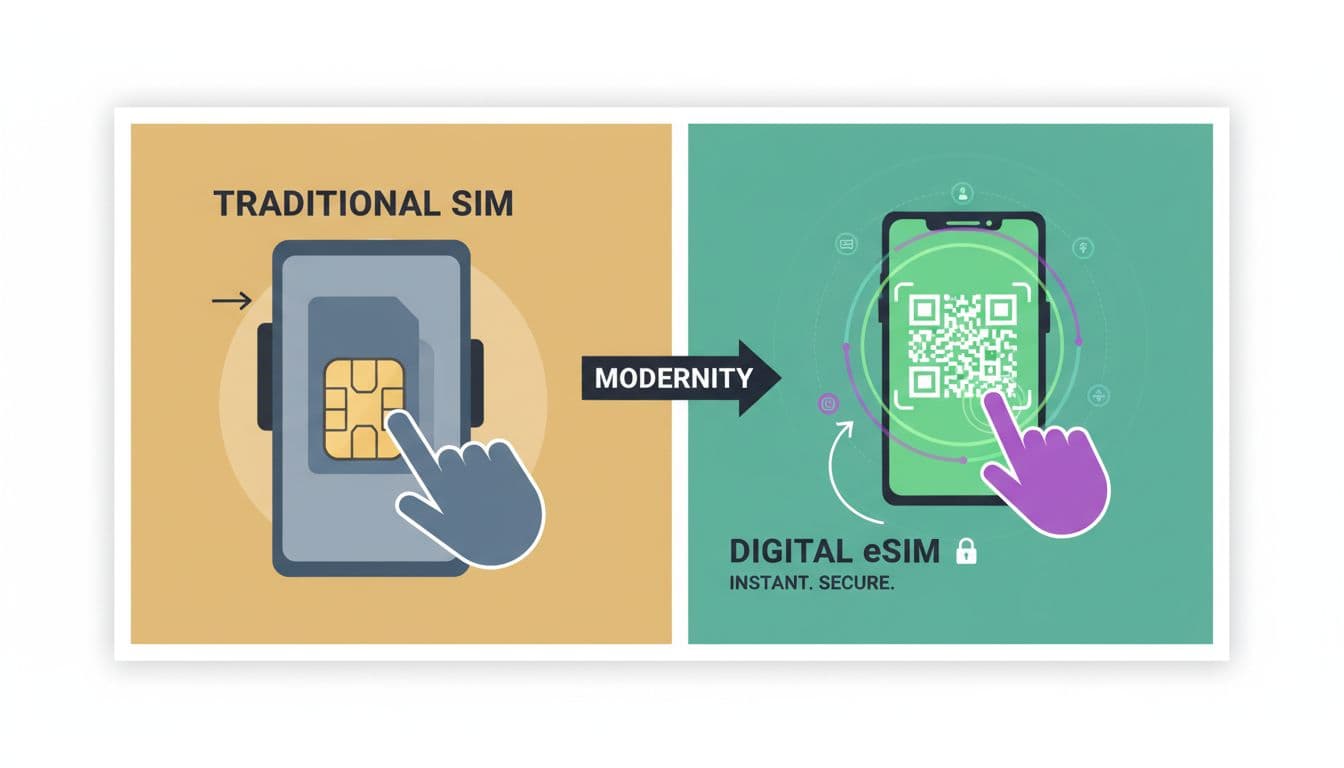
When your primary mobile connection inevitably falters while you are trying to find your hotel in a foreign city, your survival plan comes down to redundancy. We know that physical, local SIM cards are the traditional safety net; you buy one at the airport, slap it in, and you’re good to go. However, in 2026, that approach is completely outdated for an emergency backup. A physical SIM requires you to carry spare plastic, change hardware, and potentially lose your access codes. That is a major hassle when you are trying to stay calm and connected.
An emergency backup eSIM, on the other hand, lives silently on your phone and stays ready to be activated with just a couple of taps. It sits in the background, occupying zero physical space, and provides instant switching capability when your main connection tanks. To me, this is the single biggest differentiator; it removes the human element of fumbling with small cards and allows your modern smartphone to manage multiple profiles intelligently. We have seen experts predicting issues like the 2G and 3G sunset peaking in early 2026, meaning reliance on older infrastructure is dead, and digital fail-safes are where the real security lies.
Physical SIM Cards: A Declining Safety Net
Traditional physical SIM cards still work, I will give them that. If you rely on one, you usually buy it locally upon arrival, which means you have great speeds for that specific region. But it brings several bits of baggage: the physical card, the tiny tool to eject the tray, and the anxiety that you will drop that tiny plastic chip into an airport drain. That doesn’t feel like a relaxed travel experience.
Let’s look at why the physical SIM is now seen as a secondary strategy compared to a pre-loaded eSIM:
- Activation Delay: With a physical SIM, you must physically locate a kiosk, stand in line, and wait for an agent. If you land at 2:00 AM, you might be stuck until business hours. An eSIM activates instantly upon landing.
- Hardware Reliance: If you lose the physical card while traveling between countries, your backup is gone. An eSIM profile is secure on your phone’s internal chip; you can’t drop it or lose it.
- The Swapping Game: If you need to keep your home number active for banking codes but need local data, you have to swap cards constantly. This can lead to lost chips or a damaged SIM tray.
Honestly, relying only on physical SIMs for backup feels like bringing a flip phone hiking; it is too clunky for 2026 travel standards. You want something that is always present but never in the way.
Pre-Paid Local SIM Cards Versus Dormant Backup eSIMs
The most common alternative to a digital backup is buying a local pre-paid SIM card upon arrival. This strategy often grabs you the best local speeds because you connect directly to a primary carrier. However, for an emergency backup, the local SIM introduces friction points because it isn’t configured for immediate crisis use.
The core differences lie in preparation and redundancy. A local SIM is your primary plan for a short stay; it isn’t your secondary parachute for when the primary fails.
| Scenario | Traditional Local SIM (Primary) | Dormant Backup eSIM |
|---|---|---|
| Preparation Time | Must purchase and install upon arrival | Profile installed weeks before travel |
| Coverage | Excellent in one country | Works in multiple countries instantly |
| Network Redundancy | Requires a second local purchase | Uses different network infrastructure |
| Data Management | Need to monitor usage constantly | Data lasts up to 365 days until used |
To me, the real value of the backup eSIM is its long validity. You buy a cheap 2GB global eSIM today, and it might not expire for an entire year. That means for less than the price of one airport coffee, you have a standing safety net ready for any emergency across multiple continents.
Why Relying On Home Carrier Roaming Is Dangerous
Many people believe their home carrier’s international roaming package is a sufficient backup. “I pay $10 a day, I’m covered,” they might think. That thinking is outdated and expensive. Relying on your home carrier for backup is risky for three key reasons: cost, priority, and dependability.
First, let’s talk about cost. If you have a data outage for two days, you just spent $20 for what an eSIM backup might cost for a year. That is poor financial hygiene. Second is priority. When a network hub has a problem, guests on roaming agreements are often the last to get service back. A traveler using a dedicated eSIM often has better routing priority.
Third, dependability suffers because roaming often puts you on the cheapest available partner network, not the best. If you need reliable access to call a ride or check a safety alert, you don’t want the “budget” roaming partner. If you are headed to a specific region, you should check out a reliable eSIM for professional travel to Japan or similar guides to see how dedicated data plans beat roaming every time.
Essential Setup Check: Dual SIM Functionality 2026
The capability that makes the backup eSIM so powerful is the Dual SIM functionality built into modern phones. You aren’t just switching between profiles; you are running two profiles concurrently. This means you can keep your primary SIM active for receiving SMS texts from your bank while routing all mobile data through your backup eSIM.
Here is what you must confirm about your phone:
- SIM Slot Status: Check if your phone supports one physical SIM and one eSIM, or two eSIMs. Know your hardware limits.
- Primary Data Line Setting: You must manually set your primary line for calls and your secondary line for data when you are not in an outage. This prevents accidental usage on the backup.
- Testing the Toggle: Before leaving home, turn off your primary data and turn on the secondary data to verify the backup connects. If you skip this, you risk a snag when you actually need help.
Setting up this dual-line system lets your phone find the best connection instantly. Travel pros often look for seamless country switching eSIM comparison results because they want the phone to handle the handoff without manual work.
Conclusion
Maintaining a secondary internet source is the ultimate insurance policy for the modern navigator, providing a vital safety net that keeps your GPS, translation tools, and emergency contacts accessible when local networks falter. By embracing eSIM redundancy, you eliminate the single point of failure that often turns a minor technical glitch into a stressful travel ordeal.
The smartest time to secure this peace of mind is before you head to the airport, allowing you to install and verify your “digital spare” while you still have a stable home connection. Whether you choose a lean global pack or a robust regional plan, having a backup profile ready to toggle on ensures you remain in control of your journey, regardless of carrier outages or remote dead zones. If you are preparing for a long-term adventure, checking out a complete guide to eSIMs for slow travel can help you refine your connectivity strategy for months of seamless exploration.