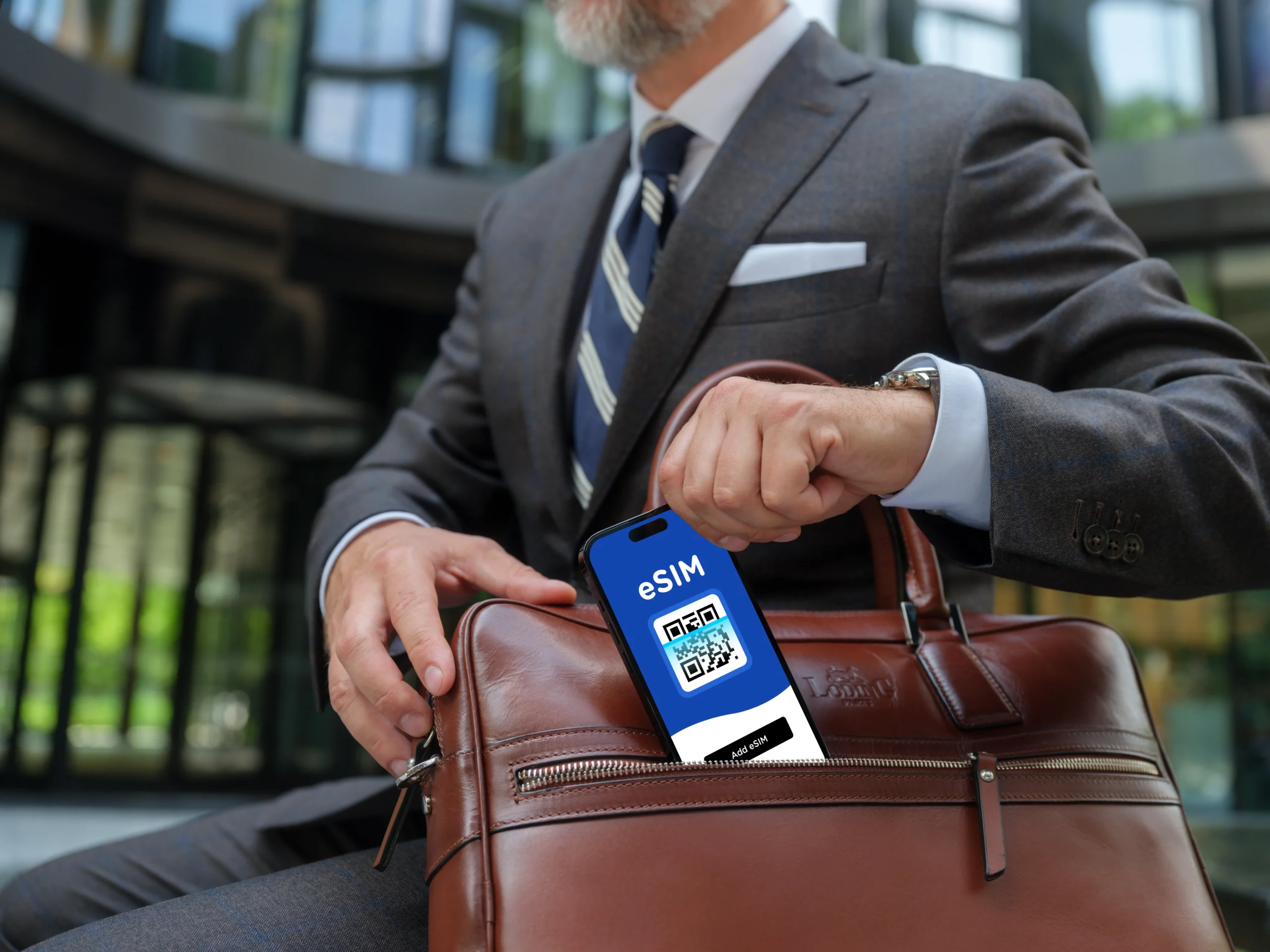
Best eSIM For Business Travelers: Secure, Reliable Connectivity With Hotspot Support
In the fast-moving world of corporate travel, hunting for stable Wi-Fi or swapping tiny plastic SIM cards at a terminal is a relic of the past. For the modern professional, a high-performance business traveler eSIM is now a specialized connectivity solution designed to bridge the gap between office security and global mobility. This article explores how modern digital SIMs provide the robust infrastructure required for executive-level performance while moving across borders.
You’ll discover why the industry is shifting toward a Zero-Trust security model, where every data packet requires authorization to protect sensitive company intelligence. We’ll also break down the importance of multi-carrier reliability, ensuring your device automatically switches to the strongest local network without manual intervention. Reliability isn’t just about signal bars; it’s about having a dedicated mobile connection that outperforms crowded public networks.
For professionals who juggle multiple devices, we examine how advanced hotspot functionality allows your laptop or tablet to stay online through your phone’s encrypted signal. This guide specifically highlights the integration of 5G RedCap for better battery efficiency and the SGP.32 standard, which simplifies how IT departments manage remote eSIM profiles. If you’re heading to a major hub, checking a Japan business travel eSIM guide can show you exactly how these professional features perform in one of the world’s most tech-dense environments.
Ultimately, the right eSIM serves as a private, secure lane on the global data highway. By the end of this post, you’ll know how to select a plan that offers built-in encryption and private network slicing to keep your workflow uninterrupted. Whether you’re presenting on a video call or accessing a secure cloud, the goal is invisible, Tier-1 connectivity that works the second you land.
What Professional Business Travelers Really Need From An eSIM
For a corporate traveler, connectivity is not a luxury; it is a critical utility, much like power or water. When you are jumping between time zones to close a deal or manage a remote team, you cannot afford to waste twenty minutes troubleshooting a spotty hotel connection or hunting for a local SIM kiosk. The needs of a professional are far more demanding than those of a casual tourist. While a vacationer might just need enough data to post a photo or find a nearby cafe, a business professional requires a dedicated pipeline that acts as a secure extension of their office.
This means looking beyond just the total gigabytes offered in a plan. You have to consider the architecture of the network and how well it protects your company’s intellectual property. A high-quality eSIM for professionals provides a stable environment where security and speed coexist, allowing you to remain productive whether you are in a taxi, a lounge, or a high-rise boardroom.
Security For Critical Work Data And Communications
The primary risk for any professional traveling abroad is the inherent insecurity of public infrastructure. Public Wi-Fi networks in airports, hotels, and cafes are notorious hunting grounds for data thieves. Hackers often set up “Evil Twin” hotspots, which are fake networks designed to look like legitimate hotel or airport Wi-Fi. Once you connect, every packet of data you send—including login credentials, private emails, and sensitive company spreadsheets—is visible to the attacker.
Using a professional eSIM effectively eliminates this threat by providing a direct, encrypted connection to a cellular tower. Instead of broadcasting your data over an open airwave shared by hundreds of strangers, your traffic stays within a private carrier environment. This is especially vital in an era where “Juice Filching” and wireless malware injection are becoming more sophisticated. By relying on a dedicated eSIM data plan, you create a personal security perimeter that public networks simply cannot match.
For those moving through high-traffic business hubs, choosing a provider with a reputation for privacy is a smart move. For example, some top eSIM options for Asian travel prioritize secure routing and offer built-in protections that keep your browsing habits private. Security features to look for in a professional-grade plan include:
- Private Network Routing: Ensures your data doesn’t bounce through insecure third-party servers.
- Zero-Trust Integration: Compatibility with corporate security apps that verify your identity constantly.
- Encrypted Tunnels: Stronger default encryption than standard consumer-grade roaming.
Reliable Speeds For Consistent Video Meetings And Uploads
Nothing kills professional credibility faster than a freezing video feed during a high-stakes presentation on Zoom or Microsoft Teams. For a business traveler, “connection” is a binary state; it either supports your workload or it doesn’t. Video conferencing requires not just high download speeds, but also low latency and consistent upload throughput. If your connection stutters, your voice becomes robotic, and your screen share lags, the meeting becomes a wash.
A professional eSIM solves this by prioritizing Tier-1 network access. Unlike some budget providers that use “throttled” or “deprioritized” data, a premium business eSIM ensures you are on the fastest available local bands, such as 5G or 4G LTE. This is particularly important when you are in transit. A reliable eSIM will stay connected as you move between cell towers on a high-speed train or in a car, maintaining the session without dropping the call.
In modern business environments, the shift toward 5G Slicing means that professionals can essentially occupy their own lane on the digital highway. This ensures that even in a crowded convention center where thousands of people are clogging the bandwidth, your connection remains stable and fast. When your job involves uploading large decks to the cloud or hosting webinars, having a stable 15-20 Mbps upload speed is the difference between a successful workday and total frustration. Always ensure your chosen plan supports high-speed hotspot functionality, so your laptop can borrow that same stable signal whenever the local Wi-Fi fails to deliver.
Why Standard Travel eSIMs Often Fail Professional Requirements
While the convenience of a digital SIM is undeniable, not all eSIMs are created equal. Most products found in app stores are designed for the casual tourist whose primary goal is checking a map or posting a quick update to social media. For a professional, these “vacation grade” solutions often lack the technical depth and reliability required to sustain a mobile office. When your livelihood depends on a stable connection, relying on a basic travel plan can feel like trying to run an enterprise on a home-user budget.
Standard travel eSIMs frequently operate on a model of affordability over performance. This trade-off results in significant technical hurdles that can disrupt high-stakes calls, delay critical file transfers, or compromise sensitive data. If you have ever experienced a sudden drop in speed during a keynote or found yourself unable to access a bank account due to a missing verification code, you have felt the limitations of consumer-level connectivity.
The Problem With Data Only Plans And Identity Verification
One of the most overlooked hurdles in professional travel is the prevalence of data-only eSIMs. While these are great for browsing, they do not provide a local phone number. In a corporate environment, this becomes a major roadblock when dealing with Two-Factor Authentication (2FA). Many secure business applications, banking portals, and even ride-sharing apps require an SMS code sent to a valid number to verify your identity.
Without a number, you are effectively locked out of your most important tools. Furthermore, the inability to make traditional voice calls to local landlines can be a disaster when you need to contact a client’s front desk or a local service provider who isn’t on WhatsApp. For those managing long-term projects, it is worth looking into stable eSIM solutions for international assignments that offer more robust features than a simple three-day data pass.
Latency Issues And Performance Throttling
Standard eSIM providers typically buy “remnant” bandwidth from major carriers, meaning their users are treated as low-priority guests on the network. In a crowded city center or a major convention hall, the local carrier will prioritize its own direct subscribers first. This leads to performance throttling, where your data speeds are intentionally slowed down to make room for others. For a business traveler, this can mean the difference between a crisp 4K video feed and a pixelated, frozen mess.
Another invisible performance killer is high latency caused by “data backhauling.” Many budget eSIMs route your traffic through a home server thousands of miles away before it ever hits the open internet. For example:
- Scenario: You are in Singapore, but your eSIM provider is based in Europe.
- Result: Every “click” travels from Singapore to London and back again.
- Impact: This adds a massive delay (lag) that makes real-time collaboration tools like Slack or Microsoft Teams feel sluggish and unresponsive.
Lack Of Dedicated Enterprise Support
When a tourist’s internet goes down, it’s an inconvenience; when a professional’s internet goes down, it’s a crisis. Most standard eSIM companies offer support via automated chatbots or email queues with 24-hour response times. This is unacceptable when you are an hour away from a board meeting. Professional-grade connectivity requires human-led, 24/7 technical assistance to resolve configuration issues instantly.
Professional travelers should prioritize reliable eSIM connectivity for business trips that includes higher-tier service agreements. If your connection fails at 3:00 AM in a foreign time zone, you need a partner who understands that every minute offline has a direct financial cost. Standard plans simply aren’t built to provide that level of accountability.
Essential Security Features For Modern Business Connectivity
When you are traveling for work, that little digital profile on your phone becomes a major security asset or a liability depending on the level of protection it offers. For a professional, connectivity must be a fortress, not a flimsy shed. In today’s connected world, keeping your company’s data private while crossing borders demands purpose-built security protocols that consumer-grade plans just don’t offer. We are talking about connectivity that locks down before your plane even hits the tarmac. This section looks at the non-negotiable fortifications built into professional eSIM solutions you should demand for your travels.
Zero-Trust Architecture And Encrypted VPN Compatibility
The gold standard for corporate security today is Zero-Trust Architecture (ZTA), which operates on the principle of never trust, always verify. By 2026, this is not just a theory for office servers; it is built right into advanced business eSIM hardware and software. To me, this means your phone’s identity is verified with every single transaction, not just when you first connect. Modern professional eSIMs achieve this by establishing encrypted tunnels that start immediately upon device boot. This means your data is wrapped in a security blanket before it ever leaves the antenna.
In fact, a significant stride in security is the integration with established corporate VPNs. A security-conscious traveler needs assurance that their private 5G eSIM connection will not conflict with or bypass existing company mandates. Top-tier business eSIM profiles are engineered for native compatibility with major corporate VPN solutions such as Cisco AnyConnect or NordVPN. This synchronization is key; it allows ZTA checks to run perfectly alongside your required encryption layers.
- Identity over Location: The eSIM acts as an encrypted ID card that verifies the user rather than just the physical location.
- Micro-Segmentation: The network creates a tiny digital fence around every app, preventing a compromised app from accessing others.
- Continuous Authentication: The network performs a digital handshake every few seconds to ensure the connection remains legitimate.
When you receive the eSIM profile, it often includes pre-validated routing information that tells the device this is a trusted connection pathway. This prevents the connection from being considered an external, unverified source. If you are looking for that next level of protection, understand that this immediate, auto-engaging encryption is what separates a tourist plan from a business tool.
Reducing Your Digital Footprint On Public Networks
Let’s be blunt; checking sensitive email over free airport Wi-Fi is playing Russian roulette with your corporate data. Why would you risk accessing shareholder data or proprietary code over a network that anyone, including sophisticated cybercriminals, can easily monitor? The huge benefit of using a dedicated, high-speed 5G eSIM for all your work is the ability to stay off public Wi-Fi entirely. This is not just about speed; it is entirely about risk management.
When you rely on your private 5G eSIM connection, you sidestep the most common hacking vector: network spoofing. Think about being at a coffee shop where a hacker sets up a network named “CafeGuest_Free”. It looks official, you connect, and suddenly every password and login is exposed to their sniffing software. By using your eSIM, you are not even touching that local network, so spoofing attacks become irrelevant to you. Your data is transmitted directly to the carrier’s secure core network.
This creates a personal security bubble around your device. Even if an attacker could intercept your cellular signal, the necessary cryptographic keys embedded in the professional eSIM profile make the data unusable to them. Why accept marginal security when your productivity and company data are on the line? Sticking to that private cellular pathway is simply the smarter, cleaner way to operate when working internationally. For those exploring diverse regions, always check the top eSIM providers for global business travel to find carriers with massive 5G footprints that limit your need to look for alternative networks. Using a private connection is the most effective way to shrink your digital footprint and keep your professional activities invisible to bad actors lurking on shared infrastructure.
Maximizing Speed And Reliability In Global Business Hubs
Connectivity acts as the lifeblood of modern business travel; if your connection isn’t fast and solid, you’re losing time and looking less than professional. When you touch down in New York, London, or Singapore, you’re stepping into high-demand technology zones. Think of these major business hubs like the main floor of a stock exchange where everyone wants a piece of the bandwidth at the exact same time. Relying on standard consumer data when everyone else is trying to upload quarterly reports leads to a miserable experience.
Professional eSIMs offer a smarter way to connect by architecting your access around expected congestion. This gives you a guaranteed lane on the information superhighway. It is about making sure your device always has the cleanest, most direct route to the data it needs, no matter how many people are trying to connect around you. Your productivity shouldn’t degrade just because you are in a crowded airport lounge or a dense financial district.
Consistent 5G Performance In High Traffic Business Districts
When an area gets packed, network speeds drop because of network congestion. This is the number one enemy of the business traveler. With standard plans, your traffic gets deprioritized when the local tower gets overloaded, meaning you’re bumped to the back of the line. This is when your video call pixelates or your large file transfer stalls right before completion.
Premium business eSIMs combat this by accessing higher priority network segments. While a consumer phone lags trying to load an email on a crowded network, a device running a professional eSIM profile sails through. These premium packages purchase a VIP pass on the cellular network. Your data packets stay in the fast lane even when every other available carrier is swamped.
- Priority Access: Your data is tagged as high priority, bypassing the “queuing” that affects standard travel plans.
- 5G Stand-Alone (SA): Professional profiles often utilize the latest 5G SA networks, which remove the 4G anchor bottlenecks found in older 5G setups.
- mmWave Support: High-tier plans prioritize “5G+” or “5G UW” bands in airports and stadiums, which are designed specifically to handle massive crowds.
In 2024 and 2025, higher priority access is critical. It pays for the quality of transmission rather than just cheap bulk data. Asking your provider about the instant connectivity for business travelers they offer is a smart move, as it directly translates to consistent 5G availability. This level of guaranteed performance is why these plans are a business asset rather than just an expense.
The Impact Of Multi-Carrier Switching On Work Performance
Moving through different cities or driving between suburbs and the urban core constantly changes the cell tower your phone connects to. For a casual user, a slight dip in service during a tower switch is fine. For a professional on a VoIP call or a secure file download, it is catastrophic. Professional international eSIMs excel here because of true multi-carrier switching.
This is not just a basic roaming agreement. It is intelligence baked into the eSIM profile itself. If you move through varying coverage zones, the profile instructs your device to look ahead for the strongest connection hand off. The jump between Carrier A and Carrier B is designed to feel like a single, continuous connection.
| Feature | Standard Travel eSIM | Professional Business eSIM |
|---|---|---|
| Network Choice | Locks to one partner per country | Switches between 2-3 top carriers |
| Switching Speed | Manual or slow auto-reconnect | Intelligent, low-latency hand-off |
| Call Stability | High risk of dropped VoIP calls | Optimized for session integrity |
You don’t experience the lag or disconnection that happens when a phone tries to negotiate a switch manually or relies on a single carrier that has a dead spot. This capability is like having a digital co-pilot constantly monitoring signal quality. It grabs the best available link without you ever touching your settings. Providers utilizing aggregated technologies maintain session integrity beautifully, meaning that or interrupted download is a thing of the past. This ability to jump providers keeps your workflow clean and builds confidence in your connection everywhere you go.
Hotspot and Tethering Strategies For Desktop Portability
For the traveling professional, the connection from the mobile phone to the laptop or tablet is the single weakest link in the mobile office setup. We demand desktop-level productivity, but we frequently tether through a smartphone that wasn’t really built for the task. The good news is that technology is finally catching up to our needs. New eSIM standards arriving in 2026 dramatically change tethering, moving it from a battery-draining emergency measure to a reliable, integrated feature. When selecting a business-grade eSIM, you must look past simple data allowances; the quality of its hotspot functionality dictates whether you can actually get serious work done away from a desk. This means checking limitations on data usage, duration, and ensuring peak power management for all-day productivity. Let’s look closely at the limitations you might face today and the exciting upgrades coming soon that will truly set your mobile workflow free.
Evaluating Data Sharing Limits For Laptops And Tablets
This is perhaps the most frustrating trap in consumer mobile plans. You might see an advertisement screaming “Unlimited Data,” and you sign up, feeling great about yourself. Then, you connect your work laptop to tethering to upload a large presentation, and suddenly, your speeds drop to dial-up levels. That’s because many “unlimited” plans bought for phones hide very strict, often daily, hotspot data caps.
In my book, if a plan restricts tethering functionality, it isn’t a true business plan. Carriers use this trickery to segment users. They know that a small phone uses far less data than a high-powered laptop running spreadsheets and video conferencing software all day. They often allow generous data for phone use but severely limit the data you can share via hotspot. You might find plans that allow 50GB for phone use but cut off hotspot sharing entirely after just 500MB or 1GB per day. That limit is practically useless for real work; it’s barely enough for a single hour of continuous Zoom.
When you evaluate a business eSIM, you need to treat the tethering allowance as separate from the primary data allowance. Look for these hidden restrictions:
- The Daily Hard Cap: Ask directly if the hotspot data resets daily or monthly. A 500MB daily cap means that by lunchtime, your laptop connection is dead unless you pay an extra fee.
- Throttling Threshold: Some plans don’t cut off completely but drop you to an unusable speed like 128kbps after a certain limit. This is just as bad as a hard cap for professional tasks.
- Device Limits: Check if you are allowed to tether more than one device. A professional setup often includes a phone and a tablet connected simultaneously.
For serious international work, only select eSIMs where the hotspot allowance matches or closely mirrors the primary allowance. If the plan offers 20GB total, it should offer 20GB usable across all permitted devices, including tethering. Don’t get stuck rationing your data just to keep your laptop online; that defeats the entire purpose of portable connectivity.
Managing Battery Life With 5G RedCap Technology
Battery life used to be the main reason travelers avoided tethering for long stretches. Firing up your phone’s internal Wi-Fi hotspot to broadcast a signal aggressively sucks the charge, often leaving your phone dead before your work session is finished, regardless of the data speed. Fortunately, the networking world is responding to this pain point for mobile professionals. We are seeing carriers roll out features based on newer 5G protocols designed to keep your power levels up even when sharing.
The development that matters most here for 2026 travelers is the advancement allowing for significantly longer tethering sessions without collapsing your battery. Thanks to optimizations in 5G standards, particularly those related to 5G Reduced Capability (RedCap) devices and integrated eSIM configurations, the power draw for continuous tethering is being slashed. Where a traditional hotspot might manage only 3 hours of heavy use before the phone critically overheated or died, current carrier benchmarks suggest that newer, compliant eSIMs and handset pairings can sustain high-speed sharing for up to 8 hours.
How does this happen? It’s all about efficiency in how the phone communicates with the tower when acting as a hotspot:
- Lower Power States: The technology prevents the phone’s radio from staying at maximum transmission power constantly. It senses when the connected laptop isn’t demanding heavy bandwidth and drops the power needed for that connection down to a minimal level. Think of it like an escalator that slows down when no one is standing on it.
- Optimized Protocols: The reliance on robust, newer standards means the data handshake is quicker and requires less continuous radio energy compared to older Wi-Fi hotspot broadcasting methods.
This shift is a complete game-changer for anyone needing a full day’s work done while relying only on their phone’s hotspot. Eight hours is a full workday, meaning you can confidently leave your large external power bank behind for lighter excursions. When you research your next business eSIM purchase, make sure the provider explicitly confirms compatibility with these newer, low-power tethering technologies. It’s the difference between productive mobility and constantly hunting for a wall outlet.
Top Recommended eSIM Providers For Business Travel In 2026
When you are traveling for work, your tech stack needs to be as professional as your presentation. You cannot rely on a budget data plan that drops out the minute you enter a skyscraper or a busy airport terminal. In my book, 2026 is the year where specialized business features move from “nice to have” to absolutely mandatory. For the modern executive, a top-tier eSIM provider must offer more than just a data connection; it needs to provide a managed, secure, and high-priority environment for work.
The market has matured significantly, dividing into distinct categories that serve different corporate needs. Whether you are a solo consultant needing a quick setup or an IT manager overseeing an entire sales fleet, the right choice depends on your specific operational requirements. I have curated this selection based on technical stability, enterprise support, and the ability to maintain a professional workflow across multiple borders without missing a beat.
Airalo: The Reliable Standard For Small Teams
Airalo remains the most recognizable name in the industry for a good reason. It is the perfect entry point for small teams or individual travelers who need a straightforward, effective solution. They offer coverage in over 200 countries and regions, which is an incredible reach for someone jumping between diverse global markets. The setup is extremely clean; you can buy and install a profile in under two minutes, which is a life-saver when you are rushing through customs.
For those managing a handful of employees, the Airalo Partners program allows you to buy credits or data in bulk. This removes the headache of individual expense reports for every single trip. If you are debating between established giants, checking an Airalo vs Gohub comparison helps you see how these services handle specific regional performance needs. Airalo is my go-to recommendation for short, standard business trips where ease of use is the top priority.
Holafly: The Unlimited Choice For Power Users
If your workday involves five hours of video calls and heavy cloud syncing, counting gigabytes is a waste of your mental energy. Holafly has carved out a massive niche by offering unlimited data plans in several popular destinations. It is a no-brainer for professionals who act as mobile hotspots for their laptops. When you use Holafly, the “out of data” notification simply isn’t something you have to worry about during a midnight strategy session.
Their 24/7 human support is another standout feature that adds to their professional credibility. If you land in a new city and the connection feels sluggish, they have real people ready to troubleshoot the configuration in real-time. Holafly is the best fit for power users who demand high discovery and high usage without the fear of being throttled or cut off.
Truphone: Enterprise Level Device Management
Truphone operates on a different level than consumer apps. They provide a full management platform designed specifically for large corporations with massive IT departments. In fact, their technology is often baked directly into the hardware of iPads and Apple Watches at the factory level. This allows a central manager to push eSIM profiles to hundreds of employees simultaneously from a single dashboard.
This is the “pro” choice for high-security environments. Truphone offers private network integrations that ensure your company’s data never touches the public internet. If you are part of a large organization that needs to manage a fleet of devices with centralized billing and security oversight, Truphone is the industry leader for a reason.
Global Business Provider Comparison Table
Choosing the right partner involves weighing data needs against management complexity. Use this table to quickly identify which provider matches your specific 2026 travel profile.
| Provider | Primary Strength | Best For | Support Level |
|---|---|---|---|
| Airalo | Global Reach | Small Teams / Solo | App & Email |
| Holafly | Unlimited Data | Power Hotspot Users | 24/7 Live Chat |
| Truphone | Centralized Management | Large Corporations | Dedicated Account Mgr |
| GigSky | Offshore & In-Flight | Executives / Specialized | Specialized Technical |
| Nomad | Regional Bundles | Multi-Country Tours | Web & App |
GigSky: Connectivity Beyond The Shoreline
For executives who spend significant time in the air or on the water, GigSky is a specialized powerhouse. They are one of the few providers that offer data for airplanes and cruise ships in addition to standard terrestrial towers. If your job involves offshore energy work or frequent private jet travel, GigSky keeps you connected in the “dead zones” where other carriers fail. It is a premium service for high-stakes environments where being out of touch is not an option.
Nomad: Optimized For Multi-Stop Regional Travel
Nomad is the champion of the “Regional” plan. If your trip involves visiting four different countries in Asia or Europe within a single week, Nomad’s regional bundles are exceptionally cost-effective. Their app provides one of the best user experiences for tracking real-time usage across various carriers. It is an excellent choice for employees on fast-moving international tours who need one single profile that works seamlessly as they hop across borders.
Building Your Ultimate Mobile Connectivity Backup Plan
Relying on a single connection while traveling for business is a risky move that can stall your productivity at the worst possible moment. Modern professionals treat connectivity as a mission-critical utility, meaning they prepare for failure by building redundancy directly into their digital workflow. A solid backup plan ensures that even if a local tower goes down or a specific carrier has a dead zone in your hotel, you stay online without a second of downtime. By 2026, the transition to fully digital systems has made creating these safety nets easier and more sophisticated than ever.
The Power Of Multi-Carrier Redundancy
A truly resilient connectivity plan doesn’t just give you more data; it gives you access to more networks. Many standard travel plans tie you to a single local partner, but if that carrier experiences a regional outage, you are stuck. Professional-grade setups prioritize Intelligent Steering, a 2026 standard that allows your phone to sense network degradation and jump to the strongest available signal across different providers automatically.
This “silent” switching is a game-changer because it handles the technical heavy lifting while you focus on your work. To me, having a secondary eSIM profile from a different provider is the smartest insurance policy you can buy. If your primary link fails, you can toggle your secondary line in the settings and be back in a video meeting in less than thirty seconds. This level of cross-carrier flexibility is why the prepaid global eSIM for business travel has become the foundation of the modern mobile office.
Remote Management And Enterprise Security Standards
For those managing teams, the backup plan needs to be centralized and secure. The introduction of the SGP.32 standard has revolutionized how IT departments handle remote connectivity. This technical framework allows a company to manage eSIM profiles over the air, meaning they can push a backup data plan to an employee’s phone in London while the IT admin is sitting in New York.
This remote management capability, often paired with Multiple Enabled Profiles (MEP), allows a single device to store numerous digital SIMs simultaneously. If an employee encounters a local connectivity crisis, the office can instantly deploy a high-priority enterprise profile to resolve the issue. These profiles often include:
- Private 5G Access: Automatic switching to secure company-owned network segments when entering corporate hubs.
- Quantum-Resistant Encryption: Advanced security layers that protect sensitive data transfers against modern decryption threats.
- Hardware-Level Locking: Ensuring the digital identity is tied to the specific device brain, making remote SIM swapping nearly impossible for hackers.
Hardware Readiness And Technical Support SLAs
A backup plan is only as good as the hardware that supports it and the people who fix it when things go wrong. In my book, 2026 is the year of the iSIM, where the cellular technology is built directly into the phone’s processor. This saves space for larger batteries and ensures that your backup connection is always “warm” and ready to activate.
However, technology can still be finicky. You should choose providers that offer a clear Service Level Agreement (SLA) for technical failures. For instance, some premium services offer a 1-hour eSIM technical replacement policy that guarantees you’ll receive a fresh, working profile if your current one fails to activate. When your work is on the line, you need more than a chatbot; you need a guarantee that your connectivity partner will troubleshoot and resolve your issue with person-to-person support. Always test your backup profile before leaving for the airport to confirm it’s properly provisioned and ready for action.
Conclusion
Professional connectivity in 2026 relies on three fundamental pillars: airtight security, unwavering hotspot reliability, and intelligent multi-carrier support. To maintain a mobile office that actually works, you need more than just a basic data connection; you need a system that mimics the stability of a high-speed corporate desk.
Security is no longer optional for business travel, and relying on private, encrypted cellular tunnels protects your intellectual property from the risks of public infrastructure. By choosing a plan that supports Zero-Trust principles and high-speed tethering, you ensure your laptop remains productive regardless of your location.
For the highest level of performance, I recommend selecting a fixed data plan over one marketed as “unlimited.” Fixed plans typically offer higher priority on local towers and more transparent hotspot allowances, which are essential for long video calls and heavy cloud usage. Investing in a professional-grade eSIM is an investment in your own efficiency, allowing you to focus on the meeting at hand rather than hunting for a signal.