The Best eSIM For Digital Nomads: Long Stays And Stable Speeds For Work (2026 Guide)
Finding a reliable internet connection is the ultimate hurdle for anyone living the nomadic lifestyle, especially when your paycheck depends on steady video calls and large file uploads. While coffee shop Wi-Fi is a gamble, an eSIM tailored for long-term digital nomad life provides a dedicated, secure bridge to the local network without the hassle of hunting down plastic SIM cards in every new city.
This guide clarifies how to maintain high-speed connectivity for months at a time, specifically focusing on providers that prioritize low latency and high data caps. We’ll examine the best options for stability and price, covering industry leaders like Airalo, Holafly, and Maya Mobile. You’ll learn which services support laptop tethering, how to navigate monthly auto-renewals, and when a eSIM vs physical SIM cost comparison reveals the best path for your budget.
If you’re wondering which provider currently reigns supreme for extended stays, the quick answer is that Maya Mobile and Nomad lead for bulk data and subscription ease, while Holafly remains the go-to for raw unlimited usage. Consistency is the name of the game here. We are going to look at the exact technical attributes that matter to remote workers, including 5G availability, regional coverage flexibility, and the specific “local priority” routing that prevents your data from lagging halfway across the globe.
Whether you’re prepping for a three-month stint in Medellin or bouncing between hubs in Southeast Asia, choosing the right digital SIM is a complete no-brainer for staying sane. Let’s get into the details so you can stop worrying about signal bars and start focusing on your next project.
What Digital Nomads Actually Need From an eSIM
Reliable connectivity is the foundation of the remote work lifestyle, yet many standard travel plans fall short of professional requirements. Digital nomads do not just need data; they need a connection that behaves like a home fiber line while they move between short-term rentals and coworking hubs. When your income depends on being present in a virtual meeting, the technical specifications of your eSIM matter more than the marketing fluff on the provider’s homepage.
The following sections break down the specific logistical and technical requirements that differentiate a basic tourist eSIM from a professional-grade nomad tool.
Long Validity Without Forced Renewals
The standard 7 day or 15 day window offered by many providers is a constant source of anxiety for those practicing slow travel. Most digital nomads prefer to stay in a single base for at least 30 to 90 days to establish a routine. Using short-cycle plans forces you into a cycle of frequent manual top-ups, which often results in a sudden loss of service at the most inconvenient times, such as mid-presentation or while navigating a new city at night.
Modern nomads look for plans that offer 30 day, 90 day, or even 365 day validity to secure peace of mind. A longer validity period ensures that you aren’t constantly checking an app to see if your “line” is about to go dark. In 2026, the trend has shifted toward “Data Wallets” and seasonal plans that allow you to buy bulk data that stays active for months. This flexibility is essential for those who might spend two months in a coastal town and another month in a mountain retreat without wanting to hunt for a new provider.
If you are planning an extended stay in North America, for example, choosing a low cost travel eSIM Canada can provide the necessary bridge for a three month stint without the high price tag of traditional monthly contracts.
- 30-Day Plans: Ideal for a quick month-long sprint in a single digital nomad hub.
- 90-Day Seasonal Plans: Perfectly aligns with the typical “Slow Nomad” visa cycle.
- 365-Day Global Plans: Best for frequent border-hoppers who want a single data bucket that never expires quickly.
Consistent Speeds For Work Calls And Uploads
High-speed data is often marketed as a luxury, but for a remote worker, it is a non-negotiable utility. Low latency (ping) and stable upload speeds are far more important than raw download speed when it comes to Zoom, Microsoft Teams, and cloud-based development tools. If your latency is too high, your video calls will lag and drop, making professional communication nearly impossible. Many budget eSIMs route data through distant servers, which adds significant delay to every packet sent.
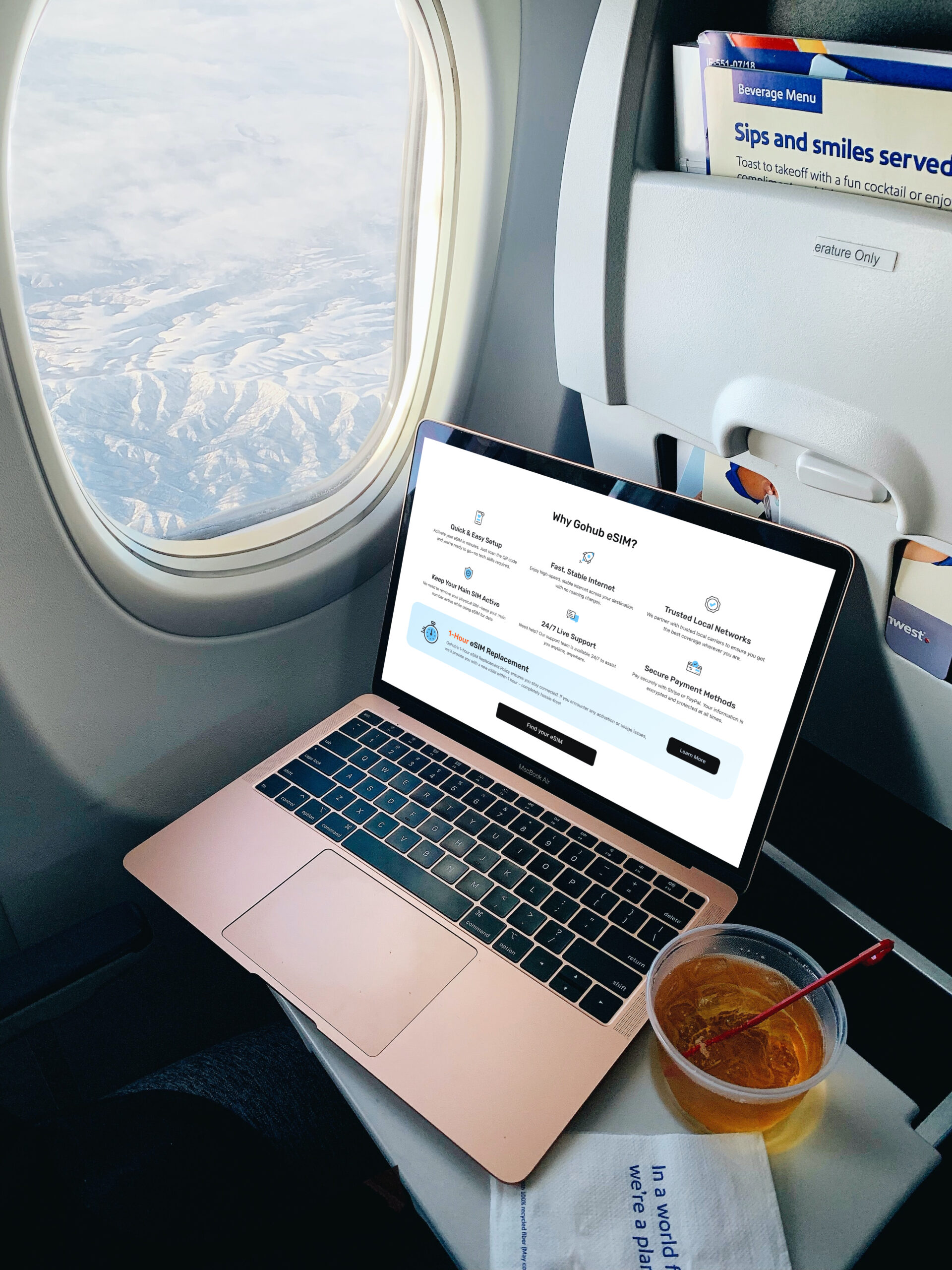
 Photo by Andrea Piacquadio
To avoid these issues, professional nomads look for providers that utilize Tier 1 networks. These are the major national carriers in each country, such as NTT Docomo in Japan or Telus in Canada, which provide the most robust infrastructure. By 2026, 5G priority has become the standard for mobile work. A 5G connection typically offers the high bandwidth required for 4K video uploads and large file transfers to Google Drive or AWS.
For those heading to Asia, finding a high-speed eSIM for Japan business ensures that you are connected to local premium networks rather than a throttled secondary provider. This “local priority” routing is what keeps your connection stable during peak hours in dense urban environments where standard tourist SIMs might get deprioritized. Always check if a plan supports hotspot tethering, as many “unlimited” plans restrict you from sharing your data with your laptop, which is a deal-breaker for any nomad.
Why Most Travel eSIMs Fail For Long Stays
The typical travel eSIM is a fantastic tool; it solves the airport data panic and gets you online instantly. But for the true digital nomad, the one staying put for a month or more in a single location to actually get work done, those standard tourist packages often fall flat. Frankly, many popular eSIMs are designed for people who just need data for social media and navigation during a two-week vacation. They aren’t built with the rigorous, high-demand, and prolonged uptime that remote work requires.
Your connectivity needs when you are chasing deadlines are completely different from someone who just needs to check flight times. When your income depends on professional reliability, poor connectivity isn’t just an inconvenience; it costs you projects and reputation. This is why many nomads find themselves constantly managing, tweaking, or replacing their data source, which completely defeats the point of simplified travel. We need stability, not constant maintenance.
Short Validity Plans That Reset Too Fast
This hits every slow traveler right in the middle of their working hours. Most entry-level eSIMs are structured around a very short shelf life, usually locking you into a 7-day or 15-day window. Think about that setup: If you plan to be in Lisbon for 45 days, you must stop everything and manually repurchase a new plan three separate times. That’s three separate moments where your data could cut out without warning.
Imagine you are mid-transferring a massive design file or you have a critical client check-in scheduled right before the old plan expires. That data gap, even if it is only for 20 minutes while you navigate the top-up process, can wreck your flow. It is an unnecessary friction point that eats into your focus time. These short-term plans are built for the tourist moving fast, not the remote worker settling in for a deep-focus project.
A professional nomad prioritizes zero downtime. Constantly wrestling with calendar reminders to buy more data is a huge operational overhead. Any provider pushing 14-day data blocks for someone settling down for a long period is showing a blind spot regarding the actual needs of the professional segment. Choosing benefits of long-term eSIM for digital nomads means picking a plan that stays active month-to-month, not week-to-week.
Speed Throttling After Light Usage
This category is where budget eSIMs reveal their limits compared to quality long-stay alternatives. Many providers advertise unlimited data only to bury a hidden restriction in their fine print: the Fair Use Policy (FUP). You might see an attractive offer touting 5GB per day of unlimited access. However, once you log into your VPN, push a few code updates, and attend two long video calls, you might hit that threshold faster than expected.
- 1GB Daily Caps: These are common in many “unlimited” plans but fail under professional pressure.
- Throttled Speeds: Once the cap is hit, speeds often drop to 128kbps or 256kbps, making even simple web browsing impossible.
- Video Meeting Demands: A standard Zoom call in HD can consume between 800MB and 1.5GB per hour.
Imagine needing to attend three back-to-back video meetings with international teams. Each meeting can easily chew through 1GB of data. If your daily allowance caps out at 1GB, those meetings mean your connection will choke out halfway through the first hour. This is simply unacceptable for business operations. The application of FUP is often opaque; you typically do not know exactly when the throttling will kick in until your video feed freezes.
We are looking for premium-level data access, and that means avoiding providers whose definition of unlimited requires you to monitor your usage like a hawk. For true stability, nomads should look for cost-effective eSIM alternatives for nomads that offer substantive daily caps or premium tier access where the speed does not degrade across a full working day. You want performance that mirrors a home fiber hookup, not a connection that treats you like a casual tourist.
The Key Features That Matter Most For Nomads
Choosing an eSIM for a long-term stay requires a shift in perspective from the casual vacationer to the enterprise-level remote worker. While a tourist might tolerate a minor lag during a Google Maps search, a digital nomad cannot afford a dropped connection during a high-stakes client presentation or a massive GitHub push. Success in a remote role depends on underlying technical features that ensure consistency, priority, and ease of management over months rather than days. To maintain a professional standard while traveling, you must look beyond the price per gigabyte and examine how the provider handles network traffic and subscription longevity.
True Monthly Or Extended Data Plans
For those who treat travel as a lifestyle, the constant friction of manual top-ups is a major productivity killer. Traditional travel eSIMs usually expire after thirty days, forcing you to remember to log in, select a new plan, and potentially deal with a gap in service if the timing is off. The modern solution for nomads involves subscription-based models that mirror a traditional home internet contract but without the credit checks or long-term commitments.
Maya Mobile has become a standout favorite for this specific reason; their auto-refill and monthly subscription options allow you to set your data needs once and forget about them. This “hands-off” connectivity is a massive relief when you are deeply focused on work. You avoid the sudden “Out of Data” notification that always seems to arrive at the worst possible moment. When comparing a USA eSIM price comparison against global providers, the value of a recurring plan often outweighs a slightly cheaper one-time package because it protects your professional uptime.
- Set-and-Forget Mechanics: Auto-renewal ensures your data bucket refills the moment it hits a threshold or a date, mimicking a post-paid mobile experience.
- Bulk Data Discounts: Monthly or quarterly commitments often unlock lower rates per gigabyte than the standard retail tourist pricing.
- Subscription Portability: Many modern nomad plans allow you to pause your subscription during a transit month or when you know you will have high-speed fiber at a specific co-living space.
Priority Access vs Standard Roaming Profiles
Not all mobile data is created equal, and the “bars” on your phone can sometimes be deceptive. When a local network becomes congested (like in a busy city center or during peak evening hours), the towers must decide which users get the fastest speeds and which get throttled. Cheap, budget-focused eSIMs often use “Standard Roaming” profiles; these are the first to be deprioritized by local carriers, leaving you with “leftover” bandwidth that feels sluggish despite a 5G signal.
High-end eSIMs for professionals prioritize local network routing and Tier 1 carrier access. These premium providers negotiate higher-level agreements that place your connection on par with local contract customers. This means that while tourists with budget plans struggle to load a webpage, your video call remains crisp because your data is treated as priority traffic. When looking at top eSIM providers 2025, the standout feature is often this invisible “Local Priority” routing that ensures low latency and stable speeds regardless of how many people are using the tower.
- Network Tiering: Premium eSIMs partner with major national carriers like Vodafone or Orange rather than secondary, smaller MVNOs.
- Reduced Hops: Better providers route your data through the closest regional hub to minimize the physical distance data travels, significantly lowering your ping.
- 5G Priority: Professional plans often include guaranteed 5G access where available, which is essential for low-latency tasks like remote desktop computing or live streaming.
Regional Vs Global eSIMs For Digital Nomads
When you are working remotely, connectivity shifts from being a convenience, like having music on a road trip, to being the entire office infrastructure. For the digital nomad, the choice between a regional eSIM and a global eSIM represents a fundamental trade-off: deep local optimization versus broad, ultimate convenience. You need to decide whether you are prioritizing the absolute best performance in one area or the uninterrupted utility across many countries. If you are setting up a long base in one city, sticking to a single country’s best network is the clear path to speed. Moving countries every two weeks demands the flexibility of a global bucket. Specialized tech now offers robust options for both scenarios, making the decision more about your specific itinerary than the technology itself.
Single-Country eSIMs For Base Cities
If you are planning a stay of two months or longer in a single hub, say, Chiang Mai, Lisbon, or Mexico City, you should absolutely lock into a single-country eSIM. Why subject yourself to the compromises of a wider network when you can access the premier local services directly? Local plans offer substantially higher top speeds and noticeably lower latency because your data is routing through the closest available infrastructure without any cross-border negotiation.
This level of performance is not just about bragging rights; it is a functional requirement for demanding remote tasks. Consider heavy data activities like live-streaming client workshops, performing large cloud-based code check-ins, or even competitive online gaming during downtime. These actions demand the lowest possible ping time. A local eSIM connects you directly to the Tier 1 carrier in that specific nation, meaning fewer network “hops” between your device and the destination server. This results in latency figures often under 30ms, which feels nearly instantaneous. In contrast, a global plan might route that same traffic through a central European or North American hub first, adding frustrating delays. For a digital nomad who relies on flawless video quality, that distinction between 20ms ping and 150ms ping is the difference between looking professional and looking like you are lagging in slow motion. Always verify that the single-country plan explicitly supports the latest speed standard, which for 2026 means guaranteed 5G access where available.
Regional eSIMs For Slow Travel
The concept of “slow travel”—moving between cities or countries within the same geographical area every few weeks—is where regional eSIMs truly shine, especially when covering continents like Europe or Asia. Installing one eSIM profile that covers twenty countries is a far cleaner user experience than manually activating twenty different single-country eSIMs. This is about reducing administrative overhead so you can focus on living and working, not on connection management.
The major benefit here is seamless network handover. Unlike some older regional bundles that required manual switching, the best modern regional plans use a single, overarching eSIM profile that intelligently connects to any supported partner network across the covered territory. As you drive from Germany into France, for example, the connection shouldn’t drop; the application should just switch networks in the background. This is exactly what travelers seeking truly consistent connectivity across continents prefer. If you are hopping between the popular digital nomad clusters in Southeast Asia or moving through the Schengen Area for a few months, a regional plan priced per region is almost always more cost-effective than buying data for each country piecemeal. Understanding the Airalo regional eSIM switching truth is essential here, as some providers require manual steps while others, like Gohub, offer a single install for multiple countries. You get the convenience of a single purchase and activation, which dramatically improves your connection uptime during transit periods.
Global Plans And Their Speed Tradeoffs
The global eSIM plan stands as the ultimate convenience offering; it is the one plan to rule them all, covering 150 or more countries with a single activation. This is the choice for the hyper-frequent international traveler, the person who might fly from Australia to Brazil next week and then attend a conference in the UAE the week after. Its value proposition is absolute simplicity: install once, connect everywhere. However, this immense convenience comes with inherent technical trade-offs, primarily related to cost and data routing latency.
Because the provider must maintain agreements with carriers across dozens of disparate networks globally, these plans are inherently more expensive on a per-gigabyte basis compared to a focused regional or single-country option. You are paying a premium for the sheer breadth of coverage. More importantly, the routing can negatively impact performance for high-demand work. When you are in a smaller, less connected nation that is part of a global plan’s portfolio, the data traffic often has to tunnel or “hop” to a major international gateway in a larger country before it reaches the public internet. This added distance imposes significant latency penalties. While this might be acceptable for checking emails or sending quick messages, it becomes a point of failure during a full day of VoIP calls or continuous data syncing to cloud servers. When searching for the best prepaid global eSIM 2025, you’ll find that global plans excel in maintaining availability but often lag in peak performance compared to local carrier priority. For the nomad whose workflow involves high-bandwidth transfers, the global approach demands an acceptance of potential speed variability in exchange for never having to manage a new SIM setup.
Speed Stability Explained In Plain Terms
For a digital nomad, speed stability isn’t just about how fast a website loads; it is about the consistency of that connection over several hours of deep work. You might see a provider flash “Up to 100Mbps” in their marketing, but if that speed oscillates wildly or drops every time a cloud sync starts, it is practically useless for professional tasks. True stability comes from low latency and a solid “floor” of throughput that never dips below what you need for a clear voice line or a secure server connection.
Tethering And Hotspot Reliability
If you plan to work from a laptop, you must verify that your chosen provider actually allows data sharing. While it sounds absurd in 2026, some budget-focused eSIMs physically block tethering or use a technique called TTL (Time to Live) throttling to detect and slow down traffic going to a computer. They do this to protect their profit margins or to push you toward expensive business-tier plans. Before you buy, always dig into the technical specs to confirm that hotspot functionality is enabled.
When you do connect your laptop to your phone’s hotspot, your data usage will skyrocket because computers treat every connection like home Wi-Fi. To prevent burning through your 20GB plan in a single afternoon, you should apply these data-saving habits immediately:
- Enable Metered Connection: In your Windows or macOS Wi-Fi settings, toggle the “Metered Connection” switch to on. This stops the OS from downloading massive system updates in the background without your permission.
- Pause Cloud Syncing: Manually pause apps like Dropbox, OneDrive, or Google Drive. These services can chew through several gigabytes just by syncing a few high-resolution photos or cache files.
- Toggle Low Data Mode: Most smartphones have a built-in “Low Data Mode” within the cellular settings. This reduces background app refresh and stops automatic photo backups to the cloud while the hotspot is active.
Video Calls, VPNs, And Cloud Tools
High latency is the silent killer of productivity. Even if you have “fast” download speeds, a high ping (the time it takes for data to travel to a server and back) will cause your Zoom calls to stutter and your VPN to frequently disconnect. Many cheap eSIMs route your traffic through a central server in a different continent, which adds a massive delay to every action. For example, if you are working in Thailand but your eSIM routes data through London, your “lag” will be unbearable.
This is why local breakout technology is a non-negotiable requirement for professional nomads. This technology ensures that your data “breaks out” to the public internet at the closest possible geographic point, keeping your latency low. If you want to dive deeper into how these systems function, a comprehensive guide to eSIM technology can help you understand the infrastructure behind your connection.
Stability for professional tools usually relies on three specific factors:
- VPN Persistence: Secure connections require a steady stream of packets. If your eSIM has high jitter (variance in delay), the VPN tunnel will often collapse, forcing you to re-authenticate repeatedly throughout the day.
- VoIP Clarity: Standard HD video calls consume about 1.5GB per hour. If you hit an invisible “Fair Use” cap mid-call, your provider may throttle you to 128kbps, which instantly kills your video and audio feed.
- 5G Standalone (SA) Support: In 2026, look for plans that support 5G SA rather than just 5G NSA. Standalone 5G offers much lower ping times, which is the secret to making a remote desktop feel like it is running right on your own machine.
Cost Over Time: What Long-Stay Nomads Should Compare
When you are planning to work from a balcony in Split or a coworking space in Canggu for three months, the price tag on a 1GB travel pack is completely irrelevant. Long-stay nomads need to look at the total cost of ownership for their connection over the entire duration of their stay. A plan that looks like a bargain on day one can quickly become a financial headache by day forty if it lacks a sustainable renewal structure or forces you into expensive top-ups. You want a price that remains flat and predictable so you can budget your life without worrying about your data bill spiking.
Stability in pricing is just as important as stability in speed. Many providers attract travelers with flashy introductory rates that only apply to the first seven days of use. Once that honeymoon period ends, you might find yourself paying a premium just to keep the same line active. To avoid this, successful remote workers often compare monthly subscription models against bulk data packages. Choosing a provider that offers a recurring monthly rate (similar to a gym membership or a streaming service) provides the most transparency for a long-term budget.
Hidden Costs That Appear After Month One
It’s common to find a “welcome” deal that makes your first month of connectivity feel like a steal, but the real test starts when you hit your second or third month in a new country. Some eSIM apps operate on a bait-and-switch pricing model where the initial promotional period is heavily subsidized. Once that initial window closes, the cost to “extend” that same line can jump significantly. If you aren’t paying attention to the auto-refill terms, you might suddenly see your monthly data cost double without any change in your actual usage habits.
The most frustrating hidden cost for heavy users is the speed throttling penalty. In the 2026 market, many “unlimited” plans are governed by aggressive Fair Use Policies that reset on a monthly cycle. You might start your second month with blazing 5G speeds, but if you push high-resolution video files or attend a week of heavy workshops, the provider might flag you as a “high-priority” cost. Instead of shutting you off, they throttle your speed to 2G levels, rendering the plan useless for work despite you having paid the full price. Reclaiming those fast speeds often requires buying a “Pro Tier” add-on or a speed boost, which is essentially a hidden fee for doing your job.
| Hidden Fee Type | What It Replaces | Real-World Impact |
|---|---|---|
| Burst Fees | Standard High Speed | Extra charges added just to maintain Zoom-quality video. |
| Reactivation Penalty | Standard Top-up | A fee charged if you let a profile go dormant for a week. |
| Hotspot Surcharge | Native Tethering | Mandatory extra monthly fee to share data with a laptop. |
| Currency Markup | Bank Exchange Rate | App-based conversion rates that are 5% higher than market. |
Another cost that creeps up on slow travelers is the “Inactivity Fee” or “Legacy Fee.” If you move to a new region and plan to keep your old eSIM profile active for a future visit, some providers charge a small maintenance fee to keep the line “warm.” While it might only be a few dollars, these small charges add up across multiple profiles. You should also watch out for tethering restrictions; some cheap plans are only cheap because they forbid you from turning on your hotspot. If you need to work from your laptop, you’ll be forced to upgrade to a more expensive tier, instantly erasing any savings you thought you had. Always confirm that your month-to-month rate is “all-inclusive” of the features you actually use for your workspace.
Best eSIM Setup For Common Nomad Lifestyles
Every nomad has a different rhythm. Some are city-hoppers who change scenery every ten days, while others are “slowmads” who spend three months getting to know a single neighborhood. Matching your data setup to your movement pattern is the secret to avoiding those mid-transit blackouts. It’s about building a digital office that moves with you, ensuring that whether you’re in a high-rise in Tokyo or a beach hut in Mexico, your connectivity remains a constant rather than a variable.
Backup eSIMs For Mission-Critical Work
If your income depends on being online, relying on a single data source is a rookie mistake. In my experience, even the best networks have bad days or local outages. The smart play is a dual-eSIM strategy where you treat your connectivity like a redundant server system. You have your primary powerhouse for the heavy lifting and a secondary “safety net” for when things inevitably go sideways.
The core of this strategy involves using a high-capacity, local-priority eSIM for your daily Zoom calls and large uploads. This is your workhorse. Alongside this, you should keep an inactive or low-cost backup profile from a completely different network provider. For example, if your main plan runs on Vodafone, your backup should ideally be on a carrier like Deutsche Telekom or O2 to ensure you aren’t affected by the same regional tower issues.
Many professionals are now utilizing free eSIM trials as a way to “test-drive” secondary networks before they actually need them. Keeping a 1GB or 500MB “emergency bucket” installed and ready to toggle on means you can switch your data line in under thirty seconds if your primary signal starts to lag. It’s the digital equivalent of having a spare tire; you hope you never need it, but you’re extremely glad it’s there when you do.
- Carrier Diversification: Never put both eSIM profiles on the same underlying network towers.
- Data Buffering: Keep a small, non-expiring data balance on a global provider like Airalo or Nomad for emergency pings.
- Toggling Logic: Practice switching your data line in your phone settings while offline so you can do it on instinct during a stressful meeting.
This redundancy isn’t just for emergencies; it’s for peace of mind. Knowing you have a plan B allows you to focus on your work rather than constantly glancing at your signal bars. For those moving through Europe, picking up one of the best multi-country free eSIMs as a secondary profile is a zero-cost way to ensure you’re never truly disconnected while crossing borders or moving through rural zones.
Conclusion
Maintaining a professional nomad lifestyle in 2026 requires a shift from chasing cheap travel packs to securing high-tier, extended data solutions. Prioritizing local network routing and 30 to 90 day validity periods keeps your workflow steady and eliminates the constant administrative drag of manual top-ups.
Success as a remote worker depends on your connection being a silent, reliable partner rather than an active source of stress; choosing a plan with priority access and hotspot support is a complete no-brainer. To protect your productivity, always install your profile and perform a speed test 24 hours before your first scheduled meeting in a new city.
Explore our detailed breakdown of eSIM technology to better understand the infrastructure powering your global office. Safe travels, and keep those upload speeds high.