Will Physical SIM Cards Disappear? The Timeline And Reality Check For Travelers
Physical SIM cards are those familiar plastic chips you’ve been sliding into phones for decades, while eSIM technology moves that entire setup to a tiny, permanent chip soldered directly onto your phone’s motherboard. While the era of fumbling with paperclips to open a tiny metal tray is definitely coming to a close, physical cards won’t vanish overnight. They’re currently in a slow decline as digital connectivity takes over, specifically in the high-end smartphone market.
Yes, physical SIM cards will eventually disappear for most users, likely becoming obsolete for new devices by 2030. In fact, many flagship models already ship without a SIM slot in certain regions, signaling a permanent shift in how we connect. If you’re comparing an eSIM vs physical SIM cost for your next trip, you’ll see that the transition is driven by pure convenience and device design.
This article breaks down the reality of this transition by looking at the specific timeline of adoption and the technical trends pushing us toward a digital-only future. You’ll learn about the massive benefits for travelers, such as instant activation, alongside the regional challenges that keep plastic cards relevant for now. We’ll explore everything from the hardware space savings to the shifting standards of global mobile networks.
Why People Think Physical SIM Cards Are Ending
It is not just speculation; the idea that the familiar plastic card is on its way out has serious momentum, and it is being driven by major players in hardware manufacturing and mobile service. The current trend points toward a world where swapping plastic cards for travel data plans seems archaic. We are moving toward a state where connectivity is baked into the device itself, providing a much cleaner, more performant user experience. Your phone is getting thinner, your battery is getting bigger, and the need for fiddly metal trays just slows everything down. This shift is about optimizing the core architecture of modern mobile communication, which is why manufacturers are aggressively pushing the technology forward.
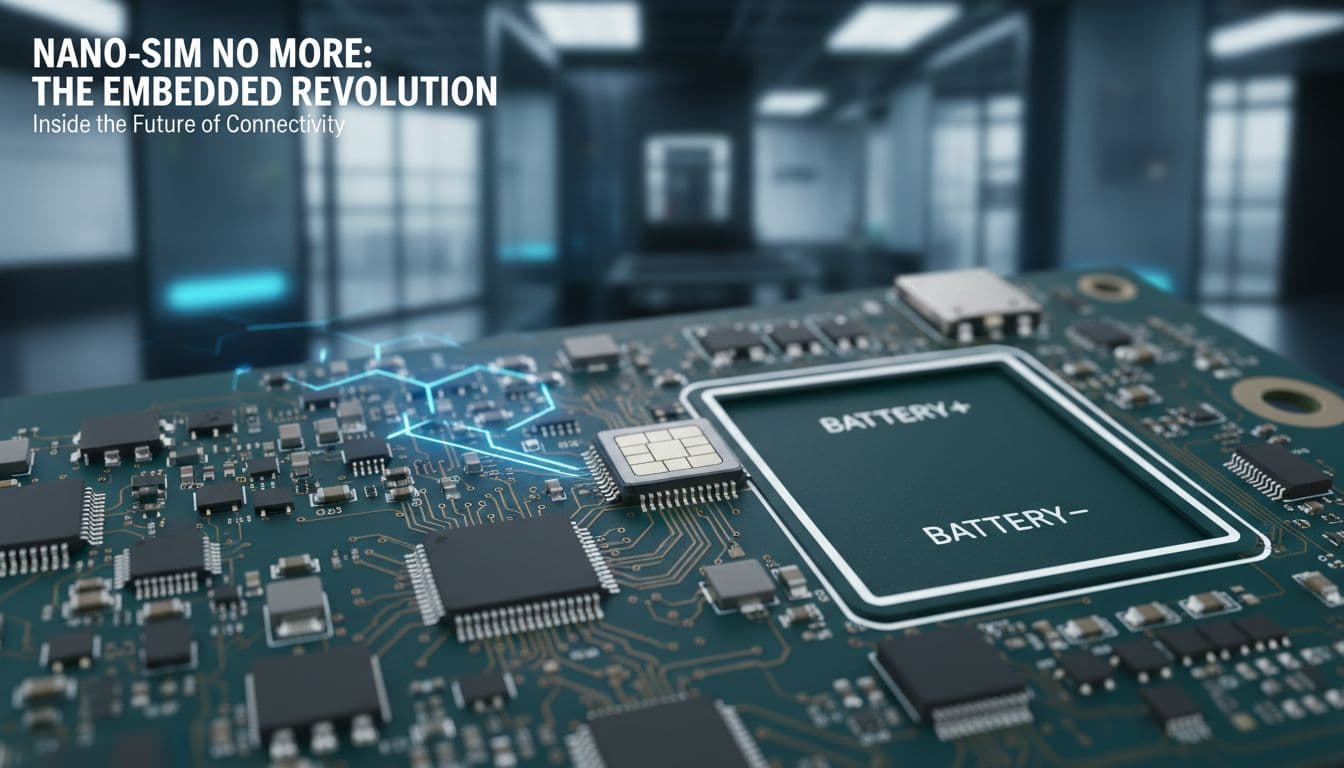
The current reality shows that mainstream, premium devices are already abandoning the physical slot. Right now, approximately 70% to 80% of all new high-end smartphones include eSIM capability. This is not a slow creep; it is a full industry decision based on engineering efficiency. For the premium segment, the physical SIM card is functionally deprecated hardware, even if the capability remains available on budget models for now.
eSIM Adoption by Phone Manufacturers
Top-tier phone makers like Apple, Samsung, and Google are the primary conductors of the movement to phase out the physical tray. They are doing this because moving to an eSIM frees up valuable real estate inside the device. That space is precious. Every millimeter matters when engineers are trying to fit in larger batteries or complex, high-performance cooling systems for powerful processors.
When you remove the SIM tray structure, which includes the plastic tray, the mechanical housing, and the necessary space for manual insertion, you gain significant room. This physical freeing of space directly translates to better hardware performance. For example, removing the slot allows manufacturers to improve water resistance ratings because they eliminate a potential ingress point for moisture and dust.
The hardware integration offers several distinct design advantages:
- Battery Life Gains: More room allows for a slightly larger battery cell, leading to longer screen-on time, which is the most important metric for most users.
- Component Density: It permits a denser layout for internal hardware, helping keep the overall phone profile slim while boosting internal power.
- Durability Improvement: Fewer mechanical parts mean fewer potential points of failure, making the device inherently more robust.
Apple’s move to eSIM-only iPhones in the United States is the clearest signal of this trend. They essentially declared the physical card obsolete for their primary market. If you are looking at the newest Pixel or Galaxy flagship, you will see that while many still retain a physical slot for broad compatibility, the eSIM profile is the priority for network registration. These companies are betting on the massive benefits that digital provisioning offers to their supply chains and the user experience.
Carrier Push Toward Digital Provisioning
Mobile carriers are enthusiastic about this digital migration, and their motivation is rooted deeply in economics and logistics. Carriers need to manufacture, store, track, and distribute billions of tiny pieces of plastic globally, which is an enormous overhead. Every time a customer signs up, changes carriers, or gets a replacement, there is a physical cost associated with that transaction.
Digital activation eliminates nearly all of that friction and expense. It shifts the cost center from physical inventory management to secure digital distribution, which is much cleaner. This is why carriers actively promote eSIM activation; every digital setup is a saving that multiplies across millions of subscribers.
The operational advantages for carriers are substantial:
- Reduced Fulfillment Costs: No more printing, packaging, or shipping plastic cards to retail locations or directly to customers.
- Faster Customer Onboarding: Activation happens instantly upon purchase or device setup, eliminating delays caused by waiting for physical mail delivery.
- Simplified Inventory: Carriers do not have to manage stock for multiple sizes since the eSIM is universal hardware.
This carrier preference ensures that even if a manufacturer includes a physical slot for backward compatibility, the path of least resistance for activation will always be the digital one. For travelers, this means that booking a plan for a destination often works better with providers who specialize in digital delivery. If you are preparing for a trip, checking out the benefits of eSIMs for travel is a good first step toward a simpler transit experience.
Travel and Roaming Pain Points Driving Change
The travel experience is where the physical SIM card really shows its age. Think of the classic airport arrival experience. You land, you drag your luggage, and then you enter a chaotic queue at a small kiosk just to buy a temporary piece of plastic so you can use maps to find your hotel. It is an irritating, time-consuming ritual that few enjoy.
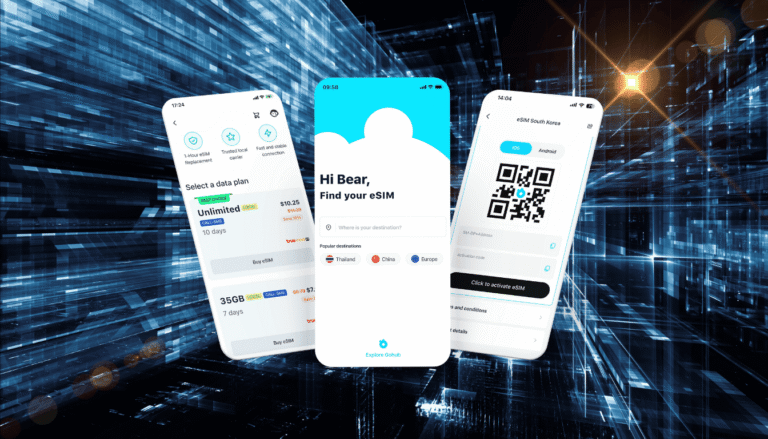
The eSIM dissolves that entire frustrating process. Instead of hunting for a physical location, you can complete the entire setup before you even leave your departure gate. You install the profile, toggle it on when you land, and get immediate connectivity. It is a massive quality-of-life improvement for any globetrotter.
Several common frustrations are pushing travelers toward digital solutions:
- Airport Chaos: The long lines and sometimes unclear pricing structures at physical airport kiosks are prime targets for obsolescence.
- The Lost Card Risk: Tiny SIM cards are infamous for getting misplaced, damaged, or forgotten in an old phone. An embedded chip cannot be lost.
- Maintaining Home Service: With an eSIM, travelers can easily keep their primary physical SIM active for essential calls or two-factor authentication texts while using a travel eSIM for data.
If you are exploring how to make your next international trip simpler, understanding the setup process for these digital profiles is key. For a deep dive into common questions you might have before making the switch, reviewing a guide to top eSIM FAQs for holiday planning can clear up any lingering doubts about compatibility or activation.
Where Physical SIM Cards Still Dominate Today
Look, while the premium smartphone market is essentially sprinting toward an eSIM-only future, we can’t pretend every phone on the planet is brand new or sold in a major Western market. The reality is that the physical SIM card, that tried-and-true piece of plastic, still holds significant territory for very practical, cost-driven reasons. We have to acknowledge the parts of the mobile ecosystem that operate on different timelines and budgets, and right now, that means accepting the plastic tray isn’t going anywhere yet. It’s about economics, infrastructure readiness, and specific enterprise needs that value tactile hardware over digital elegance. To fully grasp when you might still need to carry a paperclip, we must look closely at these three main bastions of physical SIM survival.
Budget and Entry-Level Phones
If you are looking for a phone that costs under $200, you are probably not getting an eSIM slot, and that’s purely down to the bottom line—the manufacturing cost. To me, this is the single biggest factor keeping the physical SIM alive right now. Every single component inside a smartphone adds to the final retail price, and manufacturers of low-cost devices have to make extremely tight calculations on every part they include.
Adding the hardware necessary to support an eSIM, that tiny, permanent chip, plus the necessary supporting antenna and motherboard modifications, introduces an extra expense. For a high-end flagship phone, this extra cost is negligible. For a budget model where margins are razor thin, however, that added complexity, even if it is just a few dollars in parts and assembly time, becomes a non-starter. They keep the inexpensive plastic SIM tray because it is a known, cheap quantity.
The plastic tray wins in the budget segment for several key reasons:
- Part Cost Consideration: The traditional SIM tray assembly is extremely cheap to source and install on the production line, representing an established, low-overhead solution.
- Manufacturing Simplicity: Factories that produce millions of budget devices daily are optimized for older assembly lines; updating them for new integrated hardware requires capital investment they avoid when possible.
- Market Expectation: In developing markets where budget phones are dominant, consumers often expect the ability to physically swap cards between different devices or share one phone among family members.
In fact, current data suggests that only about 15% to 20% of budget models sold today include eSIM capability, meaning the vast majority still rely on that physical insertion point. This trend is changing slowly as component costs drop and global pressure mounts, but for now, if you’re buying entry-level, you’re probably still getting the plastic experience. You are paying for budget-friendly performance, and that often means skipping premium internal features like integrated digital SIMs.
Developing Markets and Local Carriers
The story changes entirely when we look away from major metropolitan centers and toward regions where essential connectivity is often treated as a commodity, not a luxury feature. Think about many parts of Southeast Asia or large swathes of the African continent where connectivity is still evolving rapidly. In these areas, the physical SIM card isn’t just a fallback; it’s the established, preferred, and most accessible method of service provisioning.
Swapping a local physical SIM card is a daily or weekly habit for many people there, especially those moving between different regional towers or switching to the cheapest available daily data package. This practice is completely ingrained in the local mobile culture. Trying to introduce a fully digital solution, like an eSIM that requires a compatible phone and a stable Wi-Fi connection for download, faces significant adoption barriers, which local carriers are not yet ready to overcome universally.
The reliance on physical SIMs in these areas is supported by local infrastructure realities:
- Immediate Accessibility: A customer can walk into almost any small shop, purchase a cheap starter pack with a physical SIM already inserted, and be online within minutes.
- Registration Hurdles: In many nations, registering a new mobile number is tied to physical identification, and managing this process is often simpler for local carriers when dealing with physically verifiable SIM cards.
- Device Pervasiveness: While high-end phones are present, the majority of the mobile fleet connecting to networks in these regions are older models that simply lack the required eSIM hardware entirely.
For travelers heading into these areas, this means eSIM convenience doesn’t always translate easily. While you might find a top-tier travel eSIM available, if you plan on staying long enough, obtaining a local physical SIM often remains the smoothest path to secure, cost-effective service. It’s a behavioral and infrastructural dependency that technology alone cannot instantly dissolve.
Enterprise, Industrial, and IoT Use Cases
Beyond consumer phones, there is a massive amount of hardware out in the world that keeps critical industries running, and this hardware often has zero interest in adopting the latest smartphone convenience features. I am talking about everything from fleet management trackers bolted into trucks to remote environmental sensors and older industrial monitoring equipment. For these applications, the physical SIM card remains the standard, and honestly, it often makes more sense for the businesses involved.
Industrial deployments prioritize ruggedness, ease of maintenance, and broad compatibility over everything else. When a piece of machinery tucked away in a remote utility shed needs new connectivity, a field technician needs to be able to quickly pull out one physical card and slot in another without needing specialized software or a Wi-Fi connection to provision a profile. The mechanical nature of the physical SIM is actually an asset here, providing a clear, external point of contact for network access.
Consider the professional environments where physical SIMs still rule:
- Vehicle Telematics and Fleet Tracking: Devices installed deep within commercial vehicles often use standard, easily swapped physical SIMs configured specifically for data usage across the fleet.
- Industrial IoT Devices: Equipment used in construction, agriculture, or remote monitoring needs dependable hardware connections. The physical card reduces complexity when dealing with devices that might be powered on for years without a full system reboot.
- Point-of-Sale (POS) Systems: Many older or smaller retail systems use physical SIMs for their backup internet connections. Reliability and quick replacement without complex IT intervention are the key design factors here.
If a piece of hardware is designed to operate for ten years in harsh conditions, manufacturers will almost always stick with the oldest, most proven hardware interface available, and that interface is the physical SIM tray. While the Internet of Things (IoT) sector is exploring new dedicated integrated SIM standards, the current installed base is overwhelmingly physical. These industrial applications are not upgrading on the same short cycle as consumers, giving the plastic card a very long tail of continued relevance. If you are balancing personal and professional needs on a trip, managing eSIM and physical SIM cards at the same time is often the best compromise to handle these legacy requirements while enjoying modern digital data.
The Real Timeline for Physical SIM Decline
The decline of the physical SIM card feels like it’s happening quickly if you are always buying the newest flagship phone, but the actual process of complete obsolescence is a slow fade. Think of it like vinyl records or physical photo albums; they stick around in certain circles long after the mainstream has moved on. The replacement isn’t a sudden, universal switch-off; it is a phased transition driven by manufacturing decisions, carrier policies, and consumer behavior across different markets. To really understand when you might need to use that tiny paperclip forever, we need to map out the next decade, watching the adoption curve move from premium devices down to the cheapest models. It really comes down to technology meeting logistics, and right now, the logistics of physical distribution are losing the battle against digital convenience.
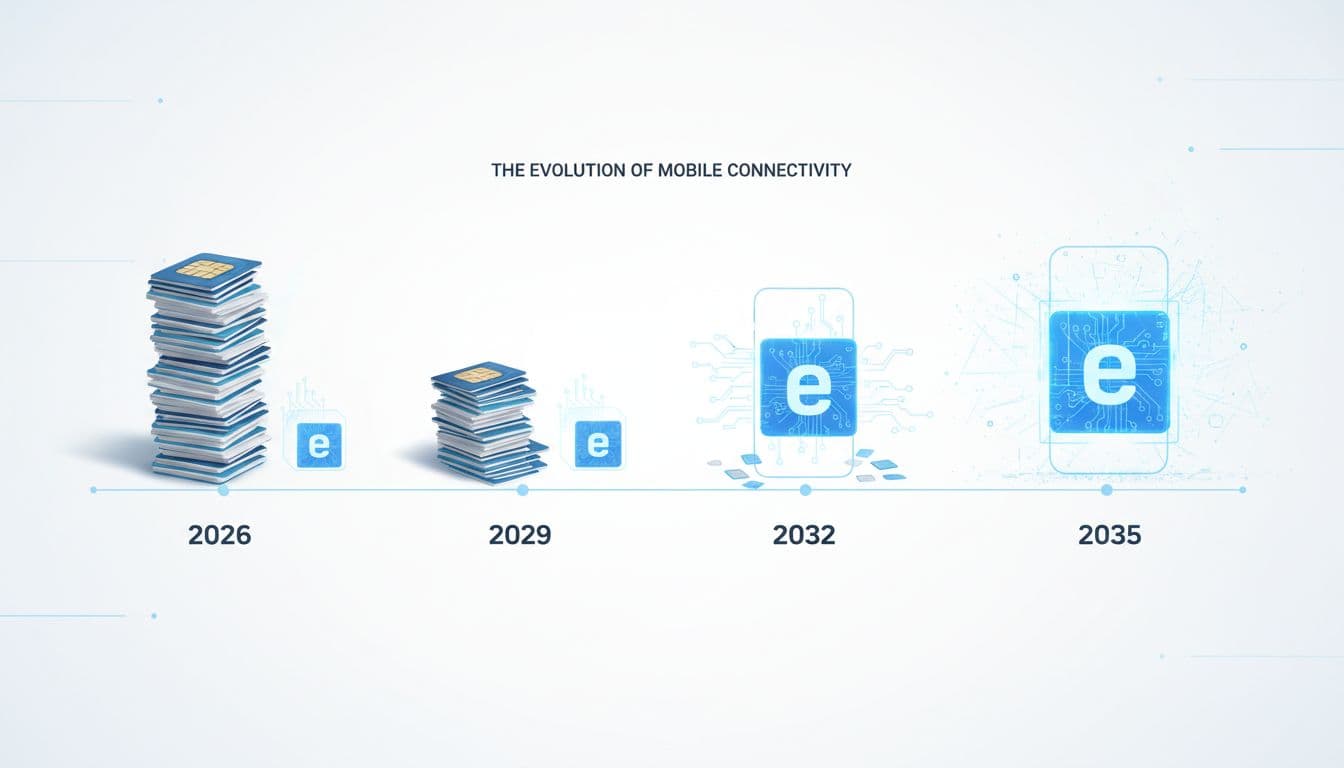
The reality of the change in early 2026 shows eSIM technology maturing rapidly. Current reports indicate that by the first quarter of 2026, 85% to 90% of all new flagship and mid-range smartphones sold worldwide include the necessary hardware for eSIM connectivity. This heavy inclusion by major manufacturers, particularly Apple’s move to eSIM-only models in key markets, means that for the high-end segment, the physical card is functionally optional hardware today. However, when looking across the entire global smartphone market, including budget devices, the overall adoption sits closer to 60% to 70%, showing the uneven global rollout. This disparity creates distinct phases for the physical card’s survival; it will exit the premium market first, linger in the mid-range, and die last in the budget tier.
Short Term: What Changes in the Next Few Years
Between 2026 and 2027, the removal of the physical SIM tray transitions from a rare feature on flagships to the expected standard for any upper-mid-range or premium device you buy. For consumers, this means that if you purchase a new high-cost phone in North America or Western Europe, it’s highly likely to be an eSIM-only model; there just won’t be a slot for that plastic anymore. This short-term window finalizes the hardware segmentation we’ve seen developing: premium phone buyers move fully digital, while budget manufacturers hang onto the cheaper tray because they prioritize cost savings over advanced features.
We can look at the primary drivers making this 2026-2027 shift inevitable for the upper market:
- Component Consolidation: Manufacturers continue to strip out any part that requires a physical cutout in the phone casing, since every hole is a point of potential failure for water resistance and durability.
- Carrier Mandates: Major carriers in developed nations increasingly stop distributing physical SIMs altogether. If they don’t sell you plastic, you can’t use it.
- Travel Experience: As more travelers successfully use eSIMs for rapid, on-demand connectivity, the frustration of physical SIM installation for short trips becomes an outdated narrative. If you’ve already found an effective way to stay connected abroad, you probably won’t want to revert to the old way.
The key change here is the industry consensus solidifying around the embedded SIM as the primary, almost exclusive, method for authenticating a device on premium carrier networks. While dual-SIM support remains, it will increasingly mean one physical slot or two digital profiles, but rarely two physical slots in new designs.
Mid Term: When eSIM Becomes the Default
By the year 2030, the term “eSIM” stops sounding like advanced technology and simply becomes the default method for nearly all global mobile carriers. This is the inflection point where carriers aggressively enforce eSIM-first policies, making life difficult, though not impossible, for anyone trying to use older, physical-SIM-only hardware. It’s an economic reality for them; managing the logistics of billions of physical cards worldwide is simply too expensive when digital provisioning provides superior control and reduced overhead. Carriers want every activation to happen instantly via software, not through a physical retail interaction.
During this mid-term period, we see the following trends solidify:
- Carrier Decommissioning: Many carriers complete the shutdown of older 2G/3G networks, which often supported older SIM types, forcing customers onto newer, eSIM-compatible hardware to maintain service quality.
- Universal Standards: The technical standards for eSIM provisioning become so robust and widely supported that even regional carriers in smaller markets can adopt them without major infrastructure overhauls.
- New Device Market Saturation: Almost every new phone produced in bulk, even those targeting emerging middle-income demographics, will include eSIM capability alongside potentially one legacy physical slot, if that. Frankly, buying a new phone that only accepts physical SIMs by 2030 will be rare.
For travelers, this means planning around the eSIM becomes the default expectation, not the special case. Booking international data plans becomes entirely app-based, making the process instantaneous, regardless of the time zone you land in. If you look at how quickly technologies like mobile payments took over, this timeline for carrier adoption feels very familiar. For example, if you are curious about the best options for international use, reviewing a SIM vs Nano SIM vs eSIM comparison will show you just how far ahead the digital option is by this point.
Long Term: Where Physical SIMs Still Survive
Even as the global mobile phone market settles into an eSIM standard by 2030, physical SIM cards are unlikely to completely vanish for several decades. The physical card will persist in a legacy support role, much like how landline phones still exist long after mobile phones became dominant. This long tail of physical SIM survival will be tied less to consumer electronics and more to industrial, remote, or highly specialized connectivity needs where hardware dependency is a feature, not a flaw. These environments value proven, hands-on compatibility above all else.
The physical SIM card finds its persistence in three main sectors:
- Legacy Industrial Equipment: Massive IoT deployments, fixed-line backup systems, and older fleet management hardware installed years ago are built to last a decade or more and will continue using the physical format until they are physically replaced.
- Remote or Disaster Relief Zones: In areas where digital infrastructure is unreliable, a physical SIM is the easiest item for relief workers to carry and swap between compatible, yet non-smart, communication devices.
- Extreme Budget Devices: Manufacturers in very low-cost markets may continue producing basic feature phones for the next 15 to 20 years that only support plastic SIMs.
What consumers need to understand is that the physical SIM will transition from being a standard feature to a specialized connectivity item. You likely won’t see it in a new phone sold in a mainstream store, but technicians in the field will keep a handful of plastic cards on hand for those rare instances when you need non-digital access. It is a similar role to carrying a spare tire in a modern car. If you are planning complex trips that might involve connecting to specialized or older networks, researching staying connected while traveling in Taiwan can illustrate how readily physical cards are available even in modern tourist hubs for those who prefer them.
eSIM-Only Phones and What They Signal
The move toward phones without physical SIM card trays is not a marketing gimmick; it signals a fundamental architectural shift in mobile hardware driven by efficiency and density. When manufacturers drop the traditional SIM slot, they aren’t just catering to travelers who love digital plans; they are making serious engineering trade-offs that directly benefit the performance and durability of the device you hold every day. To me, this is about maximizing every available millimeter inside a very constrained space. That tiny mechanical component, required for decades, has become a liability, and the industry is finally cleaning house.
Why SIM Trays Are Being Removed
The primary motivation for removing the physical SIM tray boils down to maximizing the internal component layout where space is extremely limited. Engineers are constantly playing a game of Tetris; every slot or tray system takes up real estate that could be used for more valuable hardware. When that tray is gone, designers gain immediate, tangible advantages that translate directly into better user features and device longevity. It’s a no-brainer trade-off at the high end of the market right now.
These engineering benefits create a cascade of improvements we can all appreciate:
- Better Water Resistance: The SIM tray requires a dedicated, moving seal to keep out liquids and debris. Removing the tray eliminates that physical opening, allowing manufacturers to create a more robust, one-piece chassis that better secures the internal electronics against exposure. This is a huge win for everyday resilience.
- Thinner Device Profiles: Even a few millimeters saved by removing the depth required for the tray assembly allows the overall phone to be slimmer. While some makers might use that space for a slightly thicker battery, reducing the overall footprint is a huge design goal that the SIM tray actively fights against.
- Increased Internal Room for Hardware: This is the big one. The space previously dedicated to the plastic tray structure, the microscopic metal pins, and the release mechanism can now house larger batteries, more advanced cooling systems for powerful processors, or complex camera modules. Think of it as reclaiming valuable commercial property within the phone’s shell.
For example, ditching the physical slot often lets a manufacturer add just 5% or more battery capacity without increasing the phone’s physical size, which users notice immediately in daily usage. It’s a direct path to extending screen-on time by optimizing the layout, which is perhaps the most sought-after hardware improvement today. If you’re interested in seeing which current models have already made this leap, checking a global list of eSIM compatible phones can show you which flagships have already prioritized this internal space saving.
Downsides for Repairs, Transfers, and Emergencies
While the design benefits are clear and compelling for the manufacturer, being overly enthusiastic about removing physical access points creates very real headaches for end-users when unexpected issues arise. If you’re someone who likes to tinker, reuse hardware, or simply expects tech to survive accidental damage, the eSIM-only design presents a serious friction point. The physical SIM card, however clumsy, provided a universal, carrier-agnostic way to move a phone number or restore service quickly.
The biggest, most nerve-wracking issue arises when the phone itself becomes physically unusable through hard damage. Imagine smashing your screen so badly that you can’t interact with the display at all. If your primary line is on an eSIM, you’re effectively locked out of that number until you can get the screen replaced or buy a brand-new device just to receive the activation confirmation code. It’s a classic hardware catch-22.
The key risks associated with a fully digital SIM setup include:
- Unusable Screen Transfer: If the screen is shattered or the phone is unresponsive, you cannot easily access the settings to download, transfer, or reactivate your mobile profile onto a replacement device immediately. You need a working display to manage the digital certificate.
- Repair Downtime: Repairing an eSIM-only phone usually means the technician has to work with the embedded chip, which can sometimes complicate swaps or require specialized carrier involvement that delays service restoration compared to just swapping a physical card.
- Loss of Immediate Portability: The ability to pop a physical SIM from an old phone into a new, temporary backup phone during travel or repair is lost. A physical card offers true plug-and-play mobility between devices, old or new, that software provisioning cannot match instantly.
This dependency on a functional screen and software interface is why some business segments still favor the tactile reliability of plastic. For a road warrior who might need to swap a data card between a phone and a rugged tablet mid-trip, the physical SIM is a more straightforward tool. It’s a reliability trade-off: manufacturers gain internal space and water resistance, but consumers sacrifice a simple, physical failsafe for number transferability during a crisis. This is a major point to weigh if you’re considering switching from a physical SIM to a fully digital setup, especially if you’re looking at budget options where hardware support might be less robust. Interestingly, many travelers find that by using two phones—one for their main line and a cheap secondary device for their travel eSIM—they mitigate this very risk; you can see which models are best suited for this use case in a guide on affordable eSIM compatible smartphones.
What This Shift Means for Travelers
The transition toward a digital-focused mobile experience is fundamentally changing how we plan and experience international journeys. To me, this is one of the most exciting shifts in travel tech because it removes a massive layer of logistical friction that has plagued globetrotters for decades. We are moving away from a world of physical limitations and toward a “pre-trip” digital mindset where connectivity is just another item on your digital checklist, right next to your airline boarding pass and hotel confirmation. This means your phone becomes a more powerful, flexible tool that adapts to your location without you ever needing to touch a paperclip or find a specialized electronics shop.
No More Airport SIM Counters as a Backup
That exhausted ritual of landing after a long-haul flight and immediately hunting for a brightly lit kiosk in the arrivals hall is rapidly becoming a thing of the past. In my book, those airport SIM counters have always been a bit of a gamble; you often face long queues, inflated “tourist” pricing, and the pressure of choosing a plan while jet-lagged. The shift to digital-only means you handle everything from the comfort of your departure gate or even your living room before you even leave for the airport.
By moving to a “pre-trip” digital download model, the entire experience becomes curated and predictable. You aren’t relegated to whatever local carrier happens to have a booth at the airport; instead, you can compare the best eSIM for international travel options based on actual user reviews and data performance.
This digital-first approach offers several immediate benefits for the modern traveler:
- Instant Arrival Connectivity: Your phone connects to the local network the second the wheels touch the tarmac, allowing you to call a ride-share or check maps immediately.
- Price Transparency: You see the full cost, data limits, and expiration dates upfront in an app, avoiding the hidden fees or upsells common at physical kiosks.
- Security and Privacy: You don’t have to hand over your physical passport to a stranger at a booth for photocopying, a common requirement for physical SIM registration in many countries.
Ultimately, the smartphone is evolving into a self-provisioning device. You no longer need a middleman in a physical booth to grant you access to the local web. It’s a cleaner, faster, and more professional way to manage your data, especially if you are looking for the cheapest eSIM for USA travel or other high-demand destinations where airport prices are notoriously steep.
Easier Multi-Country Travel With Fewer Swaps
If you have ever done a multi-city tour through Europe or Southeast Asia, you know the headache of maintaining a small plastic baggie filled with tiny SIM cards for every country. It is a recipe for disaster and lost hardware. The move to digital profiles solves this elegantly by allowing a single device to store anywhere from 5 to 10 digital profiles simultaneously. Crossing a border now feels much more like a software update than a hardware surgery.
I believe the real “magic” happens when you move between countries. Most modern smartphones allow you to keep your primary line active for essential texts while toggling between various travel profiles with a few taps in your settings menu. You don’t have to worry about where you put that tiny metal tool because you never need to open the side of your phone.
Consider how this simplifies complex itineraries:
- Seamless Border Crossing: As you take a train from London to Paris, you simply go into your settings and switch from your UK profile to your French profile in seconds.
- Regional Coverage Mastery: Instead of buying a new card in every city, you can utilize a best prepaid global eSIM that covers dozens of countries under a single digital umbrella.
- Emergency Redundancy: If one local network has poor coverage in a remote area, you can instantly purchase and download a secondary profile from a different carrier to get back online.
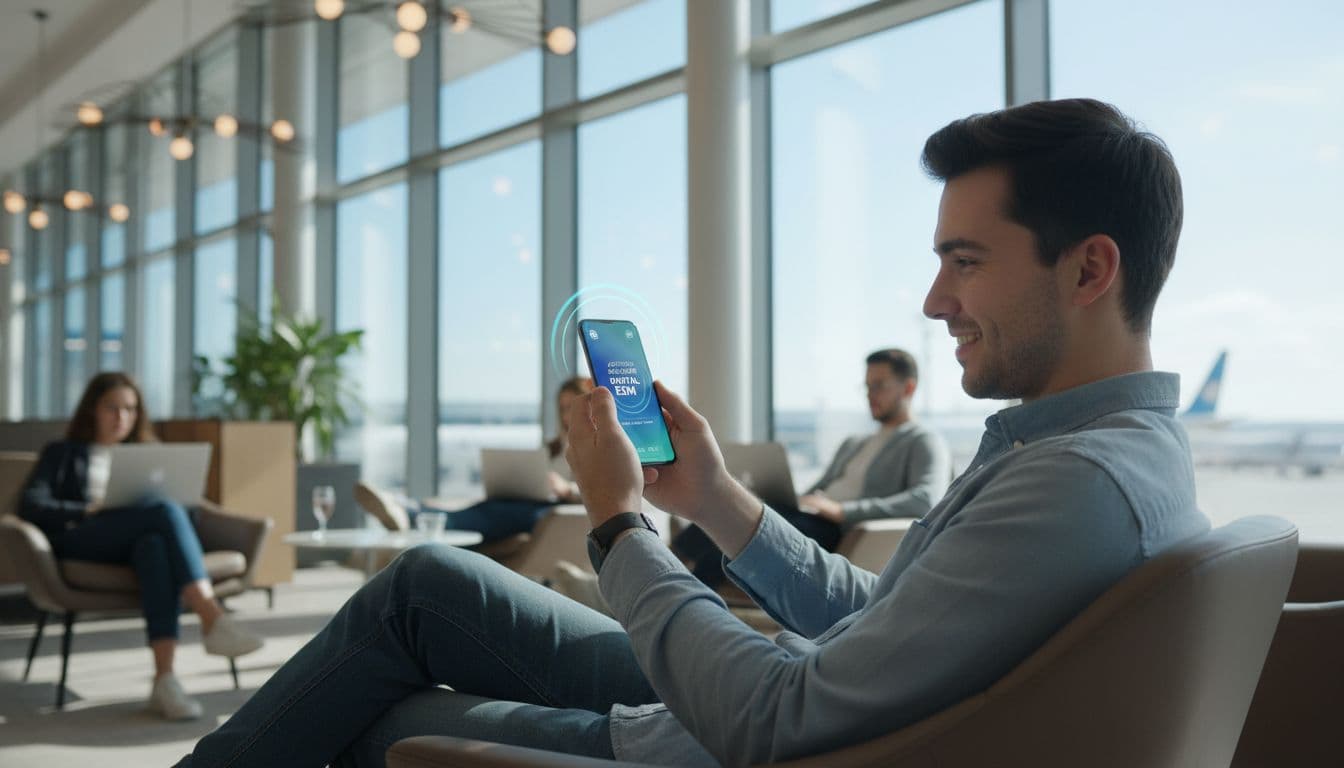
This flexibility is a total no-brainer for digital nomads or frequent flyers who value their time. The ability to manage your residency on various global networks through a single user interface on your screen makes the world feel smaller and much more accessible. You are no longer tethered to a single piece of plastic; you are tethered to the cloud, and that is a much more resilient place to be.
What Physical SIM Cards Still Do Better
While the industry is clearly moving toward a digital-only future, physical SIM cards remain an incredibly reliable piece of hardware that offers distinct advantages in specific scenarios. To me, the beauty of the physical SIM lies in its tactile simplicity; it is a universal key to your mobile identity that does not rely on software menus or a working internet connection to function. In my book, we shouldn’t dismiss these plastic chips just yet, as they provide a level of physical control and cross-device compatibility that digital profiles currently struggle to match. If you are a traveler who values hardware-level reliability, understanding where the traditional card still wins is vital for your backup planning.
Easy Phone-to-Phone Transfers
The absolute biggest advantage of a physical SIM card is the ability to swap your service between devices in seconds with zero digital friction. If you have ever been in a situation where your primary phone suddenly dies, runs out of battery, or takes a nasty fall, you know the panic of being disconnected. With a physical card, you just pop it out of the dead phone and slide it into a spare or a friend’s device.
This process is entirely mechanical and requires no cellular data or Wi-Fi to complete. Because the authentication is stored on the chip itself, the network recognizes the “new” phone the moment the tray is closed. By 2026, even as top eSIM providers for 2025 make digital setups faster, they still cannot beat the “dead phone” scenario where you cannot even turn on the screen to export a digital profile.
The benefits of physical transfers include:
- Zero Connectivity Required: You do not need to log into an account, scan a QR code, or have an active internet connection to move your service to a new piece of hardware.
- Hardware Agnostic: A physical Nano SIM works in any phone with a slot, regardless of the brand or OS, making it the ultimate tool for emergency hardware swaps.
- Visual Verification: You can physically see and touch your service, which provides a level of certainty that your number is actually “in” the device you are holding.
Use in Older or Secondary Devices
Physical SIM cards are the reason those old “back-up” phones in your desk drawer remain useful today. Whether you are heading to a music festival where you don’t want to risk your $1,200 flagship or traveling to a remote area where theft is a concern, a cheap “dumb phone” or an older smartphone is a lifesaver. These older devices almost never support eSIM technology, meaning the plastic card is the only way to keep them connected.
To me, this backward compatibility is a major win for sustainability and practicality. You can keep a rugged, older device as a dedicated travel phone or a dedicated hotspot without having to worry about complex digital provisioning. In my experience, having a physical SIM in a secondary device provides a reliable “safety net” that allows you to leave your primary, expensive device safely tucked away while you explore high-risk or high-impact environments.
Consider the longevity benefits of physical cards:
- Legacy Support: Devices built before 2018 or 2019 are almost exclusively reliant on physical trays, so the plastic card keeps these perfectly functional tools from becoming electronic waste.
- Dedicated Hardware Tasks: You can easily keep a physical SIM in a standalone mobile hotspot (MiFi) or a tablet that lacks a sophisticated digital interface for managing eSIM profiles.
- Reliable Secondary Units: Using a cheap “burner” phone with a physical SIM is a no-brainer strategy for travelers who need a reliable way to stay reachable without risking their main hardware.
Physical SIM vs eSIM vs iSIM Explained Simply
The physical SIM card is a removable plastic chip, the eSIM is a permanent digital chip built into the phone, and the iSIM is an even smaller identity module integrated directly into the main processor. While they all serve the exact same purpose—identifying you to a cellular network so you can make calls and use data—the way they occupy space inside your device is vastly different. We are currently living through a massive architectural shift where the hardware is shrinking until it eventually becomes invisible. If you have ever struggled with a tiny metal pin to open a SIM tray, you are looking at a technology that is basically a dinosaur in a world moving toward total integration.
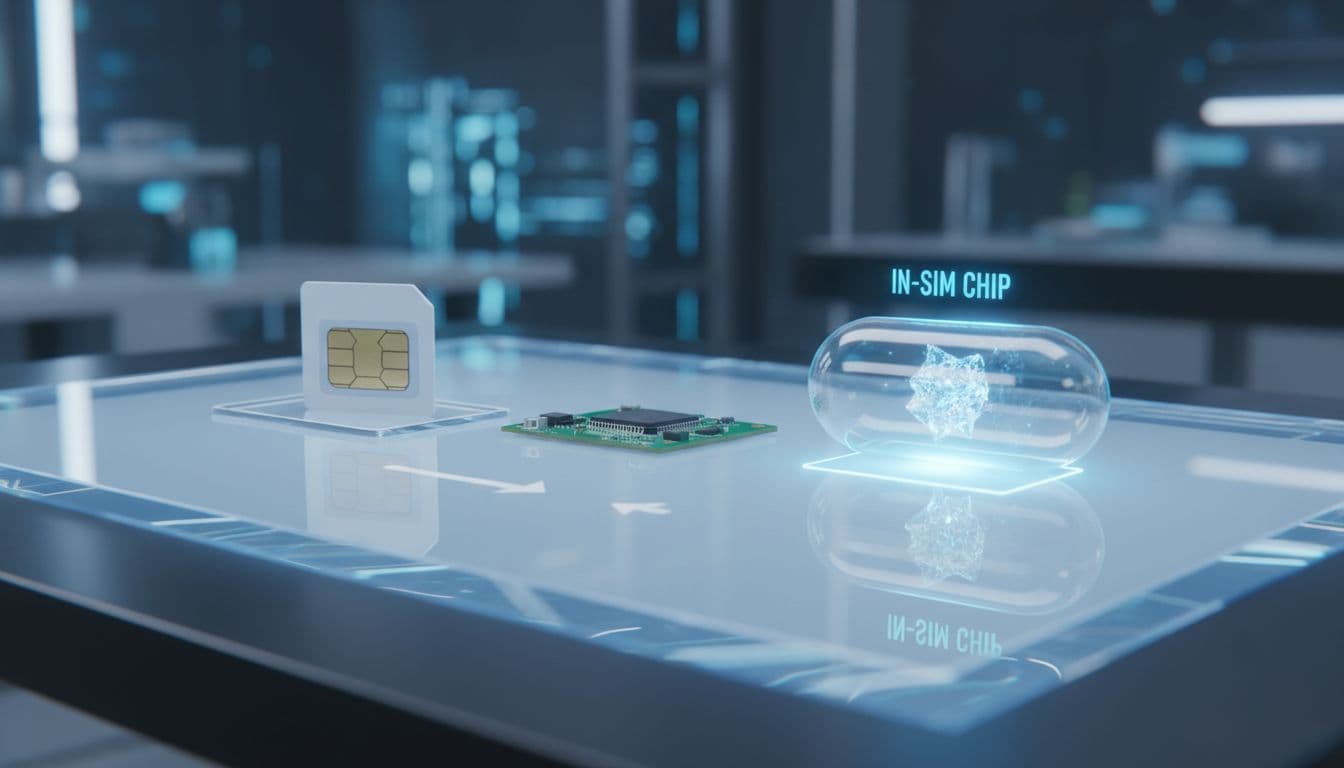
The Traditional Physical SIM Card
The physical SIM is the legacy standard that we have used for over thirty years. It consists of a piece of plastic with a silicon chip attached, which you must manually insert into a dedicated tray in your phone. To me, the physical SIM is the ultimate “old school” tool; it is tactile and reliable, but it is also bulky and inefficient for modern engineering. It requires a mechanical tray assembly that takes up a lot of room and creates a hole in the phone’s exterior.
Even though it’s aging, the physical SIM has a few specific traits:
- Manual Portability: You can move your service to any compatible phone just by physically moving the card.
- Hardware Dependency: If the card is lost or damaged, your service is effectively dead until you get a physical replacement.
- Three Sizes: It comes in Standard, Micro, and Nano sizes, though the Nano SIM is the modern standard for any phone made in the last decade.
The Embedded SIM or eSIM
The eSIM represents a massive leap forward because it removes the need for a removable card entirely. It is a tiny, permanent chip that is soldered onto the phone’s circuit board during manufacturing. You don’t “insert” an eSIM; you download a digital profile onto it. In my book, this is the gold standard for travelers because it allows you to store multiple carrier profiles on one device and switch between them in your settings.
The eSIM changes the game by offering:
- Space Efficiency: It is roughly 60 units smaller than a Nano SIM tray assembly, giving designers more room for batteries or better cooling.
- Remote Provisioning: You can activate a new plan instantly over the air without visiting a store.
- Superior Durability: Since there is no tray, there is one less way for water or dust to get inside your phone.
The Integrated SIM or iSIM
The iSIM is the newest evolution, and it is even more impressive than the eSIM. Instead of having its own dedicated chip on the motherboard, the identity module is built directly into the phone’s main processor (the Brain of the phone). This is incredibly cool because it eliminates the need for any separate SIM hardware at all. It is smaller, faster, and uses significantly less power than even an eSIM.
Here is why the iSIM matters for the future:
- Ultimate Miniaturization: By living inside the processor, it saves even more space than an eSIM, which is critical for smartwatches and tiny IoT sensors.
- Improved Security: Because it is part of the main processor, it benefits from the high-level security features built into the phone’s “secure enclave.”
- Lower Power Consumption: Since it doesn’t need its own separate power and data lines on the motherboard, it is much more efficient for battery life.
Comparison Table: SIM vs eSIM vs iSIM
This table breaks down the technical differences so you can see exactly how the hardware is evolving toward a more integrated future.
| Feature | Physical SIM | eSIM (Embedded) | iSIM (Integrated) |
|---|---|---|---|
| Physical Form | Removable Plastic Card | Permanent Chip on Board | Built into the Main CPU |
| Space Used | Large (includes tray) | Tiny (approx. 5×6 mm) | Virtually zero extra space |
| Activation | Manual Insertion | QR Code or App Download | Digital Remote Download |
| Durability | Vulnerable to loss/dirt | High (water resistant) | Ultra-High (integrated) |
| Best For | Older phones & legacy tech | Modern travelers & flagships | Wearables & Future Tech |
Which One Should You Care About?
Right now, the eSIM is the technology that matters most for your daily life and travel. While the iSIM is the future, it is currently mostly found in specialized industrial hardware and the very latest high-end processors. For any trip you are planning today, the eSIM is the tool that gives you the freedom to skip the airport kiosks and manage your data from your screen.
If you want to dive deeper into how this transition affects your specific hardware or pricing, you should check out a detailed Look at eSIM vs physical SIM cost to see where the real savings are. Moving to a digital profile isn’t just about being “high-tech” — it is about making your phone a more capable tool for the way we actually live and move across the globe today.
Common Myths About the End of Physical SIM Cards
The transition away from plastic chips has sparked plenty of rumors, but the reality is far more balanced than the “all-or-nothing” headlines suggest. While we are definitely moving toward a software-driven future, the infrastructure for mobile connectivity is deep and resistant to sudden, total shifts. Understanding the difference between industry trends and actual day-to-day requirements helps you plan better without the fear of being left without a signal.
“Travel Will Be Impossible Without eSIM”
Physical SIM slots are not vanishing overnight, and it is a total myth that you need an eSIM-only device to travel successfully in the modern era. In fact, most of the world operates on a hybrid model where dual-SIM technology bridges the gap between old and new. Even as manufacturers prioritize digital profiles, the vast majority of smartphones still ship with at least one physical tray to ensure they work in every corner of the globe.
To me, the “eSIM or bust” narrative ignores the current state of global hardware. Right now, phones sold without a physical SIM slot represent less than 5% of the total global market, largely limited to specific iPhone models sold in the United States. This means that if you are carrying any other brand or an iPhone purchased elsewhere, you still have the flexibility of using a physical card. Manufacturers use this hybrid approach as a massive safety net for users moving between advanced networks and developing regions.
Consider how these hybrid devices actually work for you on the road:
- Secondary Line Support: Most modern phones let you keep your primary physical SIM from home active in the slot while adding a travel eSIM via software.
- Universal Backup: Having a physical slot means that even if a digital activation fails, you can still walk into a local shop and buy a plastic card to get back online.
- Extended Transition: Industry experts expect the physical tray to remain a standard feature in many regions for at least another five to ten years to accommodate varied carrier readiness.
If you are worried about your upcoming trip, remember that your hardware likely gives you the best of both worlds. You can enjoy the convenience of digital setup without losing the tactile reliability of a backup plastic card. For those trying to figure out their specific data requirements before they fly, checking out a guide on how much data for travel is a smart way to match your plan to your actual usage regardless of the SIM format you choose.
The move toward digital is about adding options, not taking them away prematurely. You are in control of how you connect, and for the foreseeable future, you won’t be forced into a “digital only” corner unless you specifically choose a device that leads you there. In my book, having that physical slot as a fallback is a top-notch feature that provides peace of mind when you are exploring new territory.
Conclusion
Physical SIM cards are entering a long, slow exit as the world transitions toward a purely digital standard for mobile connectivity. While plastic chips will remain a necessary fallback in budget markets and specific industrial zones for another decade, they are no longer the primary choice for modern hardware or global travelers. The shift to eSIM and the upcoming rise of iSIM technology represent a permanent move toward device efficiency, better water resistance, and instant, software-based provisioning that makes physical trays look like relics from a bygone era.
To stay prepared for this changing reality, you should prioritize buying smartphones that support both physical and digital profiles to maximize your flexibility across different regions. Having the ability to activate your travel eSIM instantly while keeping a physical slot for local legacy networks is the smartest way to bridge the gap during this transition. Eventually, the metal SIM pin will disappear from our travel kits entirely, replaced by a world where connecting to a new network is as simple as a few taps on a screen.