Best eSIM For Asia Travel (Japan, Thailand, Vietnam, Korea)
Traveling across Asia is an incredible experience, but staying connected shouldn’t be a source of stress or high costs. An eSIM, or digital SIM card, is the modern solution for savvy travelers, allowing you to access local data networks without the hassle of physical cards. For a multi-country trip hitting Japan, Thailand, Vietnam, and Korea, choosing a regional Asia eSIM is the most efficient way to ensure you have a signal the moment you touch down. This approach eliminates the need to swap tiny pieces of plastic at every border while keeping your home number active for important texts.
In this guide, we’ll break down everything you need to know about mastering your mobile data abroad. We’ll cover specialized strategies for navigating different Asian networks, look at country-specific performance, and compare regional plans against global options. You’ll learn which providers offer the best 5G speeds, how to minimize network latency, and the easiest ways to handle activation. Whether you’re navigating the Tokyo subway or ordering street food in Bangkok, having a reliable best eSIM for Asia ensures you’re never truly lost.
Why Asia Travel Needs a Specialized eSIM Strategy
Traveling through Asia involves navigating some of the most sophisticated but fragmented mobile environments on the planet. While a global data plan sounds convenient, it often fails to account for the massive technical and regional differences between a high-tech hub like Tokyo and the rural landscapes of Northern Vietnam. A specialized strategy ensures you aren’t stuck with high latency, throttled speeds, or a complete lack of signal when you cross a border.
Managing Local Network Fragmentation Across Borders
Asia is not a digital monolith; each country operates on distinct infrastructure and frequency bands that can significantly impact your connection quality. In Japan, for instance, the government regulates spectrum strictly, meaning a generic global roaming profile might be deprioritized compared to a specialized eSIM that hooks directly into Docomo or SoftBank. Without a targeted approach, you risk spending half your trip on 3G speeds while the locals enjoy blazing-fast 5G.
A specialized strategy also solves the problem of “multi-hop” routing. Many cheap global eSIMs route your data back through a server in Europe or the US before it reaches your phone in Bangkok. This causes high latency, making simple tasks like booking a Grab ride or using Google Translate feel sluggish. By choosing an Asia-specific plan, your data stays closer to home, providing the snappy response times needed for real-time navigation.
Navigating The App-Centric Communication Culture
In most of Asia, a traditional phone number is becoming obsolete for travelers, but a high-speed data connection is more critical than ever. Whether you’re using Line in Thailand and Japan, Zalo in Vietnam, or KakaoTalk in Korea, these platforms are the lifeblood of local communication. A specialized eSIM strategy prioritizes high data caps over voice minutes, ensuring you have the bandwidth to handle video calls and photo uploads without hitting a wall.
Digital payments also drive the need for a robust data connection. Much of Southeast Asia has skipped credit cards in favor of QR-based payments like PromptPay or VNPay. If your connection drops in a small shop because your global roaming plan lost its “handshake” with the local tower, you might find yourself unable to pay for your meal. Specialized plans are built to maintain these local handshakes more reliably than broad, non-specific alternatives.
Cost Efficiency for Multi-Country Itineraries
Buying individual SIM cards in every country is a logistical nightmare that eats into your travel time and budget. A specialized regional eSIM allows you to maintain one digital profile while hopping from the neon streets of Seoul to the beaches of Phuket. This eliminates the “airport tax” often found when buying physical SIMs at arrival halls, which are frequently marked up by 30% or more for tourists.
To find the most reliable options for these varied environments, it is helpful to compare the best eSIM sites for 2025 to see which providers offer the best regional performance. Using a single regional plan also means you don’t have to re-verify your identity or register your passport multiple times, a common requirement for physical SIMs in countries like Thailand and Vietnam. It’s about buying back your time so you can focus on the experience rather than the settings menu on your phone.
Maximizing 5G Access in Leading Tech Hubs
Asia is home to some of the world’s fastest 5G networks, particularly in South Korea and Japan. However, not all eSIMs are created equal when it comes to accessing these top-tier speeds. Many “budget” global plans actually restrict users to 4G LTE/LTE+ even if 5G is available. A specialized strategy involves picking a provider with direct agreements with tier-one carriers like SK Telecom or Viettel.
- South Korea: Known for the highest 5G penetration; you want an eSIM that supports the n78 (3.5 GHz) band for peak performance.
- Japan: Requires specific compatibility with local bands to ensure “Deep Indoor” coverage in massive subway stations.
- Vietnam: Rapidly expanding 5G in Hanoi and Ho Chi Minh City; local carrier partnerships are vital for avoiding “dead zones” in high-rise areas.
What Makes the Best eSIM for Asia Travel
Finding the right eSIM for an Asian adventure requires looking past the flashy price tags and diving into the technical quality of the connection. The region is a patchwork of ultra-modern 5G hubs and developing networks, which means the “best” choice is the one that balances widespread coverage with high data priority. You want a plan that hooks into tier-one local carriers, ensuring you don’t get kicked to the back of the digital line when a cell tower in Seoul or Bangkok gets crowded.
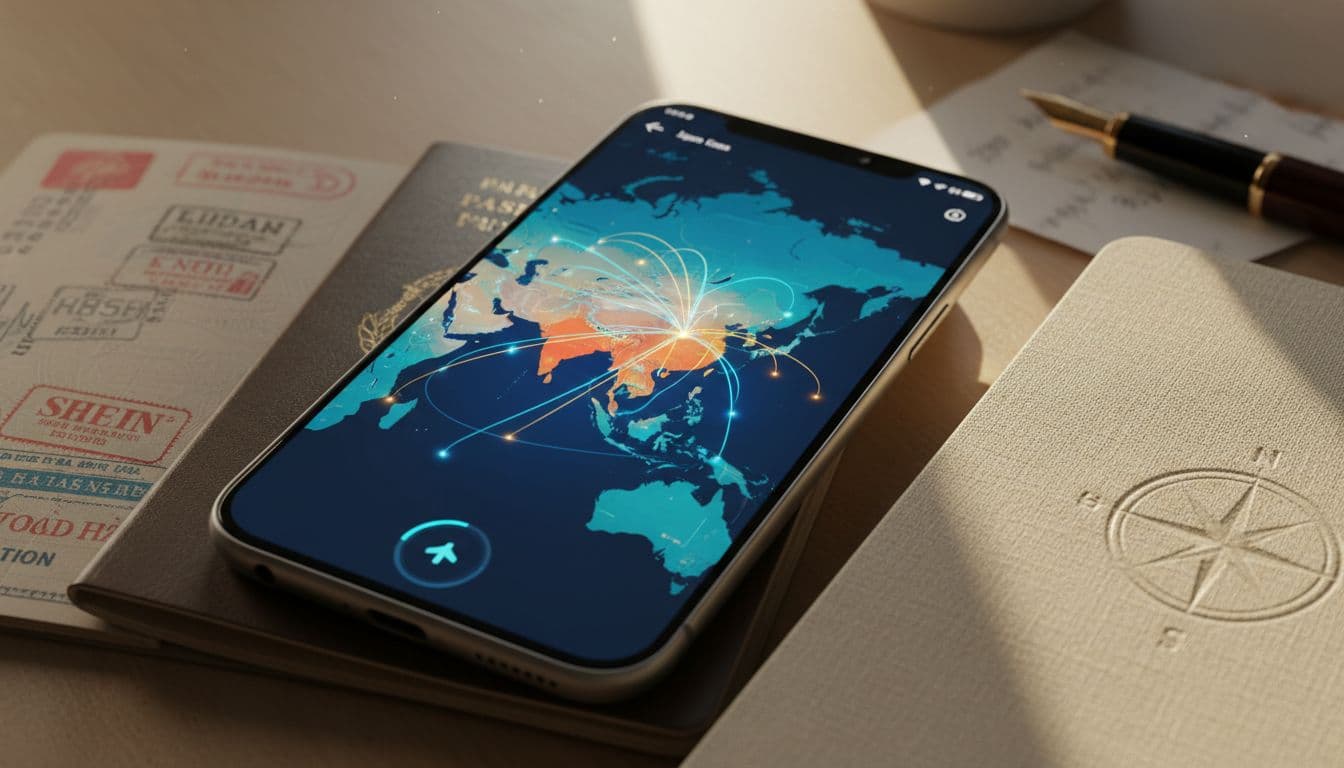
Seamless Switching Capability Across Borders
The hallmark of a premium regional eSIM is its ability to transition between countries without requiring any manual intervention from you. While many providers market “Asia” plans, some are effectively just a bundle of separate profiles. This forces you to dig through your settings and activate a new “SIM” every time you cross from Thailand into Vietnam, which is a massive headache when you are trying to find your hotel.
A truly top-notch provider offers a single-profile installation. You set it up once before you leave home, and as your plane touches down in a new country, the eSIM automatically negotiates with the local infrastructure to hand over your data session. This technical fluidity is a non-negotiable for anyone hopping between three or more countries on a single trip. If you are curious about how specific brands handle this, check out this guide on Airalo regional eSIM switching truth to see why seamless logic matters.
Direct Access To Tier One Local Carriers
Network quality in Asia is highly dependent on which local “pipe” your eSIM provider is renting. Budget-tier eSIMs often save money by routing your traffic through second-tier wholesale carriers, which results in slower speeds and frequent drops in rural areas. The best plans prioritize direct partnerships with national leaders such as NTT Docomo in Japan, SK Telecom in Korea, or Viettel in Vietnam.
Direct access usually includes 5G support by default, which is vital in tech-heavy cities. In places like Tokyo or Singapore, a 4G-only plan feels sluggish because the local infrastructure is optimized for 5G users. By ensuring your provider uses a primary local carrier, you get the best possible signal penetration inside shopping malls, underground subways, and crowded night markets where signal interference is common.
Transparent Identity Verification And Security
By 2026, many Asian governments are tightening regulations on mobile data, often requiring a “Know Your Customer” (KYC) check even for short-term tourist plans. The best eSIM providers have integrated this process directly into their apps, allowing you to upload your passport photo and perform a quick facial scan in seconds. This prevents your service from being cut off halfway through your trip due to registration failures.
Security also extends to how your data is handled. Reliable providers ensure your personal information is deleted shortly after your plan expires, complying with strict data privacy laws in regions like Singapore and Japan. Avoid any service that asks for sensitive information via unencrypted web forms or email; a reputable eSIM brand will always use a secure, app-based ecosystem for these mandatory security checks.
High Information Density For Data Heavy Apps
Travelers in Asia rely heavily on data-intensive apps for everything from video calls to real-time translation and high-definition navigation. A plan might look cheap, but if it has a low “Fair Usage Policy” (FUP) limit, your speed could drop to a crawl after using just 1GB in a day. The best eSIMs for Asia offer high daily caps or truly unlimited 5G data to support the modern traveler’s digital lifestyle.
| Feature | Premium Asia eSIM | Budget Global eSIM |
|---|---|---|
| Network Priority | High (Priority on Tier-1 Carriers) | Low (Deprioritized Roaming) |
| Latency | Low (Local Data Routing) | High (Routed through US/EU) |
| 5G Availability | Standard in Hub Cities | Often restricted to 4G LTE |
| Switching | Fully Automatic | Often Manual per Country |
Choosing the right plan ensures you don’t run out of “juice” while navigating the unblocked internet in China guide or streaming your journey to followers back home. Focus on “Cost per GB” rather than the total price; often, paying a few dollars more for 20GB of high-speed data is a much better value than a 5GB plan that leaves you stranded.
How eSIM Coverage Works In Japan, Thailand, Vietnam, And Korea
Getting your data sorted across these incredible Asian nations requires knowing that not all carriers—or countries—play by the same rules. In fact, coverage isn’t a one-size-fits-all situation, and what works perfectly in Seoul might confuse your phone in rural Thailand. We’re talking about highly sophisticated networks in some spots and rapidly updating infrastructure in others, so paying attention to the specific local partner is a no-brainer. This is where a specialized regional eSIM really shines, because the provider has already done the legwork to secure the best roaming agreements for you.
Japan eSIM Performance And Expectations
When you land in Japan, you want connection immediately, and frankly, you should expect top-tier performance; this country runs on precision, and their mobile networks follow suit. The good news is that high-speed 5G availability is extensive, particularly in the Tokyo, Osaka, and Nagoya corridors. If your eSIM is running on a reputable network, you’ll be streaming and downloading at speeds that rival many home connections worldwide.
What makes the setup easy for travelers is a major regulatory loophole, which to me, is a huge win. For data-only plans, Japanese carriers usually don’t require the intrusive identity requirements common elsewhere. You purchase the data plan, install the eSIM, and it just works; nobody is asking for passport scans just to use Google Maps. However, be aware that getting a true local Japanese phone number—one that starts with +81—is basically impossible for short-term tourists because that always requires ID verification. Stick to VoIP apps like WhatsApp or Line for chatting.
For example, if your provider partners with NTT Docomo, which is one of the three major players, you are set up for excellent nationwide coverage. You must remember that while the network is world-class, if you are using a shared regional plan, your data might be on a partner network that isn’t Docomo, which can sometimes mean slightly different performance, so check the fine print!
Thailand eSIM Coverage For Cities And Islands
Thailand is wonderful, but getting connected involves one mandatory administrative hurdle you absolutely cannot skip. Unlike Japan’s relaxed approach for data, the Thai government requires stringent registration for all SIM usage, even when using an eSIM profile. This means for your service to remain active, you must complete a registration process involving submitting a clear photo of your passport identification page and often a live selfie taken right at activation. If you miss this step, expect your signal to drop suddenly within 24 to 48 hours.
On the network side of things, you’re in good hands, especially in the main areas. AIS is consistently the top mover in terms of speed and widest coverage, often beating others both in the dense markets of Bangkok and out on popular tourist islands like Phuket or Koh Samui. Many of the best regional eSIM vendors offer unlimited data packages powered by AIS or the combined True/dtac powerhouse. I find unlimited plans particularly life-saving in Thailand, because sharing photos of that incredible street food will burn through a small data cap fast; you don’t want to be suddenly throttled mid-upload. If you are looking for reliable internet across the entire country, prioritize providers that explicitly mention AIS as their primary partner, as this usually ensures superior 4G and emerging 5G access throughout the region.
Vietnam eSIM Reliability And Speed Variability
Vietnam presents an interesting connection puzzle because its network quality varies significantly depending on where you are standing; it’s a country of dramatic contrasts. While Ho Chi Minh City and Hanoi offer phenomenal, cutting-edge speeds, venturing into less populated areas or mountainous regions can expose the variability in the network strength. You absolutely must factor in the Vietnamese regulatory environment, which is very firm about user authentication.
The key rule here is the strict 24-hour registration requirement for data services. Much like Thailand, the local authorities mandate ID registration for mobile connections, and if your eSIM provider doesn’t process this quickly upon arrival, your data connection will be cut, which is extremely irritating when you’re trying to find your hostel after a long flight. For sheer reach, especially if your itinerary includes travel outside the major hubs, look for providers that prioritize Viettel, as they typically maintain the most robust coverage in rural provinces. Vendors like Gigago, for instance, often focus on simplifying this often-clunky registration via their application interface, making the setup process much smoother than trying to deal with local shops. When scouting your plan, confirm that the plan allows for immediate activation and registration; otherwise, you are risking a service interruption right when you need to book that next train ticket.
South Korea Network Quality And 5G Reality
If you want to experience what true, mature 5G network quality feels like, South Korea is where you should focus your expectations; it’s arguably the gold standard for mobile performance globally. Speeds here are world-class, often hitting multi-gigabit rates under optimal circumstances. When choosing an eSIM for Korea, understand the core technical difference in what you are buying, because it directly impacts utility.
There’s a clear split based on identification: data-only plans are the traveler’s friend; they are super quick to activate, require no ID, and work instantly. These are perfect for navigation and social media browsing; you can treat it like prepaid Wi-Fi for your phone. However, if you want a plan that gives you a functional local Korean mobile number—which carriers often require for things like making restaurant reservations or booking specific local services that rely on SMS verification—you will be forced into the ID-required category. You must present your passport for these SMS-enabled plans.
The two dominant networks are SK Telecom and LG U+, with KT trailing slightly in some areas outside Seoul. If your eSIM doesn’t specify access to SK Telecom, you might be utilizing a smaller partner network, which could slightly impact the peak 5G speeds that Korea is famous for. Basically, for pure internet speed, an ID-free data plan is the easiest path, but remember that SMS functionality often comes with bureaucratic requirements.
Asia-Only eSIM vs Global eSIM Plans
Asia-Only eSIM plans are almost always superior to Global eSIM options for travelers visiting specific hubs like Japan, Thailand, Vietnam, and Korea. While a global plan offers the allure of universal coverage, it frequently sacrifices speed and cost-efficiency to maintain such a broad reach. For a traveler moving strictly within the Asian region, a specialized local or regional plan provides direct access to high-tier networks that global roaming profiles simply cannot match.
Choosing between a regional “Asia” bundle and a sweeping global plan comes down to one core factor: where your data is actually routed. Global plans often route traffic through distant servers in Europe or North America, which adds massive latency to every Google Maps search or Grab booking. Regional plans keep that data path much shorter, resulting in a snappier, more reliable user experience that feels like using a local SIM.
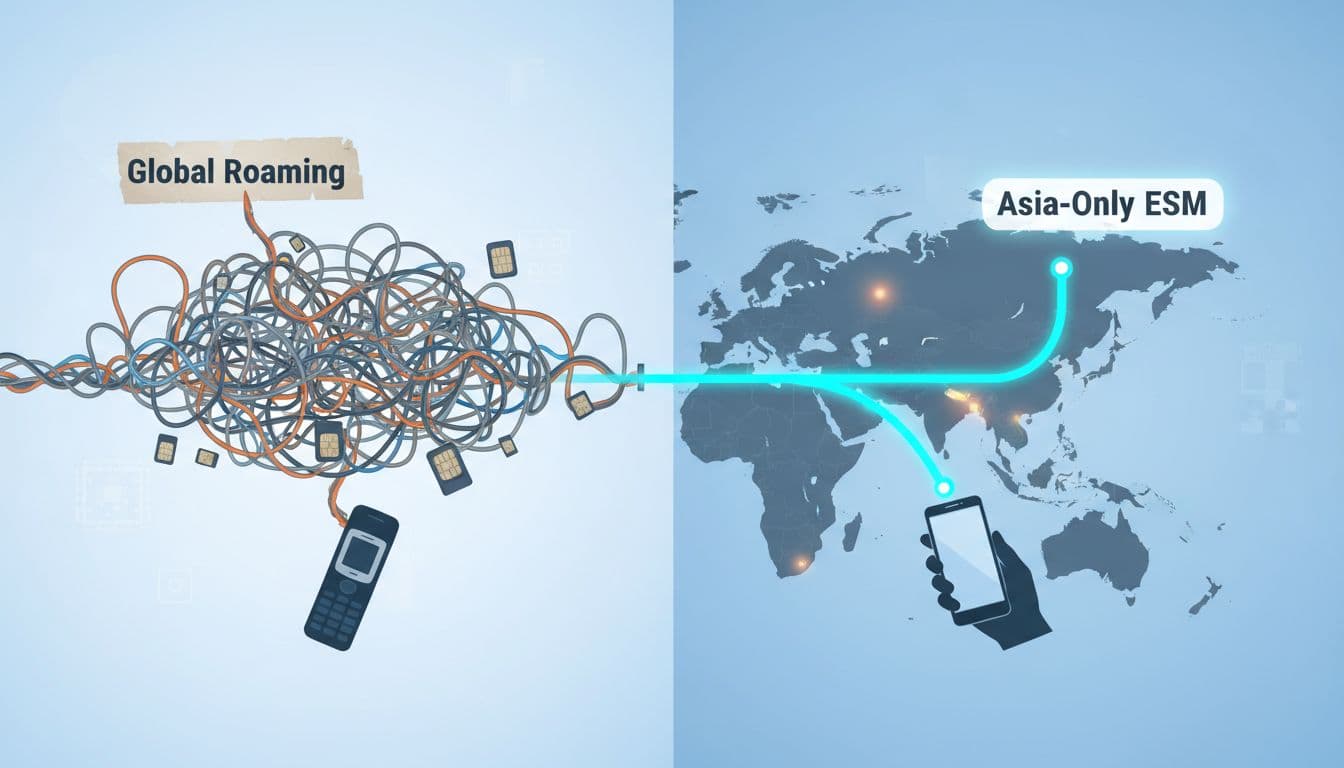
Cost Efficiency And Data Value
Regional Asia eSIMs offer significantly more data for your dollar compared to global alternatives. Because providers can negotiate lower wholesale rates with a focused group of Asian carriers, they pass those savings on to you. A global plan might charge $20 for 3GB that works everywhere, but an Asia-specific plan can often provide 10GB or more for the same price point, which is a total no-brainer if you don’t plan on leaving the continent.
When you look at the best eSIM for international travel guide, you will notice that value is highly dependent on regional density. If you are hopping between high-cost data markets like Japan and low-cost markets like Vietnam, a regional plan balances these costs out. Global plans tend to price themselves based on the most expensive country they cover, meaning you end up overpaying for data in countries where it should be cheap.
Latency And Network Priority
The technical backbone of your connection is much stronger on a regional plan. Global eSIMs are essentially “jack of all trades, master of none” solutions that often settle for second-tier roaming agreements to maintain a massive footprint. In contrast, an Asia-Only eSIM is built to prioritize the primary local carriers in the region, ensuring you aren’t stuck on a deprioritized 4G signal while everyone around you is enjoying 5G.
Lower latency is the hidden hero of a good travel experience. By using an Asia-only profile, your ping times stay low because the “handshake” between your phone and the internet happens at a nearby regional gateway. This is the difference between a video call that lags every three seconds and one that runs smoothly as you walk through a bustling market in Seoul.
Comparing Key Performance Attributes
To help you decide which path makes the most sense for your upcoming itinerary, it’s useful to look at how these two categories stack up across the features that actually affect your daily travel.
| Feature | Asia-Only Regional eSIM | Global Multi-Region eSIM |
|---|---|---|
| Typical Cost | $1.50 to $3.50 per GB | $5.00 to $10.00+ per GB |
| 5G Support | Very High (Direct local partners) | Variable (Often 4G LTE roaming only) |
| Data Routing | Local/Regional (Low Latency) | Global/International (High Latency) |
| Setup Ease | One profile for all of Asia | One profile for the world |
| Best For | Multi-country trips within Asia | World tours or multi-continent hops |
Avoiding The Global Roaming Trap
Many travelers fall into the “Global Trap” because they want the peace of mind that comes with one SIM that works everywhere. In reality, that peace of mind disappears the moment you experience throttled speeds in a high-tech city. If your trip is confined to the Asian continent, you are essentially paying a premium for coverage in Brazil or France that you will never use.
If you are debating which brand can handle these regional nuances best, a thorough Airalo vs Gohub Asia comparison shows that regional specialists almost always win on performance. By narrowing your focus to an Asia-Only plan, you ensure that every dollar you spend goes toward the highest quality signal in the countries you are actually visiting. It is about choosing performance over a bloated list of “supported countries” that won’t help you find the best ramen in Tokyo.
Best Asia eSIM Use Cases by Trip Style
Choosing the right data plan depends entirely on how you move through the world. A backpacker exploring the limestone karsts of Vietnam has fundamentally different connectivity needs than a business traveler bouncing between high-rise boardrooms in Tokyo and Seoul. The beauty of an eSIM is its adaptability; you can tailor your digital footprint to match your specific itinerary and budget without being tied to a single physical card or a restrictive home-carrier roaming plan.
Multi-Country Adventure Hopping
Digital nomads and long-term backpackers are the primary beneficiaries of regional Asia eSIMs. If your journey involves flying from Thailand to Vietnam and then catching a flight to South Korea, a regional plan eliminates the friction of modern travel. Instead of hunting for a local vendor in every new airport, your phone recognizes the change in geography and switches to the best local tower automatically.
The value here is in the “Pan-Asian” consistency. These plans treat the entire region as a single digital zone, allowing you to maintain one data balance across multiple borders. This is incredibly helpful when taking cross-border trains or buses where service might flicker between two different national networks. By opting for one of the best travel eSIMs for Asia 2025, you ensure a continuous connection that is vital for real-time navigation and booking transport on the fly.
Short-Term City Breaks
For travelers spending a week or less in a single tech-forward hub like Tokyo or Singapore, speed and priority are more important than sheer data volume. In these environments, you want a plan that grants immediate access to the 5G infrastructure. City explorers rely heavily on data-heavy applications for augmented reality (AR) maps, instant translation of restaurant menus, and calling rides through apps like Grab or Gojek.
Short-term users should prioritize providers that offer local network speeds without the “hop” back to a home country’s server. This keeps latency low, ensuring that when you search for the nearest subway exit in the depths of Shinjuku Station, the result pops up instantly. Since city breaks usually involve frequent social media uploads, look for a plan with a generous daily high-speed cap so you never find yourself throttled during a busy day of sightseeing.
Remote Work And Digital Nomadism
Professional travelers require a connection that is robust enough for video conferencing and large file uploads. For this use case, the most reliable strategy is a high-volume data plan that supports personal hotspots. Many budget global eSIMs specifically block tethering, but specialized Asia-Only plans often allow you to share your data with a laptop or tablet.
- Reliability: Prioritize carriers like SK Telecom in Korea or NTT Docomo in Japan for stable, high-bandwidth connections.
- Data Caps: Look for “Truly Unlimited” plans rather than those with hidden Fair Usage Policies (FUP) that drop speeds after a few gigabytes.
- Redundancy: Having an eSIM as a primary connection allows you to bypass insecure public Wi-Fi in cafes, which is a significant security risk for anyone handling sensitive work data.
Off-The-Beaten-Path Exploration
If your trip takes you into the rural provinces of Northern Vietnam or the remote islands of the Philippines, network reach is the only metric that matters. In these areas, 5G is often unavailable, so you need an eSIM that has a strong 4G/LTE fallback agreement with the carrier that has the most towers in the countryside.
While city-focused plans might thrive on the newest tech, rural exploration requires an eSIM partner with “deep” infrastructure ties. This ensures that even when you are miles away from the nearest city, you can still send a message or check your GPS location. In these scenarios, a plan that uses a national leader like Viettel in Vietnam is a total no-brainer, as they maintain coverage in areas where smaller, urban-centric carriers often fail.
Why eSIMs Beat Airport SIMs in Asia
Choosing an eSIM over a traditional physical SIM card from an airport kiosk is the single best decision a modern traveler can make. In the past, the “airport SIM” was a rite of passage: you landed, found a kiosk, stood in a long line, and handed over your passport while a stranger fumbled with a paper clip to open your phone tray. Today, that entire dance is obsolete. An eSIM provides a level of digital sovereignty that physical cards cannot touch, allowing you to bypass the chaotic arrival halls and stay connected the second your plane tires hit the tarmac.
Beyond the sheer convenience, there is a massive technical advantage to digital profiles. When you buy a physical card at an airport, you are often limited to “tourist only” plans that might have hidden speed caps or lack the priority of a premium network. An eSIM allows you to research and select a high-performance regional plan that specifically targets tier-one carriers like NTT Docomo or SK Telecom, ensuring you don’t get stuck with a second-rate connection while trying to find your hotel in a rainstorm.
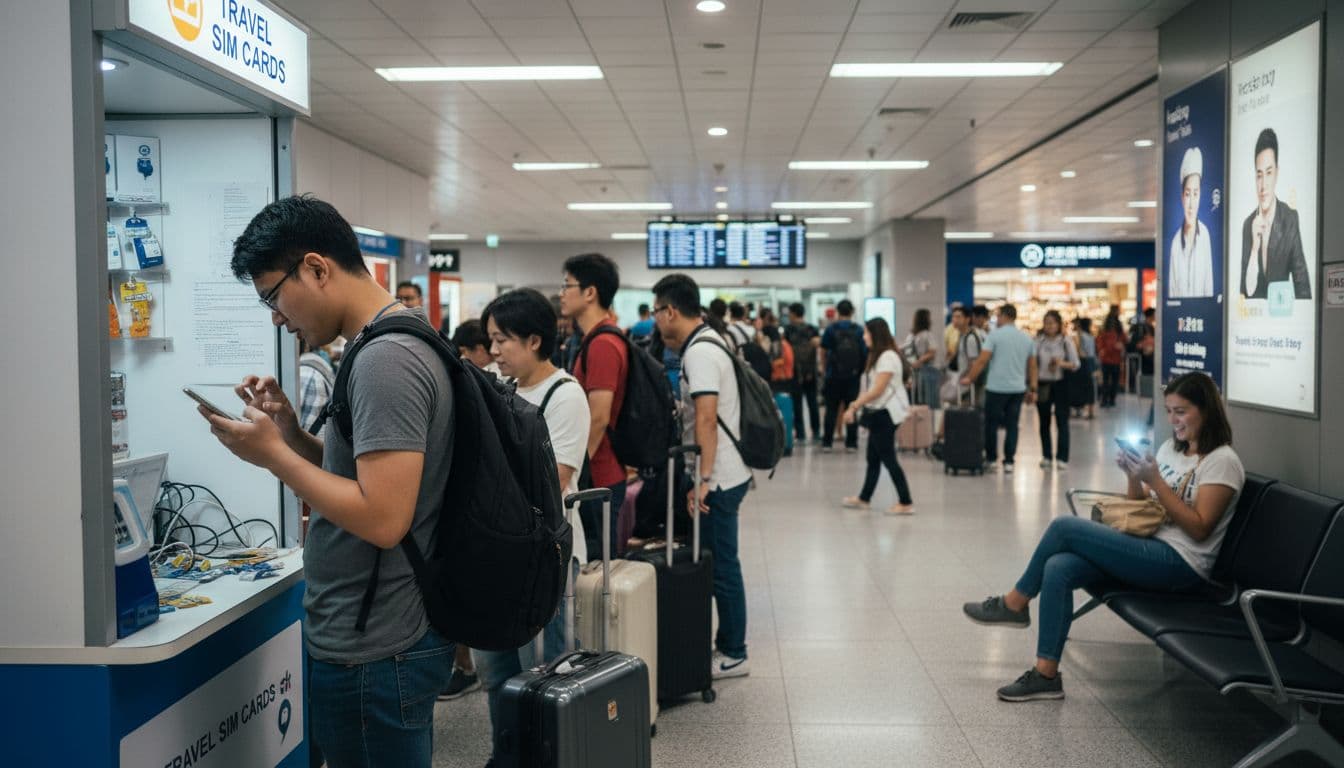
Eliminating The Airport Kiosk Tax And Queues
The “airport tax” is a real phenomenon where physical SIM cards sold at arrival halls are marked up by 30% to 50% compared to local rates. Vendors know you are tired, vulnerable, and desperate for a connection, so they bundle useless extras like international minutes or “free” coupons into overpriced packages. By purchasing an eSIM before you depart, you lock in transparent, competitive pricing that is often significantly cheaper than the flashy booths at Narita or Suvarnabhumi.
Time is your most valuable currency when traveling. Standing in a 20-minute line after a 12-hour flight is a miserable way to start a vacation. With an eSIM, you skip the bureaucracy entirely. There is no need to wait for a store to open or deal with language barriers during a transaction. You simply toggle your secondary line to “On” in your settings, and by the time you reach immigration, your data is already active. This is especially helpful in places like Thailand, where a comprehensive Thailand eSIM guide shows how you can manage registration digitally rather than at a physical counter.
Superior Security And Hardware Protection
Physical SIM cards are tiny, fragile, and incredibly easy to lose. When you swap your home SIM for a local one at an airport, you are suddenly responsible for a microscopic piece of plastic that holds your entire digital identity, including access to two-factor authentication for your bank and social media. If you drop that “home” SIM in a crowded terminal, you are in for a world of logistical pain. An eSIM stays inside your phone’s memory, meaning your home SIM remains safely tucked in its digital slot, ready to receive important security texts without ever leaving its place.
There is also a physical risk to your device that people rarely discuss. Frequent swapping of SIM cards can wear out the delicate spring mechanism in the SIM tray or even scratch the internal pins. In the humid environments of Southeast Asia, exposing the internals of your phone to the air more than necessary is never a great idea. An eSIM is a “zero-touch” solution that protects the physical integrity of your expensive smartphone while providing a much more robust, encrypted connection than the cheap wholesale chips often handed out at budget tourist kiosks.
Flexibility For The Spontaneous Traveler
If your plans change and you decide to extend your stay in Vietnam or take a detour to Seoul, an eSIM adapts to you instantly. With a physical SIM, you would have to find a local shop, verify your ID again, and buy a whole new card. With an eSIM, you simply open an app and top up your existing profile or download a new one in seconds using a coffee shop’s Wi-Fi. It gives you the freedom to be spontaneous without the fear of “running out of internet” in a place where you don’t speak the language.
| Feature | Digital eSIM | Airport Physical SIM |
|---|---|---|
| Activation Time | Instant (Pre-departure) | 15 to 30 Minutes (On Arrival) |
| ID Requirements | Often Digital/App-based | Physical Passport Scan Required |
| Risk of Loss | Zero (Embedded Software) | High (Physical Hardware Swap) |
| Price Transparency | High (Online Marketplaces) | Low (Airport Markup Pricing) |
| Multi-Country | Seamless Profiles | Requires Buying New Cards |
Traditional SIM cards are a legacy technology in a region that has moved on. Throughout Japan, Korea, and Thailand, the infrastructure is built for high-speed, digital-first interactions. Why anchor yourself to a 20th-century piece of plastic when you can have a world-class 5G connection waiting for you the moment you wake up your phone? It is a no-brainer for anyone who values their time, security, and sanity while exploring Asia.
Common Asia eSIM Problems and How to Avoid Them
Even though travel eSIMs simplify things dramatically, they aren’t totally immune to hurdles, especially across the diverse mobile testing ground that is Asia. In fact, travelers often run into trouble right when they need connectivity the most, such as exiting immigration or stepping off a train in a new city. The current reality in 2026 indicates that while the technology is mature, regional differences in carrier agreements and security policies still cause headaches. If you’re relying on an eSIM for your trip through Japan, Thailand, Vietnam, and Korea, you need to know the potential pitfalls so you can bypass them with a smart setup strategy. We are aiming for zero downtime, and that means preparing for known failure points.
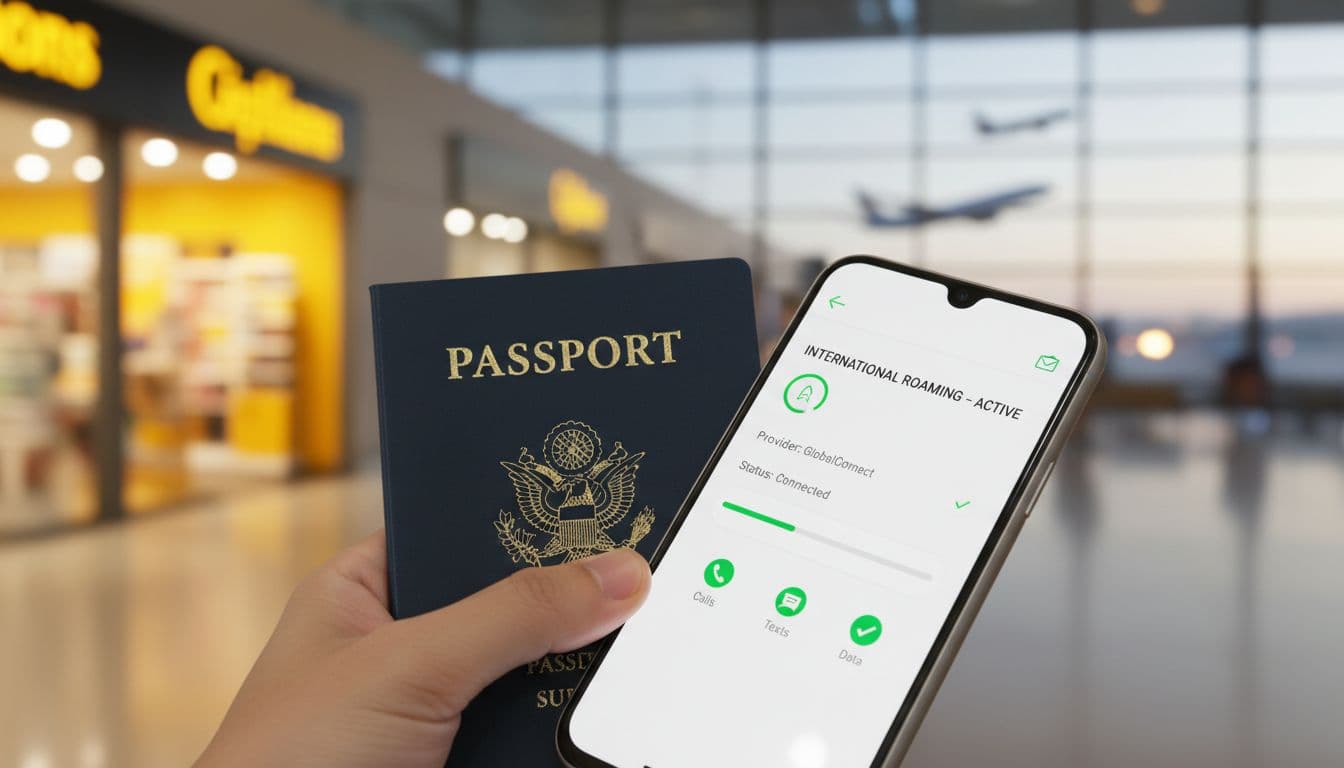
Pre-Activation Fails: QR Code Installation and Glitches
The single most common source of frustration happens before you even land: the installation process itself. You’ve bought the plan, you have the QR code, but the digital handshake fails. This often stems from poor initial connection quality during setup, which is a major issue if you try activating at the airport.
If you attempt to install your eSIM using airport Wi-Fi, you’re playing with fire. That temporary, often overloaded network can cause the activation process to timeout or become corrupted. Since most modern eSIMs use the QR code only once for the initial download, a failed attempt often leaves you with a “code used” error, which forces frustrating customer service interaction later. To avoid this, install the eSIM profile while you still have stable home internet. Don’t activate the data connection until you are ready to use it, but get the profile loaded onto your phone beforehand.
Another major blocker comes from stricter Southeast Asian security measures. In 2026, many regional eSIMs now require a live selfie or passport scan to confirm identity before the data turns on. If the lighting is poor in your hotel room, or the provider’s verification server is slow, your eSIM remains locked. To counter this, always check the provider’s terms; if KYC is required, handle it the moment you have a stable, well-lit Wi-Fi connection, not when you are stressed in a taxi line waiting for directions. For more on timing your setup, check out this eSIM activation time guide to prep like a pro.
Mid-Trip Issues: The Ghost Signal and Speed Throttling
You’ve installed it correctly, and you’ve landed. Great! But soon, you notice a signal—four bars—yet nothing loads. This is what many travelers are calling the “ghost signal” issue. Your phone connects to a network, but that network isn’t giving your eSIM the authority to pass data traffic reliably.
This usually happens because the local tower is prioritizing its native, paying customers over roaming eSIM users. If a major sporting event or festival causes a network surge in Seoul, for example, your low-priority data session gets throttled or dropped entirely so local users get better service. It’s certainly frustrating, but you can mitigate it. Your defense here is choosing an eSIM provider that specifically partners with Tier-1 local carriers (like Docomo in Japan or Viettel in Vietnam). These premium agreements mean your data isn’t simply sharing a deeply discounted, slow lane; you’re closer to the front of the line.
Furthermore, be wary of “unlimited” data plans that have a hidden Fair Usage Policy (FUP). These plans often provide fast speeds for the first 2GB or 5GB per day. After that, your connection drops to 2G or 3G speeds—painfully slow by today’s standards—until the next day resets. For heavy users relying on their phone for work or constant video streaming, this daily drop is a disaster. Always look for plans advertising high daily allowances or true unlimited access without an FUP clause to maintain consistent performance across your trip.
Security Hurdles: PDP Authentication Failures and Compatibility
When mobile data simply refuses to connect, you might encounter a technical error, most commonly a PDP authentication failure. This means your phone and the carrier failed the security check required to assign your device an internet address, preventing data session initiation. This specific error often pops up when you switch between countries or if your device’s configuration settings become confused by the switch.
To get back online, you’ll need to fix PDP authentication failure Asia by verifying your APN settings or toggling your airplane mode to force a new network handshake.
Another critical element often overlooked is device compatibility, especially regarding the use of newer technologies like 5G. Asian countries, particularly South Korea, offer incredible 5G speeds. However, if your phone was manufactured for a different geographic market, it might lack the necessary frequency bands (like the n78 band common in Asia) to access that top-tier speed. Your phone will see the 5G tower but won’t “speak its language,” forcing it to use an older, slower connection like 4G LTE+. You need to verify that your regional eSIM plan is designed to use the bands compatible with your specific phone model for that country.
Administrative Roadblocks Specific to Certain Countries
Certain nations in Asia, notably Thailand and Vietnam, enforce strict national ID registration for all mobile connections, and this applies even to digital profiles. If your eSIM plan requires this identity verification—and many do, especially those that include a local phone number component—you absolutely must complete it immediately upon arrival. Delaying this step, even by 24 hours, often results in the local carrier cutting your service completely. This isn’t a technical glitch; it’s a governmental compliance issue, and your eSIM provider can’t bypass it.

If you’re trying to keep things simple and avoid bureaucracy in these regions, stick to data-only eSIMs, as they sometimes bypass the most stringent identification requirements, though policies are constantly changing. If you are looking to manage a long-stay setup and avoid these physical and digital registration headaches, an eSIM guide for digital nomads can give you the foresight needed to select a plan that minimizes this administrative friction over weeks or months. When you are moving fast, you cannot afford service interruptions caused by paperwork.
- Verify ID Requirements: Check if your host country requires a passport upload before you depart.
- Confirm 5G Bands: Ensure your hardware matches the local frequency bands to get the speeds you paid for.
- Save Manual Codes: Keep a screenshot of your activation code in case the QR scanner fails.
- Avoid Airport Wi-Fi: Use a secure, stable home connection for the initial eSIM profile download.
How To Set Up An Asia eSIM The Right Way
You’ve picked the perfect Asia eSIM plan, the one that promises great speeds across Japan, Thailand, and Korea. That’s half the battle won, but here’s the truth: setting it up correctly is the difference between instant connectivity and a full-blown travel crisis while standing outside a busy Bangkok train station. Getting it wrong means wasted time, customer service headaches, and potentially relying on spotty airport Wi-Fi just to get your data running. The entire point of using an eSIM is to skip the friction, so we’ve got to nail this installation and activation process. This section breaks down the required actions, making sure your digital lifeline is ready before you leave home, which is the absolute best practice.
Pre-Departure Checklist For Zero-Friction Installation
The single most important thing you must do is handle the installation while you are still connected to your reliable home Wi-Fi network. Don’t wait until you land, because relying on potentially spotty, throttled, or insecure airport Wi-Fi to download a critical piece of digital hardware (the eSIM profile) is poor planning. You need a strong, uninterrupted connection for this step.
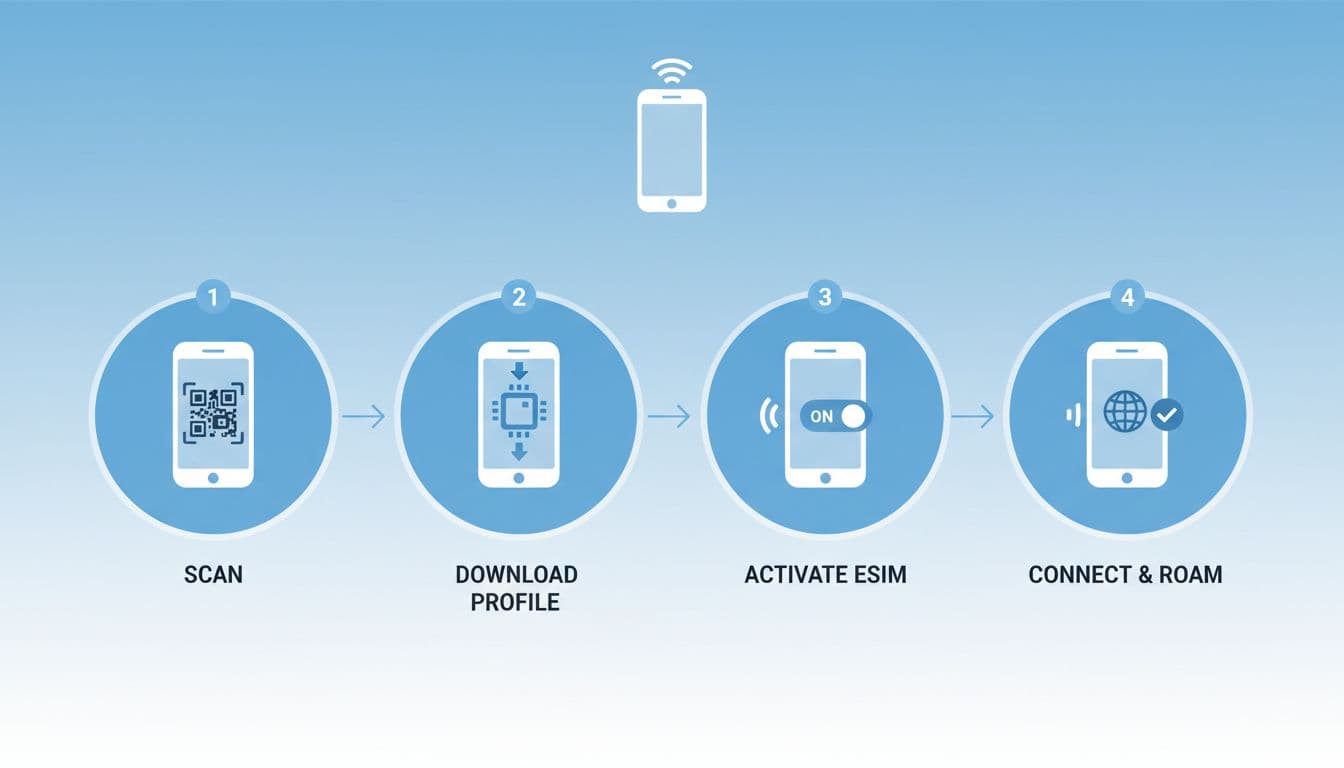
Here is the mandatory three-step preparation sequence anyone traveling to Asia should follow:
- Purchase and Receive: Purchase your regional Asia eSIM through a reputable app or website. Wait for the email confirmation that contains your QR code or manual activation details. This step must happen before you step into the airport.
- Install the Profile: Open your phone’s Settings app, find the mobile/cellular section, and look for “Add eSIM” or “Add Cellular Plan.” Scan the QR code immediately. Your phone will download the profile, but the data service remains off until you manually toggle it on later. This pre-loading step is a massive time-saver.
- Verify Device Readiness: Make sure your device is unlocked from your home carrier. An eSIM requires an unlocked phone to function properly with a new network. If your phone is still locked, you’ve got a bigger problem than just data access, so deal with that with your home provider first.
If you follow these steps, your phone is ready to go. You have the digital profile loaded; all that’s left is the final flip of the switch upon arrival.
The Critical Activation Moment After Landing
After descending through the clouds and entering Asian airspace, you need to be precise about when you officially ‘turn on’ the eSIM data. If you activate it too early, you might waste precious high-speed data allotment while still connected to an expensive home roaming plan or before you reach the country where the plan is intended to work.
When your flight lands in Tokyo or Ho Chi Minh City, follow this short sequence. It’s designed to guarantee you switch onto the correct local partner network immediately.
- Keep Home Data Off: Your primary (home) line must remain on cellular data OFF. This prevents accidental roaming charges from kicking in. Only your home line should be kept active for receiving critical SMS verification texts, which is typically allowed by most regional eSIMs.
- Enable eSIM Line: Go to your settings and simply toggle the data switch for your newly installed Asia eSIM line to ON.
- Wait For The Network Handshake: Your phone then attempts to register on the local partner network specified by your eSIM provider. You should see the network name change immediately—for example, from your home carrier to Viettel in Vietnam or Docomo in Japan.
- Test The Connection: Once the carrier name appears, run a quick speed test or refresh a mapping application. If it loads instantly, congratulations; you’ve successfully connected to a tier-one network.
This switch-on process is where many technical hurdles appear, so executing it calmly after arrival is key. For those looking for detailed installation visuals, reviewing an eSIM activation speed guide can provide the technical clarity needed here.
Addressing Country-Specific Regulatory Hurdles
While the general setup is similar, you simply cannot treat all Asian nations the same way because of varying government policies, and failing to respect these local rules leads to immediate connection failure, particularly in Vietnam and Thailand. You need to be prepared for the administrative differences that pop up after activation.
For instance, when using an eSIM in Thailand and Vietnam, ID verification is non-negotiable for maintaining service. If your regional plan includes a local voice or SMS capability, the carrier is legally obligated to register your identity. If you skipped the required in-app photo submission during setup, your data connection will likely drop after 24 to 48 hours of use. That’s a hard stop enforced by regulators, not a provider bug.
In contrast, setting up for Japan is technically easier. Japan, to the traveler’s benefit, rarely imposes strict registration rules on data-only eSIMs, meaning you can often get online instantly without uploading identification documents. However, South Korea often requires ID verification if you sign up for a plan that includes a local Korean phone number for SMS fallback. If you stick to a pure data eSIM for Korea, the process stays much cleaner and faster. Always check the specific terms linked to the country you are currently in when you activate.
Troubleshooting Ghost Signals and Speed Disappointments
The most frustrating experience isn’t having no signal; it’s having four bars of data that won’t load anything. This is the ghost signal, and it happens when your phone connects to a network that isn’t prioritizing your eSIM traffic or when the data rate drops due to network congestion. This is why we emphasized choosing a plan that uses direct, high-priority partnerships with the major carriers in the region.
If you encounter slow speeds across your Asian journey, check these common culprits immediately after turning on your eSIM data:
- APN Settings Check: Your phone might be using the wrong Access Point Name. Even if installed automatically, manually check that the APN in your cellular settings matches the one provided by your eSIM vendor. A mismatch causes a connection failure.
- VPN Interference: Some travelers run VPNs constantly. If your eSIM is trying to establish a secure tunnel over a new international network, sometimes the VPN gets confused and slows everything down. Try temporarily disabling your VPN to isolate the connection issue.
- Fair Usage Policy (FUP) Exposure: If you purchased an “unlimited” plan, remember that many providers throttle your speed severely after you hit a daily threshold, say 2GB or 5GB. If your speed feels like dial-up late in the day, you’ve hit the FUP wall.
By being prepared for these administrative and technical hurdles, you move past the basic setup phase and into enjoying the high-performance connectivity that a modern Asia eSIM promises. This level of preparation makes the journey far more enjoyable than dealing with physical SIM card hassles. For those moving through the region alone, mastering these solo traveler tech setups is the ultimate way to stay safe and connected.
Conclusion
Choosing a regional Asia eSIM provides the best balance of price and performance for navigating the diverse mobile networks of Japan, Thailand, Vietnam, and Korea. This strategy gives you prioritized access to high-tier local carriers while avoiding the high costs and slow speeds often found with global roaming plans.
To ensure a stress-free start to your trip, remember to install your eSIM profile early while you have a stable home internet connection. Be proactive with national registration requirements in countries like Thailand and Vietnam to prevent any service interruptions. Having your data connectivity sorted before you land allows you to focus on the incredible sights and flavors of Asia rather than hunting for a signal. Enjoy every moment of your journey with the confidence that you are always just a tap away from everything you need.