
Best eSIM for International Travel (2026): Top Plans, Prices, Coverage, and Setup Guide
eSIMs have gone from a niche feature to a default travel tool, adoption keeps climbing each year as more phones ship with eSIM support built in. For 2026 trips, that means you can land, switch on data, and book your ride without hunting for Wi-Fi or paying roaming rates.
An eSIM is a digital SIM that lives inside your phone, no plastic card needed. You buy a plan online, install it with a QR code or app, and connect to a local partner network once you arrive. Most travelers keep their home SIM active for calls and texts, then use the eSIM for data.
This guide breaks down the best eSIM for international travel in 2026 based on what actually matters on the road, plan options (local, regional, global), typical price ranges you’ll see this year, and how to check coverage before you buy. It also includes a simple setup walkthrough, plus common fixes if activation doesn’t go as planned. If you want a deeper comparison framework, this reference is worth skimming: How to Choose a Travel eSIM.
It’s built for family trips, backpackers crossing borders, digital nomads working from campsites and cabins, and cruise travelers who still need reliable data in port. What it won’t cover is shopping for a physical SIM in-country, or negotiating at airport kiosks.
Next up: quick picks, so you can choose a plan in minutes and get back to planning the fun part.
Best eSIM for international travel in 2026, quick picks and a fast comparison
If you just want your phone to work the moment you land, this is the fast lane. The picks below focus on what matters in real travel: coverage that actually shows up where you are, plans that make sense for a 1 to 4-week trip, and apps that don’t turn setup into a scavenger hunt. Prices move by country and season, so think in ranges, not exact dollars.
Top 3 winners at a glance (who to choose in 30 seconds)
- Airalo (Rating: 4.6/5): Huge selection of local, regional, and global eSIMs in one app, with quick top-ups. Typical 10GB range: mid-range, often about $20 to $45 depending on destination. Best for: multi-country trips when you want a familiar, widely used marketplace. Watch out for: many plans are data-only, and performance can vary by local partner network.
- Nomad (Rating: 4.5/5): Clean buying flow and straightforward plan options, especially for popular tourist routes. Typical 10GB range: mid-range, often about $20 to $50 depending on country or region. Best for: short trips and first-time eSIM users who want fewer choices and less guesswork. Watch out for: plan variety and value can swing a lot by destination, and some offers feel pricier versus local options.
- Holafly (Rating: 4.4/5): “Unlimited data” style plans that fit heavy scrollers and remote work weeks when you hate counting gigabytes. Typical 10GB range: not a perfect match since it’s usually unlimited-by-day pricing, often roughly $30 to $70 for many 10- to 15-day trips. Best for: high usage, long days on maps, reels, and uploads. Watch out for: fair-use slowdowns can happen, and hotspot support may be limited on some destinations.
Quick comparison table (coverage, price, and the one feature that matters)
| Provider | Coverage style | Typical price for 10GB | Standout feature |
|---|---|---|---|
| Airalo | Local, regional, global | $20 to $45 | Massive country list, easy top-ups |
| Nomad | Local, regional | $20 to $50 | Simple app flow, clear plan selection |
| Holafly | Regional, country packs | $30 to $70 (trip-based) | Unlimited-style plans for heavy use |
| Saily | Local, regional | $20 to $50 | Easy purchase flow, beginner-friendly |
| GOHUB | Regional, global | $15 to $45 | Strong value on multi-country bundles (see this Top global eSIM providers comparison) |
| Ubigi | Local, regional | $20 to $55 | Solid in many big-city routes, steady onboarding |
How the rankings were decided (simple, repeatable testing)
- Coverage reality check: Verified where plans are sold as local, regional, or global, then cross-checked supported destinations against common travel routes (airport arrivals, road trips, border hops). A long country list matters, but so does whether it fits your itinerary.
- Network quality signals: Looked for transparency on network partners (or at least carrier tier hints), plus real-world reports of stability. Some providers perform great in cities but struggle on rural highways or islands.
- Observed performance, not lab numbers: Compared general user experience for speeds and latency during typical tasks, like maps, rideshare, messaging, video calls, and hotspot use. No “perfect” average exists, results vary by city, time of day, congestion, and your device’s supported bands.
- App usability under travel stress: Tested purchase, install, and activation steps with a “tired at the airport” mindset. The winners make it easy to find the right plan, install in minutes, and track data before you hit zero.
- Support and refunds you can actually use: Checked support channels (chat vs email), typical response windows, and how clearly refunds are explained. The best providers make it obvious what happens if activation fails or if you buy the wrong plan.
If you want the short list, pick based on your trip style (single country, region-hopping, or unlimited-style daily plans). Next up, the deep dives break down each provider’s best plans, setup steps, and the fine print that catches people mid-trip.
Provider rankings with real travel use cases, plans, prices, and coverage trade-offs
Think of each provider below like a “provider card” you’re holding in your hand. Read it the same way you’d read a trail map: where it shines, where it fails, and who should skip it. Price matters, but so do the rules that show up mid-trip, like plan validity, hotspot limits, and what happens if activation goes sideways.
Saily: best all-around pick for most trips (with a security-first angle)
Saily ranks high because it hits the travel sweet spot: simple setup, solid plan selection (mostly country and regional), and a focus on safer browsing. It’s a strong fit when you want your phone to “just work” without spending an hour comparing 40 nearly identical plans.
Plan types: Country and regional plans (typical travel lengths).
Typical price ranges: Often $20 to $50 for mid-size data packs in many popular destinations (varies by country and trip length).
Coverage notes: Like most travel eSIMs, coverage depends on local carrier partners. Expect good service in cities and transit corridors, with more mixed results in rural areas, islands, and mountain regions.
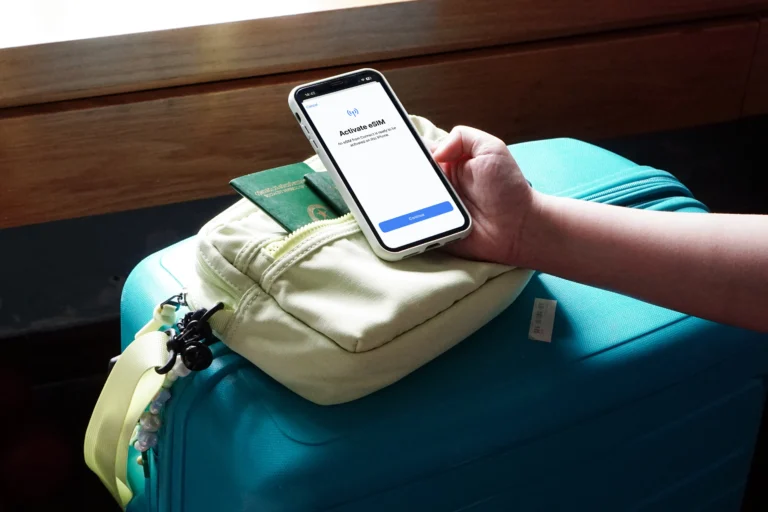
Setup experience: Usually app-first with a guided install flow. Install before you fly (on Wi-Fi), then turn on the eSIM line when you land.
The privacy angle: public Wi-Fi is convenient, not safe
Airport and hotel Wi-Fi can be fine for checking a menu, but it’s also where travelers get sloppy, especially when tired. Shared networks make it easier for bad actors to snoop, trick you into connecting to a fake hotspot, or capture logins if a site or app is misconfigured.
A simple rule: if you wouldn’t say it out loud in a crowded café, don’t send it on public Wi-Fi without protection.
What “VPN included” means (in plain language)
A VPN is like putting your internet traffic into a sealed tube between your phone and a trusted server. People on the same Wi-Fi network can see that you’re connected, but it’s much harder for them to read what you’re doing inside that connection.
This is helpful for:
- Logging into email or banking on travel Wi-Fi
- Sending work messages from a hotel lobby
- Uploading passport scans or travel docs to a secure portal
A VPN does not make you invisible, and it won’t fix a weak password. It’s a safety layer, not a superhero cape.
Trips it fits best
Saily is a great match for:
- Multi-city trips where you bounce between airports, trains, and rentals
- Mixed work and fun travel (some calls, some hiking, lots of maps)
- Travelers who want fewer decisions and fewer surprises
Hotspot policy: Commonly supported on many travel eSIMs, but it can vary by destination and network. If you plan to tether a laptop, confirm hotspot is allowed for your specific plan before buying.
Refund policy signals: Look for clear language on refunds for unused plans versus “installed/activated” plans. With any provider, refunds are usually easier before activation. If you want a broader comparison set, skim Top Saily eSIM Alternatives for 2025 for what competing offers tend to look like.
Pros
- Balanced mix of usability, plan options, and travel-friendly flow
- VPN angle is practical for airports, hotels, and cafés
- Good fit for travelers who don’t want to micromanage settings
Cons
- Coverage quality still depends on local partners
- Hotspot and speed behavior can vary by destination
- Refunds can get strict once a plan is installed or activated
Best for: Most travelers who want a reliable default choice, especially if you work on the road and end up on public Wi-Fi often.
Sim Local: best value when you need lots of data (but read the fine print)
Sim Local tends to stand out when you compare cost per GB on bigger bundles. If you’re the kind of traveler who downloads offline maps, posts videos, and keeps cloud backups running, bigger packs can be cheaper than repeatedly topping up smaller ones.
Plan types: Often country and regional options, with larger bundles available in many places.
Typical price ranges: Vary widely by destination, but value usually shows up in 10GB and up bundles.
Coverage notes: Typically aligns with local partner networks, which is great when the partner is strong in your route and less great when you’re going off the main tourist track.
Setup experience: Usually straightforward, but always install on Wi-Fi before departure. If the plan requires an APN setting (some do), that’s the kind of fine print that matters when you’re standing outside baggage claim.
Heavy-user rules that can change the “deal”
When you buy big data, these plan rules matter as much as the price:
- Validity windows: A 20GB plan that expires in 7 days is not the same value as a 20GB plan that lasts 30 days. Match validity to your trip length.
- Throttling: Some plans reduce speed after high usage or during congestion. It can still work for maps and messaging, but video calls can suffer.
- Fair use: Providers may restrict extreme usage patterns (constant tethering, high-volume uploads, or automated backups) to protect the network.
- Top-ups: If top-ups are available, check if they extend validity or only add data. That difference decides whether you can “rescue” a plan mid-trip.
Here’s a practical way to think about bundle sizing, using price ranges only (since prices swing by destination and season):
| Bundle size | Typical price range | Fits this traveler |
|---|---|---|
| 5GB | $10 to $25 | Weekend city break, light maps, messaging, ride-hailing |
| 10GB | $18 to $40 | 1 to 2-week trip with daily maps, social, some video calls |
| 20GB | $30 to $65 | Heavy user, family sharing via hotspot, content uploads |
Hotspot policy: Often allowed, but heavy tethering is where fair use rules show up first. If you’ll work from a laptop, treat hotspot as a requirement, not a “nice to have,” and confirm it for your destination plan.
Refund policy signals: Watch for rules around “delivered” or “installed” eSIMs. Some providers consider the product used once the QR code is issued. Save screenshots of your plan terms and keep your order email handy.
Pros
- Strong value when you need larger data bundles
- Top-ups can make it easier to extend a trip
- Good for travelers who hate running out mid-week
Cons
- Fine print can change the real value (validity, throttling)
- Big bundle is wasted if validity is too short
- Support and refunds can be strict once the plan is issued
Best for: Data-hungry trips where you want the best cost per GB and you’re willing to double-check validity and hotspot rules.
Holafly: best for unlimited-style plans (what “unlimited” really means)
Holafly is popular for one main reason: you can stop counting gigabytes. For short trips where you don’t want to babysit usage, unlimited-style plans can feel like a relief.
Plan types: Mostly country and regional plans priced by trip duration (days), not data amount.
Typical price ranges: Often $30 to $70 for many 10 to 15-day trips (varies by destination).
Coverage notes: Usually strong in major travel regions and cities, but “unlimited” does not mean identical performance everywhere.
Fair use, explained like a normal person
“Unlimited” usually means no hard data cap you can easily see, but there are still rules to keep a few users from crushing the network for everyone else. In practice, that can look like:
- Speeds that are fast at first, then reduced after heavy usage
- Slower performance during peak hours in crowded areas
- Extra scrutiny when you use hotspot all day
Most travelers won’t hit these limits with normal use. Heavy uploaders and hotspot-first laptop workers are more likely to notice.
Hotspot rules and “speed after X” behavior
Hotspot support varies by destination, and it’s often limited. If you need to tether for work, treat Holafly as a “check first” option.
Also, speed slowdowns usually don’t show up as a clear number you can plan around. The best way to think about it is this: unlimited works best when your usage is bursty, like maps, calls, and uploads sprinkled through the day, not constant streaming from breakfast to bedtime.
Scenario: 10-day Europe trip with busy days
You land in Paris, take trains to Brussels and Amsterdam, then fly out of Rome. You’re using:
- Google Maps every day
- Video calls to coordinate meetups
- Uploads to cloud storage for photos
- Occasional hotspot in a pinch
For this kind of trip, unlimited-style pricing can be worth it because you’re paying for peace of mind. You’re not chasing top-ups in the middle of a museum line.
Setup experience: Usually QR code install with clear steps. Install before departure, then enable the eSIM line on arrival.
Refund policy signals: Unlimited products often have stricter refund terms once activated. If you’re unsure, buy closer to your departure date and install only when you’re confident about your itinerary.
Pros
- No daily math, great for short, busy trips
- Works well for maps, calls, and frequent uploads
- Simple buying decision compared to data packs
Cons
- “Unlimited” can still slow down after heavy use
- Hotspot support can be limited depending on destination
- Can cost more than fixed data for light users
Best for: Short trips where you’ll use a lot of maps, calls, and uploads, and you want predictable spending.
MobiMatter and Maya Mobile: strong alternatives for deal hunters and control freaks
If you like having lots of plan options and tweaking details (validity, data size, region), MobiMatter and Maya Mobile are worth a look. They can also be good backup providers if your first choice doesn’t offer a strong plan for a specific country.
Plan types: Commonly country and regional, sometimes global; often data-only.
Typical price ranges: Highly variable because offers differ by destination, brand, and validity. Expect everything from budget deals to premium pricing depending on the plan.
Here’s a quick side-by-side to help you pick based on how you travel:
| Provider | Strengths | Best use case | Common limitations |
|---|---|---|---|
| MobiMatter | Lots of plan choices, good for comparing options | Deal hunters who want to shop multiple plan brands | Can feel like a marketplace, support and refund terms may vary by plan |
| Maya Mobile | More control over plan selection and timing in some destinations | Travelers who want more plan control (validity, data sizing) | Many plans are data-only, app and support experience can vary by region |
When marketplaces are great, and when they get confusing
Marketplaces can be amazing because you can:
- Find more plan shapes, like longer validity or unusual regions
- Compare offers quickly when you have a specific itinerary
- Grab a backup plan for a second device
They can also be confusing because:
- Multiple brands can show up with similar names and different rules
- Refund policies can depend on the specific plan, not just the marketplace
- Support may involve more back-and-forth to identify the exact plan you bought
If you’re the type who wants a simpler “buy once, forget it” approach, you may prefer a single-storefront provider. If you enjoy shopping and optimizing, marketplaces can save money.
For travelers who want a straightforward place to browse destination options without overthinking it, it can help to compare against a single shop catalog like Buy Travel eSIM Online – 100+ Countries to get a baseline for plan types and trip lengths.
Hotspot policy: Often plan-dependent. Assume hotspot is not guaranteed until you see it stated in the plan details.
Refund policy signals: Marketplaces often have plan-specific refund rules, so read the terms for the exact SKU you’re buying. If you want more control, choose plans with clear validity and activation language.
Pros
- Strong options for price shoppers and specific itinerary needs
- More plan variety, including unusual validity periods
- Good as a backup provider when your first choice is sold out or overpriced
Cons
- Can be confusing, especially when many plan brands look similar
- Refund terms and support experience may vary by plan
- Data-only plans are common, calling and texting usually require apps
Best for: Deal hunters, frequent travelers, and anyone who wants more knobs to turn (data size, validity, region), and doesn’t mind reading terms.
If you already know where you’re going next, the fastest way to pick well is to match a provider to your region and route. Next up are regional recommendations so you can choose an eSIM that fits your exact itinerary, not just a generic “international travel” label. For travelers planning multi-stop routes in Asia, comparing regional bundles like the Southeast Asia eSIM – Gohub Coverage can also help you sanity-check country-hopping costs.