
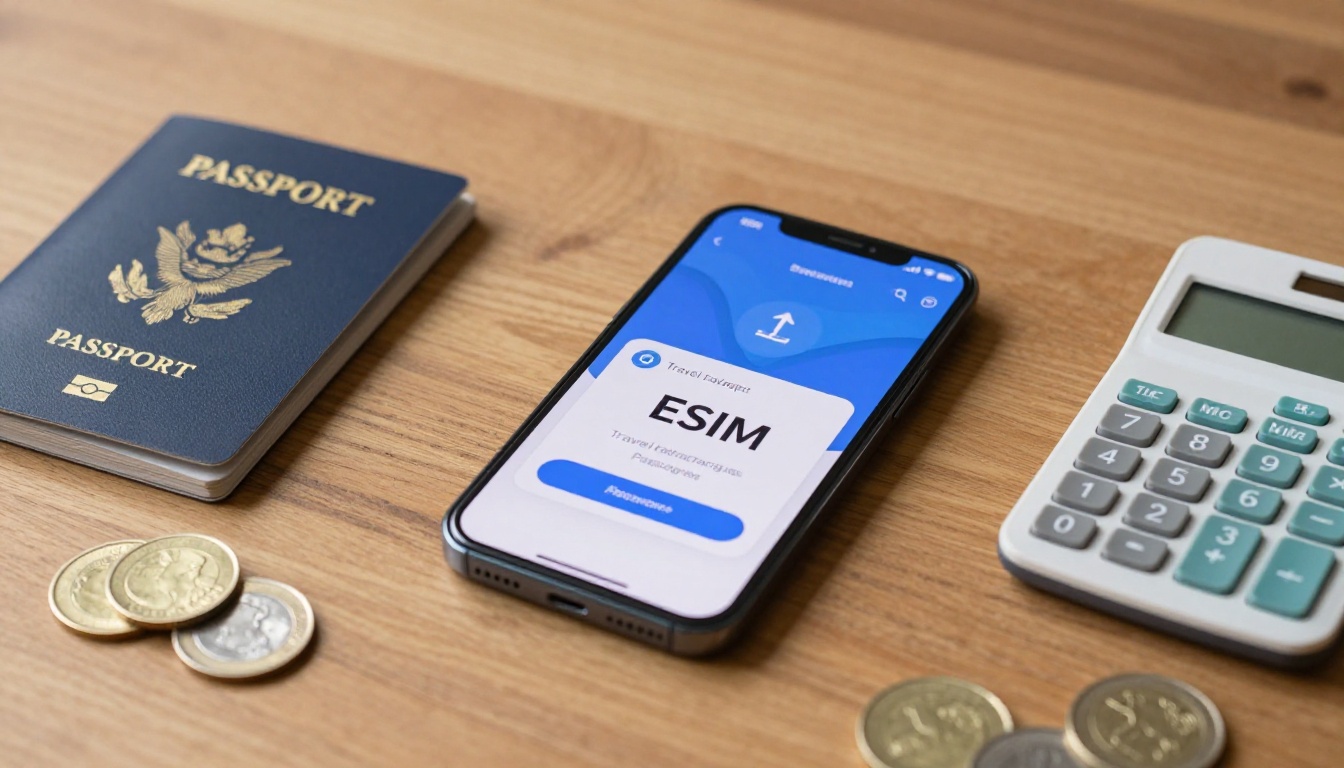
Price per GB for Travel eSIMs: Compare True Data Costs
A “$1-per-day” travel internet plan sounds like a no-brainer, until you discover it includes only 100MB daily. That tiny allowance can make your trip far more expensive than a larger package with a higher-looking upfront price.
The price per GB travel eSIM gives you the clearest comparison. Divide the total package price by its total high-speed data allowance, then compare that number across plans with different prices, validity periods, and marketing claims.
This calculation also exposes throttling, short expiry windows, activation fees, and data allowances that won’t match your trip. Next, we’ll look at real data needs, hidden costs, and practical checks before you buy, starting with the best-value eSIM plans by cost per GB.
Watch this international eSIM comparison for another useful reference.
How to Calculate the True Price per GB for a Travel eSIM
The advertised daily rate rarely tells you what your mobile data really costs. To compare travel eSIMs fairly, use the final checkout price and the total amount of high-speed data included.
The basic formula is simple:
Total package price ÷ total included gigabytes = true price per GB
That number lets you compare a cheap-looking daily plan with a larger fixed-data package without getting distracted by the validity period.

Why Daily Rates Can Hide an Expensive Data Plan
A “$1-per-day” plan sounds fantastic, especially when you’re planning a long trip. But what does that dollar actually buy? If the plan provides only 100MB per day, you would need ten days to reach 1GB.
At that rate, the plan costs $10 for 1GB, assuming you use the entire daily allowance. A fixed package offering 5GB for $12 costs only $2.40 per GB, even though its headline price looks higher.
Some daily plans advertise unlimited data, but reduce your speed after a small full-speed allowance. For example, a $1 daily pass might provide 100MB at normal speeds, then throttle your connection for the rest of the day. Your advertised allowance may sound unlimited, but your usable data is closer to 100MB.
Calculate the price using the data you can actually use at normal speeds. If you buy a seven-day plan for $7 and receive 700MB of full-speed data, convert that allowance to 0.7GB. The true price is:
$7 ÷ 0.7GB = $10 per usable GB
Daily plans can still work well for very light users. A traveler who only checks messages and occasional directions might prefer a low daily commitment. Still, compare the usable data first, not the number of travel days.
What Counts as Usable Data in the Calculation
Usable data means full-speed data available for your planned activities. That includes loading maps, browsing websites, sending messages, uploading photos, using transportation apps, and checking email without an immediate speed reduction.
The advertised allowance and the normal-speed allowance are not always the same. Before calculating a price per GB travel eSIM, check these details:
- A plan may throttle speeds after 500MB or 1GB each day.
- Fair-use rules may reduce speeds after heavy consumption.
- Some apps may receive unlimited access while other traffic uses your main allowance.
- Hotspot data may have a separate limit or may be blocked entirely.
- The allowance may reset every day instead of lasting for the full package period.
- The provider may list data in MB, not GB, which makes the package look larger.
Use 1,000MB as a simple comparison standard. A 500MB package equals 0.5GB, while 2,000MB equals 2GB. So, a $3 plan with 500MB costs $6 per GB, not $3 per GB.
For example, compare these two packages:
| Plan | High-speed allowance | Final price | True price per GB |
|---|---|---|---|
| Option A | 1GB | $5 | $5.00 |
| Option B | 10GB | $15 | $1.50 |
Option B is the clear unit-price winner. However, a lower price per GB doesn’t automatically make it the right choice. Coverage, hotspot access, network quality, and validity still matter. A cheap plan that expires before your trip ends is no bargain.
When a provider mentions fair-use restrictions, read the policy before buying. The European Union’s fair-use guidance shows why advertised roaming allowances can include separate usage limits. For regional trips, also compare Asia eSIM costs per GB when daily data and throttling rules vary by destination.
Four Ways Travel eSIM Providers Hide a High Cost per GB
The headline price rarely tells the whole story. Providers use attractive daily rates, unlimited labels, and low entry prices while limiting how much data you can use at full speed. Read the fine print before comparing the price per GB for a travel eSIM.

Unlimited Data That Slows Down After a Tiny Allowance
“Unlimited data” sounds generous, but the full-speed allowance may be tiny. A plan might give you 500MB at normal speeds, then drop to 2G for the rest of the day.
At 2G speeds, basic tasks become frustrating. Maps can take minutes to load, ride apps may struggle to refresh, and photo uploads can fail repeatedly. Remote work becomes even harder when you need video calls, cloud files, or a reliable hotspot.
Before buying, find three details:
- The amount of full-speed data included.
- The speed after the provider applies throttling.
- When the allowance resets, such as daily, weekly, or never.
If the provider hides those details, treat the unlimited label with caution. Fixed-data plans often provide a clearer high-speed allowance, making the true price per GB travel eSIM calculation much easier.
Small Data Bundles That Make a Cheap Plan Cost More
A low total price can still hide an expensive unit cost. For example, a 500MB package priced at $3 costs $6 per GB because 500MB equals 0.5GB.
That starting price may look perfect for a short trip. The problem begins when you need more data. Buying four separate 500MB packages costs $12 for 2GB, which equals $6 per GB. A mid-sized package might offer 5GB for $10, reducing the cost to $2 per GB.
Small bundles also create more chances for rushed top-ups. You may run out while leaving an airport, boarding a train, or trying to find your hotel. At that point, convenience matters more than careful comparison.
Choose enough data for the entire trip instead of grabbing the cheapest package on the screen. For larger allowances, compare Europe eSIM costs per GB before deciding.
Short Validity Periods That Waste Unused Data
A 5GB plan for $8 sounds reasonable until you notice its three-day validity period. A delayed flight, a rest day, or a longer itinerary can leave you with unused data when the plan expires.
That changes the real value. If you use only 2GB before expiry, you effectively paid $4 per used gigabyte. The unused allowance disappears, even though you paid for it.
Match the validity period with your full trip, including arrival and departure days. Also check when the clock starts. Some plans begin at purchase, while others start during installation or the first network connection.
A slightly higher price can offer better value when it lasts seven, 15, or 30 days. The best plan is not always the cheapest package. It is the one that gives you enough time to use what you purchased.
Checkout Fees That Raise the Final Price per GB
The banner price may not equal the amount charged to your card. Activation fees, payment processing charges, taxes, currency conversion costs, and required app charges can all raise the final total.
A plan advertised at $10 for 5GB appears to cost $2 per GB. If checkout adds $2 in fees, the real calculation becomes $12 divided by 5GB, or $2.40 per GB.
Always calculate the unit price from the final checkout total. Review the currency, tax line, payment fee, and any mandatory setup charge before paying. Prepaid plans with clear pricing make this comparison much easier. Fee and tax disclosures can help consumers understand additional charges beyond the advertised price.
A clean checkout is more than a nice user experience. It protects your comparison from numbers that look cheap until the final payment screen.
How Much Travel Data Do You Need for Maps, Messages, and Media?
Your ideal travel eSIM package depends on more than trip length. Navigation, video habits, photo uploads, work tasks, and Wi-Fi access can change your data needs quickly. A one-week city break with hotel Wi-Fi may need far less data than a road trip through remote areas.
Use these figures as planning estimates, not universal rules. Your own habits matter more than any package label.

A Light-Use, Regular-Use, and Heavy-Use Data Budget
These three traveler profiles give you a practical starting point before comparing the price per GB for a travel eSIM.
| Traveler profile | Typical activities | Reasonable weekly range |
|---|---|---|
| Light user | Messages, occasional maps, email, light browsing | 1GB to 3GB |
| Regular user | Frequent navigation, social media, photo uploads, browsing | 4GB to 10GB |
| Heavy user | Video streaming, remote work, hotspot sharing, large uploads | 15GB or more |
A light user mostly relies on WhatsApp messages, occasional voice calls, and short map checks. WhatsApp messaging and voice calls may use about 30MB per hour, while web browsing and email use around 60MB per hour. For many travelers, 1GB to 3GB per week covers the basics.
Regular users open maps throughout the day, scroll social feeds, and upload photos. Social media uploads can use about 800MB per hour, especially with high-resolution videos. A package between 4GB and 10GB per week gives this traveler more breathing room.
Heavy users stream video, join work calls, upload large files, or share a connection with a laptop. Cloud backups, app updates, and hotspot use can consume several gigabytes without much warning. Start with 15GB or more per week, then add a buffer for workdays and poor Wi-Fi.
Here is a closer look at common activities:
| Travel activity | Approximate usage | Weekly planning figure |
|---|---|---|
| GPS navigation with Google Maps or AllTrails | About 50MB per hour | 1GB to 2GB |
| Social media uploads | About 800MB per hour | 5GB to 10GB |
| WhatsApp messages and voice calls | About 30MB per hour | About 500MB |
| Web browsing and email | About 60MB per hour | About 1GB |
These figures can overlap, so don’t add every maximum automatically. Instead, estimate your daily routine and add 10% to 20% extra for unexpected use. A missed turn, long airport delay, or urgent file upload can eat through a tight allowance quickly.
For help choosing the right setup, review this guide on configuring travel eSIM data settings. It covers selecting the eSIM for mobile data while keeping your primary line available for calls and texts.
When Offline Tools Can Lower Your Data Cost
Offline tools can shrink your mobile data needs before your trip even begins. Download maps for your driving route, hiking area, or city while connected to reliable Wi-Fi. Google Maps and AllTrails can then handle many navigation tasks without repeatedly loading map data over your eSIM.
Road trippers should download every major route before leaving their hotel. Hikers should save trail maps while they still have service. For multi-city travel, download each destination separately and remove old files later.
Playlists, podcasts, movies, and TV episodes also belong on your pre-trip Wi-Fi list. Disable automatic photo backups, app updates, and video downloads over cellular data. Those background tasks can quietly consume the allowance you planned for navigation.
Offline maps reduce routine data use, but they don’t replace a reliable connection for live traffic, updated transit times, emergency searches, or changing trail conditions.
The savings connect directly to your price per GB calculation. If offline tools reduce your need from 10GB to 5GB, a smaller suitable package may cost less than an oversized plan. Keep some mobile data available, though. Remote roads, weak Wi-Fi, and unexpected changes still make a dependable connection worth paying for.
Compare More Than Price per GB When Coverage Matters
The lowest price per GB travel eSIM isn’t always the best deal. A cheap plan becomes expensive when weak coverage leaves you without maps, messages, or ride apps.
Price per GB should lead your comparison. Coverage and usable performance decide the final choice. Before buying, check where the plan works, which networks it uses, and how reliably it connects.
Country Plans, Regional Plans, and Global Packages
A country plan suits travelers visiting one destination. These plans often use local carrier access and can offer a lower unit cost than broader packages. If you’re spending two weeks in Japan, for example, a Japan-only eSIM may give you better value than a regional plan covering half of Asia.
Regional plans make more sense when your itinerary crosses borders. One eSIM can cover several nearby countries, so you don’t need to install a new profile at every train station or airport. This convenience can outweigh a slightly higher price per GB, especially during fast-moving trips.
Global packages cover many countries and may help frequent travelers. They can save you from buying separate plans for every destination, but they often cost more per GB. Coverage may also look broader than it feels, since some included countries have limited networks or uneven access.
Calculate the unit price using only the countries you will visit. Then count only the data you can actually use in those places. A 20GB global plan is not a 20GB bargain if five included countries don’t match your route.
For multi-country travel, compare the plan’s supported countries, local carrier partners, and network switching rules. Some eSIMs connect to several networks automatically, while others remain tied to one partner. A coverage and speed comparison can help when two plans have similar prices.
Hotspot Access, Network Partners, and Other Value Checks
Hotspot support matters when you travel with a laptop, tablet, second phone, or camping device. It also matters when you’re sharing data with a partner or child. A low-cost plan loses its appeal quickly if tethering is blocked or limited to a small daily allowance.
Check these details before checkout:
- Confirm whether hotspot use is allowed.
- Review any tethering limits or separate hotspot allowance.
- Check access to 4G and 5G networks.
- Look for local carrier names, not just country coverage.
- Review coverage maps for islands, rural roads, national parks, and mountain areas.
- Confirm how the eSIM switches between available networks.
Carrier coverage maps can help you compare provider access with the actual network footprint, especially outside major cities. The FCC National Broadband Map provides mobile coverage information that can help you compare reported network availability across different providers.
Calls and texts deserve a quick check, too. Many travel eSIMs provide data only, so you may need WhatsApp, iMessage, or your primary line for communication. Also confirm your phone supports eSIMs and remains unlocked before purchase.
Activation timing can affect validity. Some plans start when you install them, while others begin after the first network connection. Review the travel eSIM setup guide before installing too early.
Finally, compare refund rules, top-up prices, and customer support response times. If the connection fails at midnight in a remote town, fast support has real value. The cheapest plan wins on paper, but the better plan keeps working when your trip leaves the city.
The Smart Buyer’s Checklist for Finding the Best eSIM Value
The best travel eSIM starts with your route, not the cheapest banner price. List every country you will visit, estimate your data use, then compare plans using the same details.
Record these numbers for each option:
- Final checkout price, including taxes and fees.
- Total full-speed data allowance.
- Validity period and activation date.
- Supported countries and local network partners.
- Hotspot rules, throttling limits, and top-up prices.
- Device, payment, and dual SIM compatibility.
Choose the lowest price per usable GB that meets your coverage, speed, validity, and device needs. That simple rule cuts through most travel eSIM marketing.
A Quick Comparison Formula to Use Before Checkout
Use this formula before you click buy:
Final package price ÷ full-speed GB allowance = true price per GB

Then check the details that a unit price cannot reveal:
- Confirm the plan covers every country on your route.
- Check how long the data remains valid.
- Verify the included carrier networks.
- Confirm hotspot access for laptops, tablets, or travel companions.
- Find the full-speed limit and reduced speed after throttling.
- Compare the price of every available top-up.
Here is a quick comparison:
| Plan | Final price | Full-speed data | True price per GB |
|---|---|---|---|
| Low-cost package | $5 | 1GB | $5.00 |
| Larger data package | $15 | 10GB | $1.50 |
| “Unlimited” package | $12 | 0.5GB | $24.00 |
The unlimited option may allow slower data after 500MB, but that does not make it a strong value. Active travelers can use 500MB quickly through maps, social media, photo uploads, and ride-hailing apps.
After throttling begins, basic tasks may become painfully slow. If terms such as fair use, APN, or reduced-speed data appear in the plan details, check the provider’s terms carefully to understand the data limit, throttling speed, and conditions that apply after the high-speed allowance is used.
Red Flags That Signal a Poor-Value Travel eSIM
Missing information creates comparison risk. If you cannot identify the full-speed limit, network partner, or activation rule, you cannot calculate the plan’s real value.
Watch for these warning signs:
- The provider advertises unlimited data without stating its high-speed allowance.
- The plan lists a country but does not name its available networks.
- Validity lasts only one or three days, even though your trip runs longer.
- The checkout price adds taxes, activation fees, or payment charges.
- Top-ups cost far more per GB than the original package.
- Activation begins at purchase, leaving data to expire before arrival.
- Hotspot access remains blocked, restricted, or unexplained.
- Customer support only uses email, with no clear response time.
A cheap first package can become expensive after one rushed refill. Compare the top-up price before buying, especially if you expect to work remotely or share data.
Also check your phone’s eSIM support, unlocked status, dual SIM settings, and preferred payment method. Travelers using an iPad or laptop should review this iPad eSIM travel hotspot guide before choosing a plan.
A transparent $15 package often beats an unclear $5 offer. You know what you receive, what happens after the allowance ends, and what the next gigabyte will cost. That clarity is part of the value.
Conclusion
The price per GB travel eSIM gives you the clearest view of what your mobile data really costs. Divide the total package price by the usable high-speed data allowance, not the advertised daily rate or unlimited label.
Then check the details that can change the value: throttling limits, short validity periods, hidden checkout fees, coverage, and hotspot rules. A low unit price means little if the connection slows down, expires early, or won’t work where your itinerary takes you.
Compare transparent travel eSIM reviews and plans on BesteSIM.blog before you buy. The right plan gives you enough usable data, reliable coverage, and a price that makes sense for your trip.