Best eSIM For Japan Travel: Coverage, Speed, And Setup Guide (2026)
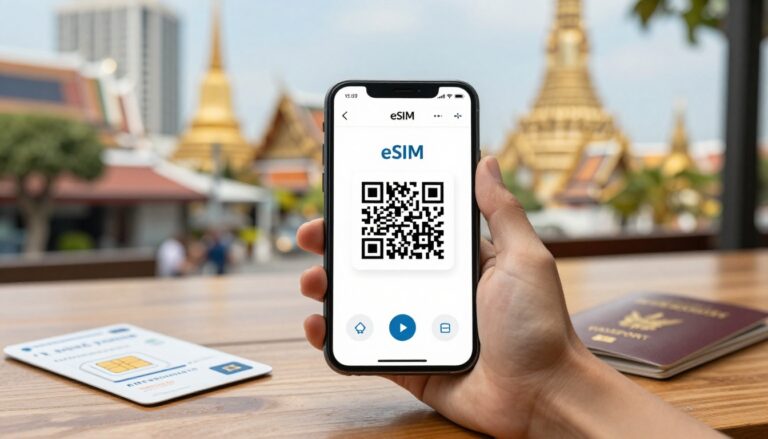
Gone are the days of hunting for tiny plastic chips at Narita or fumbling with paperclips in a crowded train station. Today, an eSIM for Japan is the modern alternative to physical SIM cards, allowing you to download a digital data plan directly to your device via a simple QR code. As Japan has fully embraced 5G Standalone (SA) technology, using an eSIM is now the industry standard for travelers who want instant, high-speed connectivity the moment they touch down in Tokyo.
In this guide, you’ll learn exactly which providers offer the best performance, how the coverage compares between giants like Docomo and SoftBank, and the most reliable ways to get your data running. We’ll break down top-tier picks such as Airalo, Ubigi, and Holafly while providing a clear Japan eSIM activation guide to ensure you aren’t left without maps in Shinjuku.
Whether you’re prioritizing raw speed for streaming or a budget-friendly plan for basic navigation, this overview covers the essential attributes of modern Japanese mobile networks. We’ll also tackle common hurdles, such as checking device compatibility and how to fix Japan eSIM connection issues if your data doesn’t kick in immediately. By the time you finish reading, you’ll be ready to bypass the expensive roaming fees and navigate the Land of the Rising Sun like a local. Why Japan Is a Unique Case for Travel eSIMs
Japan treats its mobile connectivity with the same precision it applies to its high-speed rail systems, creating a landscape that is both incredibly advanced and surprisingly rigid. While you might expect a tech-forward nation to offer open-access networks, the reality involves a complex web of local regulations and infrastructure priorities. Understanding these quirks is the difference between having instant access to Google Maps in a Kyoto alleyway and being stuck with a “no service” icon at a critical moment.
Advanced Mobile Networks but Strict Local Rules
By 2026, Japan has largely completed its transition to 5G Standalone (SA) technology. Unlike the older Non-Standalone (NSA) 5G that essentially piggybacked on 4G infrastructure, 5G SA is a pure, high-speed ecosystem that offers lower latency and significantly better performance in dense crowds. However, as a traveler using a global eSIM, you are effectively a guest on these networks. Major Japanese carriers like NTT Docomo and SoftBank rent out “space” to travel eSIM brands, but they maintain strict control over how that data is prioritized.
During peak hours in busy hubs like Shinjuku Station or Umeda, local subscribers often get first dibs on the fastest lanes. This means your “5G” connection might occasionally feel slower than expected if the network is congested, as the virtual network operators (MVNOs) used by most eSIMs are lower on the hierarchy. Furthermore, many travel eSIMs route their data through servers in Singapore or Hong Kong. This “roaming” hop can add a few milliseconds of delay, which is barely noticeable for browsing but might cause a slight stutter during a high-stakes competitive mobile game.
What Travelers Usually Get Wrong About Japan Connectivity
The most frequent mistake travelers make is assuming a Japan eSIM works exactly like a physical SIM card bought at home. In Japan, strict telecommunications laws designed to prevent fraud mean that almost every travel eSIM is a data-only plan. You will not get a local Japanese phone number starting with +81, which means you cannot make traditional voice calls or receive SMS messages. If you need to call a restaurant for a reservation or contact your hotel, you will need to rely on apps like WhatsApp, FaceTime, or the local favorite, Line.
Another common pitfall relates to device settings and hardware compatibility. While modern phones are designed for global use, your eSIM will not function if your device is still “carrier locked” to your provider back home. You must ensure your phone is fully paid off and unlocked before you step on the plane. Additionally, your “Data Roaming” toggle must be switched to On for the eSIM to communicate with Japanese towers. Many travelers skip this step out of fear of extra charges, but because you are using a prepaid eSIM, it is actually necessary to enable this setting to get online.
Before you commit to a specific plan, it is a smart move to compare the best eSIM for Japan to see which providers currently offer the best balance of local network priority and price. To stay connected without a hitch, always double-check your phone’s compatibility settings at least 48 hours before your departure.
Best eSIM Plans for Japan: Top 3 Picks

Choosing the right data plan for Japan is like picking the right bullet train; you need reliable speed and a great network backbone, especially since connectivity here operates differently than almost anywhere else. Since you’ll be relying on these overseas providers that piggyback onto local Japanese carriers, your provider choice dictates which network you land on. Are you hiking through the Kumonodake region, or are you sticking to the high-density user zones of Shibuya crossing? These scenarios often require different network strengths. Our top three picks for 2026 balance network integrity, data volume, and sheer value, making sure your connection stays crisp from your first vending machine photo to your last Shinkansen ride.
Ubigi: The Best Professional and Rural Choice
If your travels take you outside the main metropolitan areas—maybe you are a working professional needing reliable access for video calls from a quiet Ryokan, or perhaps you are an adventurer exploring the lesser-traveled north—then you must strongly consider Ubigi. What makes Ubigi stand out is its preferred partnership with the Docomo network. Docomo is arguably Japan’s gold standard for geographic reach. Think of it this way: if a signal exists outside of Tokyo, Osaka, or Nagoya, Docomo is usually the one broadcasting it.
This preference for Docomo means that when you are deep in the mountains or exploring remote prefectures like Hokkaido or the Japanese Alps, Ubigi users report significantly more stable connections than users on other networks. While other eSIMs might default to SoftBank or KDDI, which sometimes have thinner coverage in rural valleys, Ubigi gives you access to Docomo’s sprawling tower infrastructure. This is a no-brainer if your trip involves significant exploration of the Japanese countryside; you simply can’t afford to lose connectivity when you rely on digital maps for trailheads or shuttle bus schedules.
Value is also a major selling point with Ubigi right now. For travelers who need substantial data without breaking the bank, their offering of 10GB for around $17 provides an excellent data-to-cost ratio. This hits that sweet spot for most travelers; it’s more than enough for daily social media use, streaming in HD during downtime, and utilizing Wi-Fi calling apps, all for a very competitive price compared to buying a single-use physical SIM in the airport. Don’t mistake good rural coverage for slow speeds, either. As of 2026, travelers confirm that Ubigi’s connection through Docomo maintains strong speeds even when traversing less populated regions. You get the breadth of the best network combined with excellent pricing, making it a top choice for the serious traveler who also values budget.
Airalo and Holafly: Budget and Unlimited Options
When it comes to modern travel eSIMs, Airalo and Holafly own the market space occupied by high-volume, consumer-favorite offerings. They get incredible visibility, and for good reason; they focus heavily on making the purchase and installation process absolutely frictionless, which is key when you just want to get online instantly.
Airalo shines brightest due to its user-friendly nature and its primary network partnership with SoftBank for its Japan plans. Airalo is the definition of a clean user experience (UX). Their app layout is intuitive and incredibly easy to navigate, even if you’ve never installed an eSIM before. You download the app, pick your plan, scan the code, and you are typically online within five minutes. For trips heavy on city sightseeing—think catching the Yamanote Line crowds or exploring fashionable Harajuku—SoftBank’s high density of towers in these urban cores provides top-notch reliability. If your travel itinerary sticks strictly to major hubs, Airalo’s simplicity paired with SoftBank’s urban might is a fantastic combination.
Now, let’s talk about the unlimited data devotee: Holafly. If you are a content creator, a heavy streamer, or someone who simply refuses to ever check their data meter, Holafly’s offering often appeals most. They push the truly unlimited narrative, which is exactly what some travelers crave. However, you must read the fine print here, as this is where the experience can hit a snag. While Holafly advertises unlimited data, they often restrict tethering or hotspot usage. This is a critical limitation compared to competitors; if you plan on sharing your phone’s connection with a laptop or a secondary tablet, Holafly might cap that usage severely, perhaps allowing only a small daily amount of high-speed data before throttling the rest of the month. For heavy users who only use their phone, Holafly offers peace of mind regarding data volume. But if you need to power multiple devices, that hotspot restriction often makes the unlimited plan less of a clear winner. Always check the specifics regarding tethering before committing money to an unlimited plan that restricts how you can use it. The difference between using 5GB and truly using 50GB of data on the go is massive, making that small print really matter.
Coverage and Speed Expectations Across Japan
Connectivity in Japan is shifting toward a standard where dead zones are becoming a thing of the past. By 2026, the mobile infrastructure supports high-speed data even in locations that were previously tricky for international roaming or travel eSIMs. You can expect widespread 5G access in almost every urban center, while the robust 4G LTE network serves as a rock-solid safety net for the more remote corners of the archipelago. Whether you are navigating the neon-soaked streets of Shinjuku or finding your way to a hidden shrine in the mountains of Wakayama, your data speed and reliability will largely depend on how the local infrastructure handles your movement and your hardware.
Connectivity on Bullet Trains and Subways
Traveling on the Shinkansen used to be a gamble for anyone trying to get work done or stream a movie. You would have a great signal one second, only to see it vanish the moment the train entered one of Japan’s many mountain tunnels. By 2026, those frustrating drops are largely solved by the massive rollout of leaky coaxial cables inside the tunnels. These specialized cables act like long, continuous antennas that broadcast a steady signal throughout the entire length of the tunnel, ensuring your connection doesn’t drop between Tokyo and Osaka.
In addition to tunnel upgrades, the major carriers have installed 5G base stations along the tracks that use beamforming technology to track the train as it moves. This prevents the “buffering” effect that used to happen when your phone tried to jump from one tower to the next at 200 mph (322 km/h). In the subways of Tokyo and Kyoto, you will find that the signal remains incredibly stable even deep underground. Most platforms and tunnels are now equipped with multi-carrier nodes, so you can check your transfer or post a photo to Instagram without waiting to reach the next station.
5G vs 4G LTE: What Travelers Actually Notice
While seeing the 5G icon on your phone is exciting, the reality is that 4G LTE still does the heavy lifting for most travelers. Japan’s 5G network is fast, often hitting speeds over 500 Mbps in city centers, but it uses specific frequency bands that some older foreign phone models don’t support perfectly. If you find your phone is constantly switching between 5G and 4G, it can actually drain your battery faster as the device hunts for the best signal. In these cases, it is often a smarter move to manually lock your phone to 4G/LTE in your settings.
You might notice that 4G LTE provides a more consistent experience when you are inside large shopping malls or older concrete buildings where high-frequency 5G signals struggle to penetrate. For the average traveler, the difference between 40 Mbps on LTE and 400 Mbps on 5G is negligible for things like Google Maps, Google Translate, or social media. Unless you are downloading massive files or gaming, the stability of a 4G connection is often preferable to the raw but sometimes fickle speed of 5G.
- 5G Performance: Best for outdoor urban areas and open spaces near major landmarks.
- 4G LTE Reliability: Ideal for indoor use, rural trains, and saving phone battery life during long days of sightseeing.
- Carrier Specifics: Docomo and SoftBank have the most mature 5G networks, but their LTE coverage is nearly identical in terms of footprint.
How to Set Up a Japan eSIM Step by Step
Setting up your data shouldn’t feel like deciphering ancient scrolls. Since Japan has sprinted ahead with its digital infrastructure, the process is now remarkably fast, provided you follow a specific order of operations. You want to handle the technical heavy lifting while you still have a stable home connection so you can hit the ground running at Narita or Haneda. Taking five minutes to prep before you board your flight saves you from the frantic search for airport Wi-Fi later.
Installation and First-Time Connection
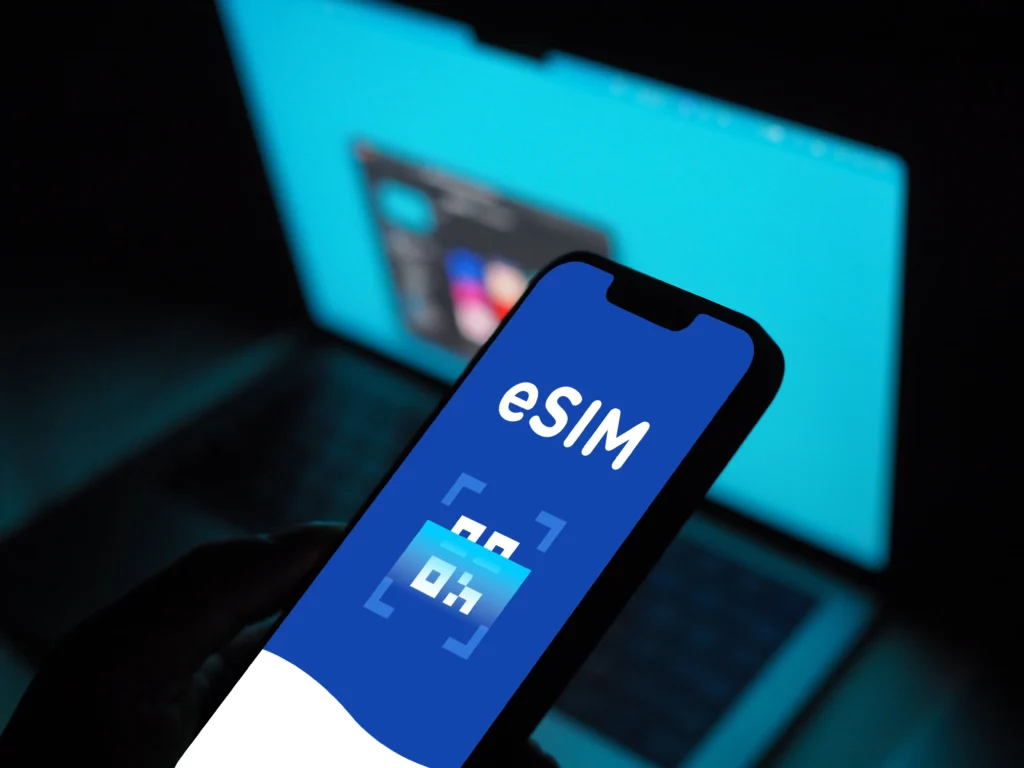
You should install your eSIM profile while you are still at home or at your departure gate. Most providers like Ubigi or Airalo send a QR code via email or host it directly within their app. To get started, go to your phone settings and find the cellular or mobile data section. Choose the option to add a data plan, scan the provided QR code, and your phone will begin the download process. It’s a good idea to label this new line “Japan” or “Travel” right away to avoid any confusion with your primary carrier.
Once the profile is on your device, keep the line turned off until you actually land in Japan. The most important step happens the moment the plane touches down: you must go into your settings and set your “Cellular Data” to use the new Japan eSIM. However, you should keep your primary home line “On” for specific services. By leaving your main line active but disabling its data roaming, you can still use iMessage or WhatsApp with your original phone number. This setup gives you the best of both worlds: local Japanese data speeds for maps and browsing, while your friends back home can still reach you on the apps you use every day.
Common Problems and Troubleshooting Tips
A “No Signal” message is the most frequent headache for travelers, but it usually comes down to one missed toggle. Even if your eSIM is active, it cannot talk to Japanese towers unless you turn on Data Roaming for that specific line. Since this is a prepaid plan, you don’t need to worry about surprise charges on your travel card. If roaming is on and you still can’t get a connection, you might need to manually configure the Access Point Name (APN). You can find these details in your provider’s instruction email; simply go to the cellular data network settings and type the required text into the APN field.
If things aren’t working perfectly right away, resist the urge to panic. Whatever you do, never delete an eSIM profile from your phone to “start over.” Most travel eSIMs are designed for a single installation only. If you delete the profile, the QR code becomes invalid, and you will likely have to buy a brand-new plan. If a simple restart doesn’t fix the issue, your best bet is to reach out to the provider’s support chat. They can often refresh the connection on their end without you losing your data plan. Remember that your phone is working hard to find new towers, so expect a bit more battery drain than usual and keep a power bank handy.
Who Should Buy a Japan eSIM Plan
Deciding how to stay connected in Japan used to be a headache involving long queues at a kiosk after an eleven-hour flight. Now, you have options that fit right in your pocket without actually taking up any physical space. An eSIM is the absolute right call for the soloist who values time and anyone who wants to hop off the plane and immediately pull up a train schedule without searching for “Airport Free Wi-Fi” that never actually works. It is for the person who doesn’t want to carry an extra device or worry about returning a rental. If your phone is unlocked and supports the tech, this is the modern way to travel.
Japan eSIM vs Airport SIM vs Pocket WiFi
When you look at the landscape of Japanese travel tech, the choice usually boils down to convenience versus group size. An eSIM is for the individual who wants zero friction. You buy it, scan it, and you’re live. There is no physical hardware to lose, no tiny SIM card to drop under a train seat, and no battery to charge other than your phone. It is a total no-brainer for solo travelers or couples who don’t want to stay tethered to each other’s side just to share a signal.
Pocket WiFi remains a strong contender for large families or groups of four or more people traveling together at all times. It acts like a portable router, allowing everyone to connect to one device. However, you have to find the pickup desk at the airport, keep the unit charged throughout the day, and remember to drop it in a mailbox before you fly home. If the person carrying the Pocket WiFi goes to a different shop in a mall, everyone else loses their map access instantly.
| Feature | Travel eSIM | Airport Physical SIM | Pocket WiFi |
|---|---|---|---|
| Setup Time | Instant (via QR code) | 10-15 minutes at desk | 10-15 minutes at desk |
| Hardware | None (Digital) | Physical nano-SIM | Portable Router device |
| Group Value | Best for 1-2 people | Best for 1 person | Best for groups of 4+ |
| Portability | Weightless | Weightless | Small brick in your bag |
| Maintenance | None | Don’t lose your home SIM | Must charge daily |
| Approx. Price | $17 (10GB / 30 Days) | $35 (8GB / 30 Days) | $5-$10 per day |
Choosing between these comes down to a simple trade-off between price and freedom. For a solo traveler, spending $18 on a 10GB Airalo plan is much more cost-effective than paying $7 per day for a Pocket WiFi rental that totals over $100 for a two-week trip. Physical SIMs bought at airports are often the most expensive option and sometimes have restrictive activation windows. To me, the freedom of having your data live on your phone without any extra gadgets makes the eSIM the undisputed winner for 2026 travel.
Conclusion
Navigating the 2026 5G-SA landscape in Japan is a total breeze once you pick the right digital partner for your phone. To me, Ubigi is the undisputed champion for reliability because it taps into the Docomo network, keeping you connected from the streets of Ginza to the snowy peaks of Hokkaido. If you are sticking to major cities and want to save a few bucks, Airalo is a fantastic, low-cost alternative that handles urban crowds with ease.
Before you head to the airport, make sure your phone is unlocked and install your chosen plan at least 24 hours before departure. This simple prep ensures you skip the technical hurdles and start your trip the moment you land. Whether you prioritize the raw speed of 5G or the massive data buckets of a budget plan, the freedom of an eSIM is the ultimate travel upgrade for any Japan itinerary. Enjoy your trip and stay connected!