Best eSIM For Europe Travel (Top Multi-Country Plans For 2026)
Traveling across the European continent used to mean juggling a handful of local SIM cards or returning home to a roaming bill that cost more than your flights. A multi-country eSIM is a digital-only SIM profile that allows you to connect to local cellular networks across various borders without physically swapping a chip. By 2026, these plans have become the gold standard for tourists because they offer borderless connectivity while skipping the predatory fees of traditional carriers.
This guide explores the top-tier options for navigating the European Union and non-EU territories like the UK, Switzerland, and Norway on a single plan. You’ll learn about the shift toward 100% Standalone 5G coverage and how these modern networks support everything from city hopping to remote mountain treks. We’ll also break down how to choose a plan based on your specific trip style, whether you’re a data-heavy digital nomad or a light browser.
The main benefits of switching to an eSIM include massive cost-efficiency, instant activation, and the convenience of maintaining one digital profile from London to Istanbul. If you’re planning to spend significant time in specific regions, you might want to check out an Orange eSIM Europe review and rating to see how a major carrier stacks up against specialized travel providers. Ultimately, these digital plans provide the freedom to cross borders without ever losing your signal.
Why Europe Travel Needs a Multi-Country eSIM
When you’re planning a grand tour of Europe, the connectivity strategy you choose is almost as important as which museum you visit first. Trying to manage connectivity across multiple nations using old methods feels completely outdated in 2026. You’re here to experience culture, hike mountains, and eat amazing food; you aren’t here to waste time or money on terrible roaming charges. That’s precisely why the multi-country, or regional, eSIM has become the absolute best choice for modern European travel. It keeps your phone active, your wallet happy, and your itinerary running smoothly. We see the focus now is on guaranteed 5G speeds and removing roadblocks, which is something only a top-tier eSIM plan can truly deliver across borders.
Border Crossings Happen Faster Than Connectivity Changes
Think about the classic European iron triangle: taking the high-speed train from Paris to Amsterdam, or perhaps chugging through the Alps from Zurich toward Milan. These journeys are incredibly fast; you zip across national lines, often without even noticing the change in landscape, let alone the border checkpoint! What does notice, however, is your data connection if you rely on an old physical SIM or a single-country plan.
If you’re relying on your phone for real-time updates during transit, a break in service is a genuine headache. Say you’re on a train pulling into Brussels, and you need to check the address of your Airbnb or you need to quickly confirm your ride-share pickup spot. If your old SIM loses connection the second you cross from France into Belgium, you are suddenly staring at a useless screen. You have to frantically scramble through your settings, maybe even manually select a new network, or perhaps the worst-case scenario; activate a local SIM. This delay, even if it’s just 60 seconds of downtime, interrupts your navigation and breaks that necessary digital flow.
Regional eSIMs solve this completely, offering that always-on utility you crave. The entire point of these advanced digital profiles is network agility; they are designed to register with whichever partner network offers the strongest signal in that precise geographical zone, whether you are on a high-speed rail line or deep in the Swiss countryside. You move, the phone swaps networks automatically, and your connection stays live. It’s the difference between smoothly transitioning your workflow and having to stop, troubleshoot tech, and then resume; and trust me, when you’re traveling, you want zero troubleshooting. Keeping that reliable, single digital profile active across the entire Schengen Area and beyond is the top reason to make the switch right now.

Why Country-Specific SIMs Break European Trips
When people look for ways to save money, they often gravitate toward buying a local SIM card in every single country they visit. It sounds budget-friendly in theory, right? Buy a cheap card in Italy, use it up, then buy another one in Germany. In practice, this approach causes major friction and often leads to hidden costs. The core problem is that a country-specific SIM is just that; it’s locked to that single country’s network infrastructure.
The minute you cross into the next country without proactive steps, you hit something I call the connectivity gap. This gap is that awful moment when your phone defaults back to your original home carrier’s roaming, suddenly kicking in those outrageous pay-as-you-go charges. You’ve just arrived in, say, Austria from Slovenia, and you desperately need your phone to pull up the directions from the Vienna Hauptbahnhof to your hotel, but your data is either non-existent or costing you 3 Euros per megabyte. That’s a poor user experience, plain and simple.
Here’s what makes local SIMs a headache for multi-country travel:
- The Activation Chase: You land, you’re tired, and now you have to find a store, wait in a line, present your passport, and explain which data plan you need in broken phrases. This eats up valuable time you could spend seeing sites.
- Incompatible Roaming: Most local SIMs do not support roaming outside their home nation. If your plan from a provider covers only France, don’t expect it to work in Czechia. Any data you prepaid becomes useless the moment you cross that invisible line.
- Hidden Costs: If you forget to turn off data roaming on your original SIM while using the local one, you might get hit with charges for background app updates or notifications hitting your home network. It adds complexity you simply don’t need.
A multi-country eSIM, by contrast, is built to prevent this gap. It’s a single profile that already has agreements with carriers across the entire region, including the EU, UK, and often Switzerland. You install it once, and as recent regulatory trends show, carriers are being pushed to maintain service quality, meaning your connection stays reliable when you need it most. For the contemporary traveler, this means no more connectivity gaps and no more emergency store runs while you should be enjoying your trip. If you are looking for a best eSIM for international travel guide, you’ll find that many experts prioritize these regional digital packages for the cleanest setup. Choosing the right eSIM options for international travel can provide a deeper look into provider comparisons.
What Makes the Best eSIM for Europe Travel
Selecting the best travel companion for your European connectivity involves more than just eyeballing the cheapest data package. You need a provider whose digital roaming infrastructure is built for serious multi-nation movement, not just a single country’s footprint. Think of it like picking a tire for a rally car; you don’t want a tire that is only good on smooth highways. The top-tier eSIM plans are architected for resilience, speed, and comprehensive geographic reach, which is essential when you’re bouncing between capital cities and small Alpine towns. We are looking for plans that treat the entire continent, including those tricky neighboring spots, as one connected zone, giving you a truly reliable user experience.
Coverage Across EU and Non-EU Countries
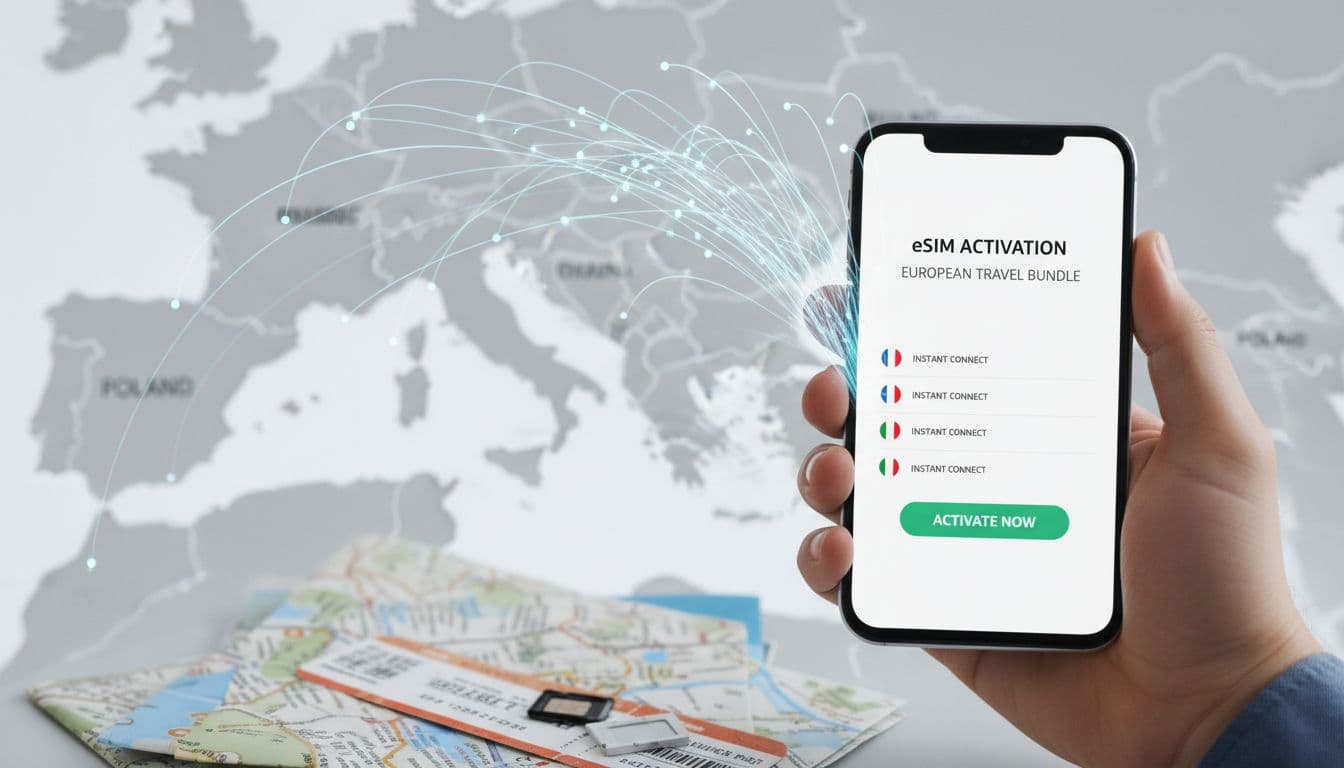
When you look at a map of Europe, it’s easy to assume one plan covers everything between Portugal and Poland. However, the European Union (EU) has specific roaming agreements, often referred to as the “Roam Like at Home” rules. Destinations outside the official EU bloc, such as the United Kingdom (UK), Switzerland, and Norway, are where many supposedly “European” eSIMs fall apart dramatically. This is the Switzerland Trap you absolutely must avoid.
Switzerland, for example, never joined the EU, and while many carriers offer favorable roaming there, it is not guaranteed under the standard deals. Norway and the UK have made specific agreements, yet an eSIM provider must explicitly state they support these territories for the connection to be automatic and fee-free within your package. If a plan boasts connectivity for 35 European countries but only lists 27 EU nations, you are gambling with your data.
For true multi-country efficiency, the best eSIM for Europe must clearly list these adjacent territories as part of its core coverage. That transparency signals a provider who has done the hard work of negotiating with multiple network operators beyond the basic EU requirement. Keep these non-EU territories in mind:
- Switzerland: Known for high roaming costs, a true Europe plan includes it without extra fees.
- The United Kingdom: Post-Brexit, some European carriers have reintroduced roaming charges, but top eSIMs keep it integrated.
- Norway and Iceland: Often lumped with the EU through the European Economic Area, but always worth a double-check.
If an eSIM doesn’t expressly guarantee UK, Switzerland, and Norway coverage within the standard price, it’s really only an EU eSIM, not a true Europe plan for the modern, extensive itinerary. You want a single, clean data policy that lasts from Edinburgh to Geneva without needing to understand how to activate a travel eSIM for every new border.
Network Quality and Speed Consistency
Having coverage is one thing; having fast, usable data across every border is another entirely. The best travel eSIMs aren’t tied to just one local network operator in each country; that would defeat the purpose since network performance varies wildly depending on your position. The industry leaders build partnerships that allow for multi-network support, which is a total game-changer for digital nomads and heavy users.
What this means for you, the traveler, is intelligent provider switching. Imagine you are driving through the French provinces where only Orange has a strong tower, but the next day you are in a German city where T-Mobile offers superior 5G coverage. A top-notch eSIM profile acts like a smart traffic cop for your data. It constantly pings the surrounding tower infrastructure and switches your device automatically to the operator providing the strongest signal.
This agility is key to maintaining performance for several reasons:
- Automatic Frequency Selection: Your phone connects to the carrier with the best local band support for your specific device model.
- Speed Priority: The eSIM selects 5G networks where available, avoiding the “throttling” that some budget providers use.
- Redundancy: If one carrier has a local outage, your phone simply hops to the competitor’s tower without you ever noticing a drop in signal.
This agility is key to maintaining performance. You don’t want to lose that speedy connection because you crossed a municipal line into a dead zone for your specific eSIM’s primary partner. Good eSIMs ensure your entire trip maintains a performance profile comparable to a local citizen’s experience, whether you are streaming video in a bustling Berlin café or uploading travel photos from a quiet spot near the Italian lakes. If your plan only relies on one provider per country, you are vulnerable to network congestion. A resilient, multi-network approach is a massive differentiator that ensures your tips for staying connected in Europe actually work when you’re off the beaten path.
How Europe eSIM Coverage Really Works
When it comes to using an eSIM across the diverse nations of Europe, the experience that hits your phone screen looks incredibly clean and simple. You see one plan, one remaining data balance, and total connectivity from Lisbon to the outer edges of the Schengen Area. However, what is happening behind that simple user interface is a sophisticated dance of digital agreements between your travel eSIM provider and the local mobile companies on the ground. To me, this background mechanism is the real magic of modern travel connectivity. It is what separates a truly good multi-country plan from one that is only mediocre. Do you really want to deal with connectivity hiccups when you are excited to explore a new city? Not at all. The beauty of a top-notch eSIM is that it handles all the heavy lifting automatically, giving you performance that feels local without the complicated setup or the massive bills that used to plague European travel.
One Plan vs Multiple Local Networks
You purchase a single data package, say 20GB for your trip spanning Italy, Germany, and the Netherlands, and that is the end of the transaction on your side. This makes the user experience fantastic. But think about how that works; your eSIM provider is not usually the company owning the cell towers in Rome or Munich. Instead, your eSIM works by utilizing wholesale roaming agreements with various local Mobile Network Operators (MNOs) in each country. The provider essentially buys large chunks of bandwidth from several partners, like Vodafone in one country and Deutsche Telekom in another, and then repackages that data into one simple plan sold to you.
This whole structure is designed to be far more cost-effective than sticking with your home carrier’s international roaming rates. Direct carrier roaming is the kind of service where you pay a premium just for the privilege of using someone else’s network without permission to negotiate pricing yourself. When you use a dedicated multi-country eSIM, however, the provider has already negotiated deep, favorable rates with the local networks because they purchase data at a massive commercial scale. That saving is passed directly to you.
- Cost Efficiency: You avoid the $10 per day “travel pass” fees from home carriers by using local-rate data.
- Unified Billing: One payment covers 30+ countries, so you never have to manage multiple accounts or currencies.
- Provider Aggregation: Your eSIM connects to the strongest available partner rather than being locked to just one tower owner.
For instance, a provider might be paying a local German carrier a small fraction of the retail price, then offering it to you at a rate that is significantly less than your regular carrier would charge for the exact same tower access. It is really crucial to understand that your single eSIM profile is a layer of smart aggregation sitting between you and the dozens of local networks it connects to. This centralization is the core benefit; you get the coverage footprint of many operators under the simple management system of one provider. If you are starting your journey in the city of light, getting a best eSIM for France ensures you have that local-tier performance from the moment you land.
Network Switching While You Move
If you are taking a train, driving an Autobahn, or simply walking from one side of a major city to another, you are constantly moving in and out of coverage areas managed by different cell towers. If you have ever had your phone suddenly drop connection while moving between territories managed by two different local partners, even within the same country, you know how frustrating it is. With a modern, well-configured travel eSIM, this handoff process between towers is nearly invisible.
What happens, especially in 2026 with enhanced network standards, is that your phone is always looking for the strongest available network that is partnered with your eSIM provider. As you move out of range of Tower A (perhaps owned by Network X) and into the zone of Tower B (owned by Network Y), the phone initiates a handover. Previously, a physical SIM card or less advanced digital profile might briefly pause data transfer during this switch, causing a momentary lag or a dropped call. But these updated eSIMs manage the switch automatically without any user input.
New regulations in 2026 are pushing carriers to make sure that even if the primary partner network is congested, your eSIM can quickly pivot to a secondary partner for better speed consistency. This function is what keeps your maps loading smoothly and your uploads continuing in the background, even as the scenery outside your window changes from French vineyards to Belgian cobblestones. The technology handles the complex negotiation of connecting to the best local infrastructure, leaving you with what truly matters: uninterrupted data access. I want you to think of your eSIM like an expert tour guide who knows exactly which local network has the best signal at any given moment, directing your phone there instantly. This level of automation is a key differentiator for top-tier travel connectivity solutions.
Global eSIM vs Europe-Only eSIM Plans
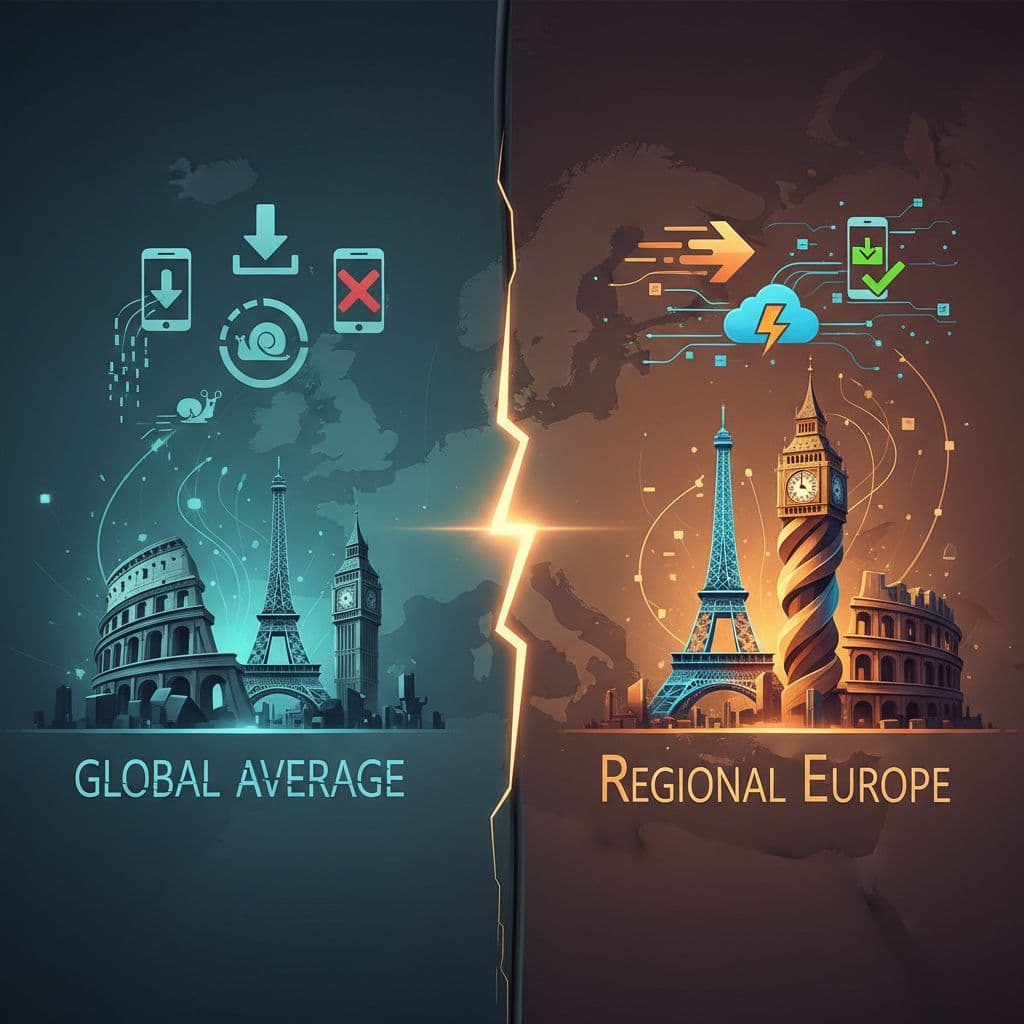
Choosing between a global data plan and a regional European package is a major fork in the road for any traveler. While a global plan promises the ultimate convenience of working in 140 or more countries, it often forces you to compromise on the actual quality of your connection within the European continent. For those spending their entire 2026 trip within the UK, the EU, or neighboring spots like Switzerland, a dedicated Europe-focused plan is almost always the superior choice. These plans are tuned specifically for the European infrastructure, ensuring you aren’t just connected, but that you are connected at the highest possible speeds.
Why Europe-Focused Plans Often Perform Better
The technical performance of your data connection often comes down to a metric called latency, also known as your “ping.” Latency is the time it takes for a request from your phone to travel to a server and back again. Europe-specific eSIM plans generally utilize local servers positioned directly within the European continent. This physical proximity means your data has a shorter distance to travel, resulting in incredibly snappy performance when you load Google Maps or refresh a social media feed.
Global plans frequently route their data traffic through centralized “home” servers located in the United States, Hong Kong, or Singapore. Even if you are standing in the middle of Berlin, a global eSIM might send your data request halfway around the world and back before the website actually loads on your screen. This creates a noticeable delay, or “lag,” that makes a high-speed 5G connection feel like a sluggish 3G one. By staying with a regional provider, you ensure your data stays local, keeping your navigation fluid and your video calls crisp.
Cost, Speed, and Latency Tradeoffs
When you look at the numbers, the gap between these two options becomes even clearer. Global plans carry a higher price tag because the provider must pay roaming fees across a massive variety of international networks, some of which are extremely expensive. By contrast, European regional plans take advantage of the 2026 wholesale price drops within the EU, allowing providers to offer much larger data buckets for a fraction of the cost.
| Feature | Europe-Only eSIM Plan | Global eSIM Plan |
|---|---|---|
| Typical Price | $1.00 – $3.00 per GB | $5.00 – $15.00 per GB |
| Data Routing | Local European Servers | Remote Global Hubs |
| Latency (Ping) | Low (Fast response) | High (Noticeable lag) |
| 5G Availability | Priority Access | Limited / Best Effort |
Speed consistency is another critical factor. Because best prepaid global eSIM plans have to work everywhere from Brazil to Thailand, they often rely on “roaming” tiers that local carriers might deprioritize during busy times. Regional Europe plans often have “Tier 1” access agreements, meaning you get the same 5G priority as a local subscriber. If you are trying to decide which route to take, looking into top Saily eSIM alternatives for travel can help you find regional specialists that beat the big global names on both price and performance. For most itineraries, the regional plan is the clear winner for a smooth, lag-free experience.
Best Europe eSIM Use Cases by Trip Style
Choosing the right digital data plan in 2026 depends heavily on how you move across the continent. A traveler spending a weekend in a single city has vastly different technical needs than someone crossing five borders in a week or working full time from a van. Matching your eSIM choice to your specific trip style ensures you never pay for data you can’t use or, worse, run out of speed when you need it most. By understanding these specific use cases, you can select a plan that fits your itinerary like a glove.

Multi-Country Rail and Road Trips
If your dream trip involves the Eurail pass or a scenic drive through the Pyrenees, your biggest challenge is signal persistence during long transits. Moving at 300 km/h on a TGV train or driving through remote mountain tunnels puts immense strain on a mobile connection. Traditional roaming often fails during these rapid handovers between towers, but a robust regional eSIM is built specifically to handle these quick transitions without dropping your session.
For those planning to spend hours on trains, data consumption usually spikes as you stream movies, jump on video calls, or sync large photo libraries to the cloud. In this scenario, you should look for True Unlimited plans that don’t just offer a bucket of data, but provide unthrottled 5G speeds. Many budget options claim to be unlimited but will drop your speed to a crawl after the first few gigabytes, making high definition streaming impossible just when you need it most on a long haul from Berlin to Prague.
To ensure your journey remains connected, prioritize these features:
- Broad Transit Coverage: Verify the plan includes 5G partners specifically along major rail corridors.
- High Speed Thresholds: Choose plans with high daily “fair use” limits to avoid evening slowdowns.
- Low Latency Routing: Essential for keeping your GPS responsive while driving through complex interchanges.
A reliable connection turns a long travel day into a productive or entertaining experience. Without it, you are left staring at a buffering icon while the best scenery passes you by. For rail enthusiasts, the ability to check platform changes or delay updates in real time is a safety necessity, not just a luxury.
Digital Nomads and Longer European Travel
Digital nomads require more than just a smartphone connection; they need a mobile office. When you are working from a cafe in Lisbon or a rental in the Greek islands, the ability to share your 5G connection with a laptop is non-negotiable. This process, known as tethering or creating a mobile hotspot, is where many eSIM plans differ significantly. Some providers actually block hotspot functionality or charge extra fees to enable it, which can be a massive roadblock for anyone needing to join a Zoom call or push code.
In 2026, the best plans for long-term travelers offer full data sharing capabilities as a standard feature. This means your laptop can use the same high-speed 5G pool as your phone without any artificial restrictions. It’s vital to check the fine print for “hotspot compatibility” before you buy, as some “unlimited” plans only apply the unlimited status to on-device data, while capping your shared data at a much lower level.
Photo by Kampus Production

Nomads should look for these professional-grade specs:
- Full Tethering Support: Ensure the provider explicitly allows laptop and tablet connections.
- Large Data Buckets: 50GB or 100GB plans are usually safer than smaller tiers for heavy work weeks.
- Multiple Network Access: Having access to two or three carriers in one country provides a backup if one network is congested.
If you find yourself staying in one region for more than a month, a dedicated regional plan often provides better value and lower latency than a global one. For those specifically heading to the Iberian Peninsula, checking out the best eSIM for Spain can provide insights into local network speeds that nomads rely on for daily standups and large file transfers. Always confirm that your chosen plan treats the UK and Switzerland as part of the “Europe” zone if your nomadic route takes you outside the European Union.
Common Europe eSIM Problems And How To Avoid Them
While high speed data makes exploring the continent much easier, digital travel setups aren’t always perfect. You might find your connection dropping at the most inconvenient times, like when you are trying to pull up a train ticket or find your hotel in a new city. Most of these hiccups aren’t caused by faulty technology but rather by how phones interact with local towers or by small gaps in service agreements. Understanding these common friction points allows you to troubleshoot in seconds rather than spending your afternoon hunting for public Wi-Fi.
Throttling After Border Crossings
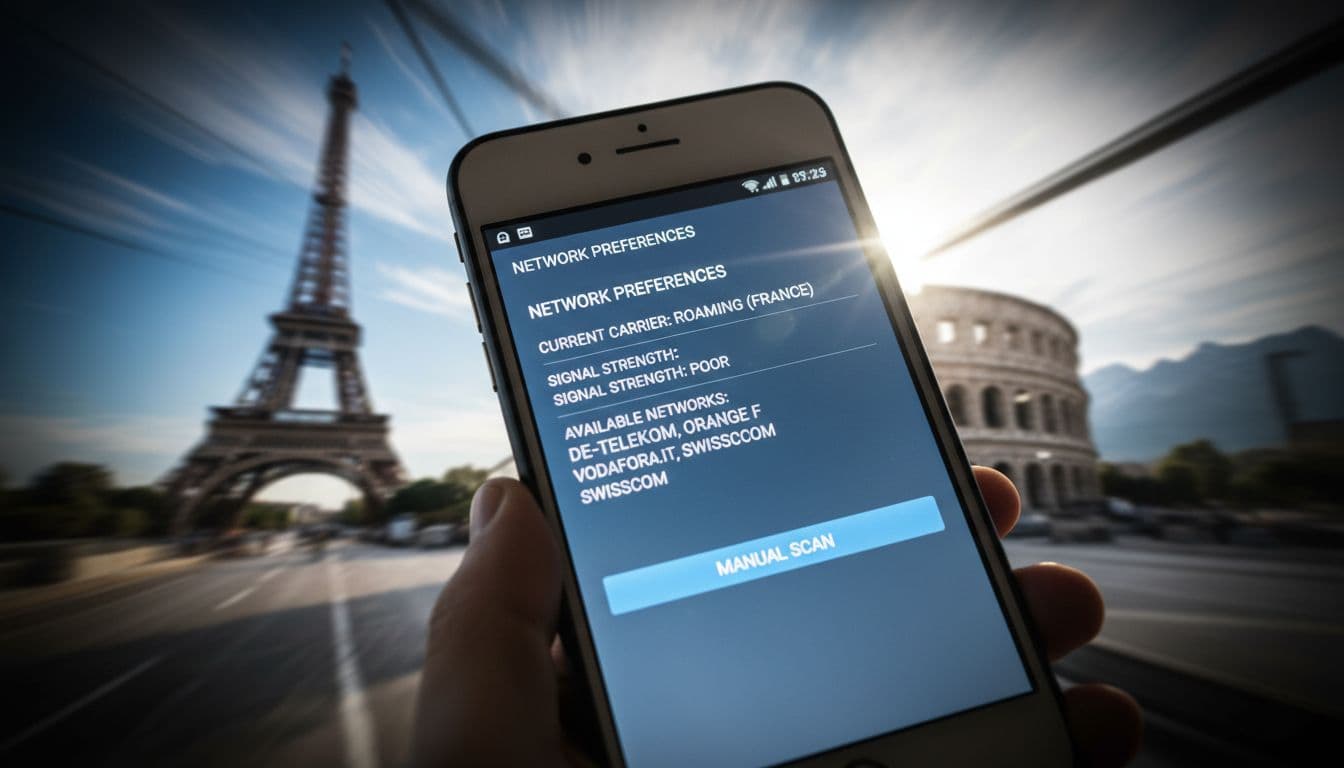
It’s a classic travel scenario: you cross from France into Spain, and suddenly your 5G signal vanishes, replaced by a painful 3G connection or no service at all. This happens because your phone is trying to hold onto the “home” network from the previous country as long as possible. Even when it finally lets go, the handshake with the new Spanish carrier can get stuck in a low-priority loop, causing massive lag or “throttling” that makes your apps unusable.
To fix this, you need to force your device to forget the old network and search for the strongest local signal immediately. I always recommend the “Airplane Mode Reset” as your first move. Toggling Airplane Mode on for 10 seconds and then off forces the eSIM to re-authenticate with the nearest tower, which usually bumps you back up to 4G or 5G speeds.
If the quick reset doesn’t work, follow these steps to get back online:
- Enable Data Roaming: This is the number one reason eSIMs fail. Go to Settings > Cellular, select your travel eSIM, and ensure the “Data Roaming” switch is ON. Without this, your phone won’t talk to towers in a new country.
- Manual Network Selection: If the automatic choice is slow, go to Settings > Cellular > Network Selection and turn off “Automatic.” Wait for the list to populate and try selecting a different carrier from the list.
- Check APN Settings: Occasionally, a new country requires a specific Access Point Name (APN). Check your provider’s instructions to see if you need to type a specific word like “internet” into your cellular data settings.
When traveling through hubs like Berlin or Munich, using a best travel eSIM for Germany 2025 often provides a more stable experience because these plans have deeper integration with local giants like Deutsche Telekom. For those moving between many nations, understanding automatic country switching for regional eSIMs is vital to ensure you aren’t stuck with a plan that requires manual re-installation at every border.
Country Lists That Exclude Key Stops
One of the sneakiest problems with “Europe” eSIM plans is the definition of “Europe.” Most budget providers build their plans around the European Union (EU) bloc to take advantage of regulated roaming rates. This creates a massive problem if your itinerary includes micro-states or non-EU countries. If you drive from France into Andorra or take a day trip to Monaco, your “Europe” plan might stop working instantly, or worse, start racking up expensive “out-of-plan” charges.
Micro-states like San Marino and Vatican City are often included because they rely on Italian infrastructure, but Andorra and Monaco are frequent omissions. Similarly, Balkan countries like Albania, Serbia, and Montenegro are often excluded from standard regional bundles, requiring a separate local eSIM or a more expensive “Global” plan. I’ve seen many travelers lose their GPS signal exactly when they cross into Andorra because they didn’t check the fine print on the country list.
Before you buy, cross-reference your itinerary with the provider’s “Included Countries” list and look specifically for these common gaps:
- Andorra: Almost never included in standard EU-only plans.
- Monaco: Often requires a plan that specifically mentions French network roaming or “All Europe.”
- The Balkans: Countries like Montenegro and Bosnia frequently fall outside the “Europe” regional umbrella.
- Switzerland: While often included in premium plans, some ultra-budget options still leave it out.
If you know you’ll be hitting these spots, download local maps for offline use before you leave your hotel. This ensures you can still navigate even if your data drops the moment you pass the border. Checking for seamless multi-country eSIM connectivity beforehand will save you the headache of being stranded without a signal in the middle of the Pyrenees or a Mediterranean coastal road.
How to Choose the Best eSIM for Your Europe Trip
Picking the perfect data plan for a European getaway is mostly about matching the digital specs to your actual movement on the ground. It is incredibly easy to get distracted by a flashy “Unlimited” sticker, but the real value lies in the details of the coverage map and your own backup strategy. You want a plan that feels like a silent partner, working perfectly in the background while you focus on the architecture and the food. By 2026, the market is flooded with options, so being a bit picky about the fine print is how you ensure you are getting that top-tier 5G experience.
Matching Coverage to Your Route
When you see an eSIM labeled as a “Europe” plan, don’t just take that at face value and hit the buy button. In the world of telecommunications, “Europe” is a bit of a flexible term that varies between providers. Usually, a regional plan covers the primary 27 EU member states, but your itinerary might include spots that fall outside that specific legal bucket. I’ve seen plenty of travelers get caught off guard when their data cuts out the second they cross into a neighboring non-EU territory.
Always take sixty seconds to scan the specific list of 30 or more countries included in the package. If you are planning to wander through the Swiss Alps, visit the fjords in Norway, or explore the history of London, you must confirm these specifically. Some budget-tier plans exclude Switzerland or the United Kingdom because the roaming agreements there are more expensive for the provider to maintain.
To keep your trip frustration-free, check for these specific destinations:
- Major Non-EU Hubs: Ensure the United Kingdom, Switzerland, and Norway are explicitly listed.
- Popular Micro-states: Confirm coverage for places like Vatican City, San Marino, and Monaco if they are on your list.
- Eastern Borders: Look closely at countries like Turkey or the Balkan states (Albania, Serbia, Montenegro), as these are rarely included in standard EU-only bundles.
It’s much better to spend an extra two dollars on a truly comprehensive plan than to find yourself in Geneva without a working map. A little bit of homework before you buy saves you from the “No Service” notification when you need it most.
Planning Backup Connectivity
Even the most reliable 2026 5G eSIM can occasionally hit a snag, whether it’s a rare local tower outage or a weird software glitch on your phone. Relying on a single point of failure when you are navigating a foreign city is a risk you don’t need to take. Having a “Plan B” is the mark of a seasoned traveler who knows that digital infrastructure, while amazing, isn’t totally invincible.
One of my favorite tricks is to keep a secondary, tiny data-only eSIM from a different provider on my phone. You don’t need a massive 50GB plan for this; even a 1GB “emergency” profile that lasts for a year can be a lifesaver. If your primary network gets congested at a major festival or drops out in a rural valley, you can simply toggle on your backup for five minutes to send a message or download a fresh map.
If you don’t want to buy a second eSIM, you should at least know where the reliable physical signal spots are. Most major European train stations, like Gare du Nord in Paris or Berlin Hauptbahnhof, offer decent free Wi-Fi as a standard service.
Consider these quick backup steps before you leave your hotel:
- Offline Maps: Download the Google Maps area for your next city so you can navigate without any data at all.
- Service App Screenshots: Keep a screenshot of your eSIM provider’s support page and your activation QR code in your photo gallery.
- Public Hotspots: Identify “Wi-Fi 4 EU” spots, which are free public hotspots found in many European parks and town squares.
Having these small safety nets allows you to travel with way more confidence. If the primary connection dips, you won’t feel that spike of panic because you already know exactly how to get back online in seconds. It’s all about staying one step ahead of the tech.
Conclusion
The ideal eSIM for a European journey combines broad geographical reach with technical simplicity. To truly master your mobile setup, look for a plan that treats the United Kingdom and Switzerland as primary territories rather than expensive extras. Prioritizing a provider that offers 5G access as the baseline ensures your navigation and streaming remain responsive, even in crowded city centers. Choosing an option with push-install activation is a total life-saver, as it removes the need to fumble with QR codes or complex manual settings.
For the most reliable experience, I recommend booking your plan at least 24 hours before your departure. This lead time allows you to verify the digital profile is ready on your device, ensuring you hit the ground running the moment your plane lands. If you want to compare various platforms before committing, checking out top eSIM providers for travel can help you find a package that matches your specific data needs. By taking these small steps early, you guarantee that your focus stays on the sights and sounds of Europe rather than your phone’s signal bar.