Best eSIM For Short Trips (The Ultimate 3 To 7 Day Travel Guide)
A short-term travel eSIM is a digital SIM card built directly into your phone that allows you to activate a local data plan without swapping physical plastic chips. Unlike traditional roaming, these digital plans provide an immediate connection to local networks the moment you land. For quick getaways spanning 3 to 7 days, the priority shifts toward instant activation and cost-efficiency for lower data volumes.
You don’t need a bulky 30-day plan for a long weekend in Tokyo or a mid-week hop to London. This guide focuses on providers like Airalo, Saily, and Holafly that excel in providing 5G support and easy setup for brief stays. Whether you’re looking for best global data plans 2025 or a simple 1GB bucket to power your maps, choosing the right tech ensures you skip the airport SIM kiosk lines entirely.
In this article, you’ll learn how to identify the best value for short-term stays, which brands offer the most reliable speeds, and why 5G compatibility matters even on a three-day trip. We’ll also break down the top Saily eSIM alternatives if you’re hunting for specialized regional coverage or better price-to-data ratios. By the end, you’ll know exactly how to keep your device connected without overpaying for data you’ll never use.
Why Short Trips Need a Different eSIM Approach
Short trips are all about maximizing every hour. When you only have 72 or 120 hours in a new city, the way you handle mobile data changes fundamentally compared to a month-long backpacking trek. For these brief visits, the traditional logic of “finding the best price per gigabyte” starts to fall apart because your time is actually more valuable than the three dollars you might save by hunting for a local deal.
The strategy here shifts from long-term sustainability to immediate performance. You need a connection that works the second the plane wheels touch the tarmac, ensuring you can call a ride-share or check your hotel’s location without a hitch. This requires looking at data plans not as a bulk purchase, but as a specialized tool for a specific window of time.
Limited Time Means Zero Setup Friction

If you are on a three-day trip, every hour spent troubleshooting is an hour stolen from your vacation. Think about it; would you really want to spend two hours of a 48-hour Paris getaway standing in line at a kiosk or digging through a drawer for a tiny metal SIM tool? Modern travel demands instant connectivity.
The goal is to have your eSIM installed and ready to activate before you even leave home. This removes the risk of “dead zones” at the airport where public Wi-Fi is often slow, insecure, or requires a local phone number to join. By choosing a provider that offers one-click activation, you bypass the headache of manual APN settings or waiting for a physical card to “find” the network. Short-term travel is about the user experience of the tech; it should be invisible and immediate.
Why Overpaying Happens Most on Short Trips
Overpaying on a short trip usually comes in two forms: daily roaming fees from your home carrier or buying a massive data bucket you will never finish. Many travelers fall into the trap of purchasing a standard 30-day, 10GB plan because it looks like a “good deal” on paper. In reality, if you are only staying for four days, you are essentially paying for 6GB of data that will vanish unused the moment you fly home.
For a 72-hour or 96-hour stay, a cheapest USA eSIM plans or similar regional micro-plan is often the smarter financial move. Focus on 1GB to 3GB buckets. These smaller portions are specifically designed for the “city break” traveler who needs GPS, messaging, and occasional social media uploads.
- 1GB Plans: Perfect for a weekend (2–3 days) of navigation and WhatsApp.
- 3GB Plans: Ideal for 5-day trips where you might be uploading reels or using translation apps frequently.
- Micro-Passes: Newer “weekend passes” often provide unlimited data for a flat 48-hour fee, which is much cheaper than standard roaming.
What Matters More Than Unlimited Data
On a five-day trip, “unlimited” is usually a marketing gimmick that provides less value than most people think. Many unlimited plans come with a Fair Usage Policy (FUP) that throttles your speed to a crawl after you hit a daily limit. If you are trying to use live AR translation or high-resolution maps in a crowded city center, speed and stability matter far more than an infinite cap of slow data.
Prioritize providers that offer 5G availability as the standard. High-speed 5G ensures that your maps load instantly and your messages go through even in high-traffic tourist areas. When time is tight, you want a premium network partner, not the cheapest, most congested one. If you are comparing prepaid global eSIM options, look at which local carriers they use. Reliable 4G or 5G coverage from a top-tier provider beats a “throttled unlimited” plan every single time. Most users realize that 2GB of lightning-fast data is infinitely more useful than 20GB of data that barely loads a webpage.
What Makes an eSIM Ideal for 3 to 7 Day Travel
Choosing the right connectivity tool is about more than just finding the lowest price; it is about finding a plan that fits the specific rhythm of a short getaway. When you are on the ground for less than a week, you don’t want to manage a complex account or worry about data rolling over into a second month you won’t use. The best short-term eSIMs prioritize lean, efficient packages that mirror your itinerary perfectly.
Simple Plans With Clear Validity
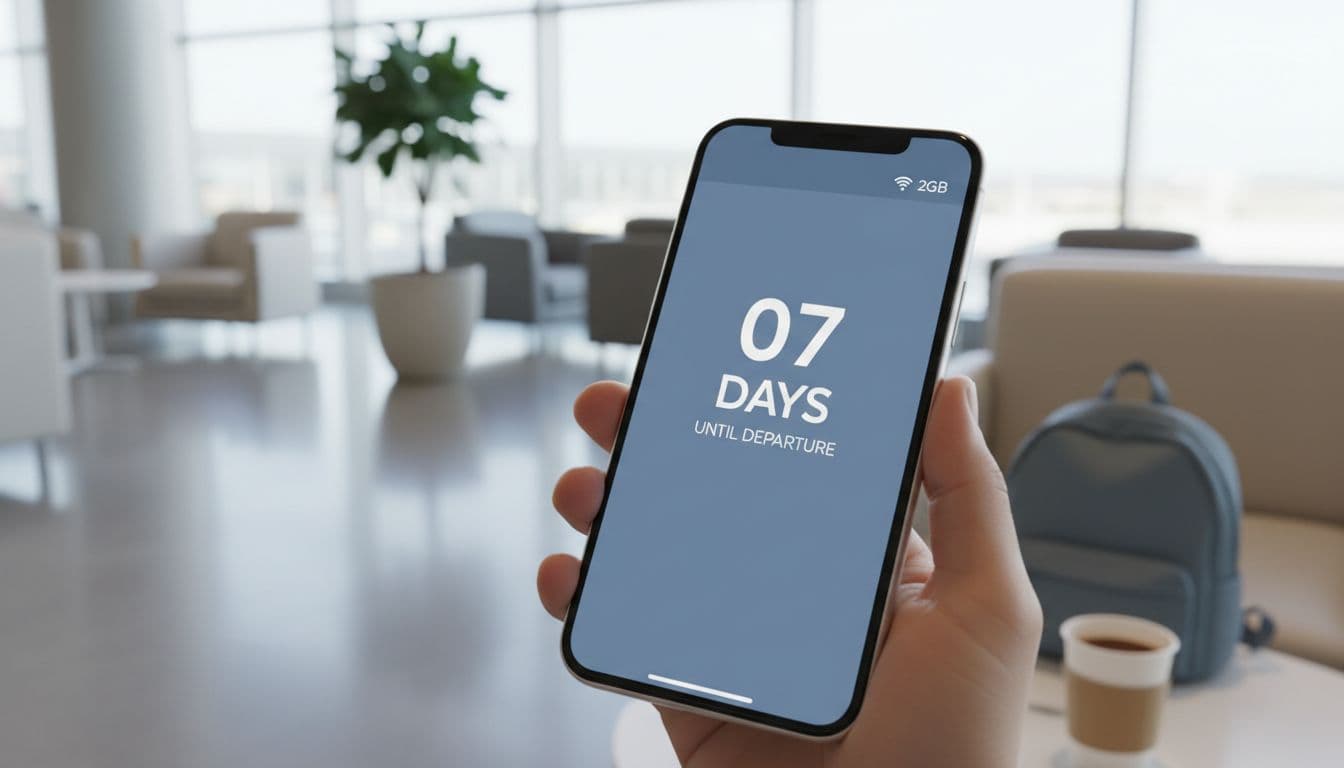
The greatest luxury in travel is simplicity, and short-term eSIM plans deliver this by offering expiration dates that actually make sense. Most leading providers now offer 7-day windows as a standard baseline, which is the “sweet spot” for most vacations. These plans are designed to be disposable; they activate when you arrive and effectively disappear once you depart, leaving your phone clean of any lingering subscriptions.
Using these micro-plans helps you avoid the common “auto-renew trap” often found with traditional carrier add-ons. You pay a one-time fee for a specific bucket of data, and once that time or data is gone, the service simply stops. Brands like Saily and Nomad have mastered this by offering highly localized 7-day packages that are often cheaper than a single airport meal. This “one and done” approach is a massive relief for travelers who hate checking their billing statements for months after a trip has ended.
Strong Coverage From Day One
Reliability is non-negotiable when you only have a few days to see the sights. If your connection drops while you are trying to navigate the Tokyo subway or find a hidden bistro in Rome, you are losing more than just data; you are losing precious vacation time. This is why a top-tier eSIM doesn’t just connect to one network; it uses “fallback” logic to keep you online as you move through the city.
The best providers partner with multiple local carriers in each country so your phone can jump to the strongest signal available. If the primary network hits a dead zone in a historic stone building or a crowded market, your eSIM automatically switches to a secondary partner. This redundancy ensures that 5G or high-speed 4G remains constant throughout your stay.
When you are looking for the best eSIM for USA travel, check if the provider utilizes major networks like T-Mobile or Verizon. Having access to these “Tier 1” networks means you get the same priority as a local subscriber. For a short trip, having this level of stability is a no-brainer because it removes the stress of hunting for public Wi-Fi or dealing with “no service” bars exactly when you need to call a ride-share.
Analyzing Common Short-Trip Travel Scenarios
Short jaunts are what we are talking about here trips lasting three, four, or maybe seven days. When time is this scarce, the entire calculus of travel data changes. You aren’t planning for long term connectivity because you just need a solid connection for a very tight window. The objective shifts from cost efficiency over time to maximum performance in minimal time. You want the connection to be automatic, fast, and completely hassle free, otherwise, you’re wasting the vacation days you paid for.
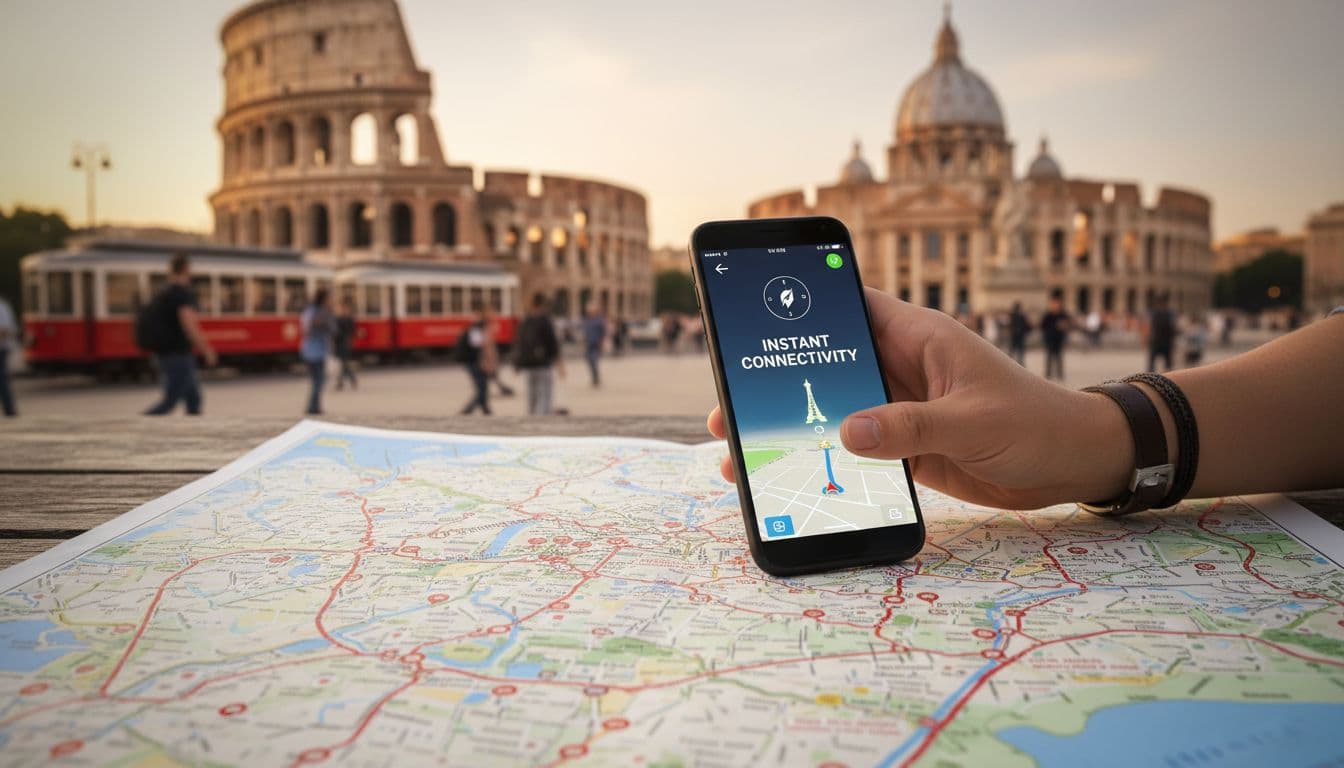
For these quick itineraries, data needs are highly predictable because your activities are usually focused on immediate access to services. We aren’t talking about streaming entire seasons of shows; we are talking about knowing exactly where the taxi stand is, confirming a dinner reservation, and quickly sending proof-of-life photos back home. This type of usage profile makes choosing the right short term eSIM a very clear decision.
Weekend City Breaks and Stopovers
Weekend city breaks, often lasting 48 hours, are the ultimate test of quick mobile setup. Primary data needs here revolve almost entirely around navigation. For a 48-hour trip focused on seeing the main sights and using GPS repeatedly, estimated data usage generally lands around 500MB to 1.5GB. If you rely heavily on navigation apps like Google Maps or Apple Maps without downloading city maps beforehand, you’ll drift toward that higher end, especially if you’re constantly refreshing traffic or looking up routes underground.
To help you plan, here’s a breakdown of typical data consumption for a two-day city visit:
- Navigation (GPS): 100MB to 300MB for active routing and loading map tiles.
- Messaging & Socials: 200MB to 600MB for texts, high quality photos, and short updates.
- Browsing & Search: 100MB to 200MB for menus, opening hours, and translation.
- Background Tasks: 100MB to 400MB for email syncs and weather updates.
For international stopovers, especially in Europe or Asia, regional eSIMs are your best friend. Why fumble switching between half a dozen country specific plans when you have a layover across two or three different countries, say London, Frankfurt, and Dubai, all within a week? A wide regional eSIM that covers the entire European Union is a total no-brainer. You activate it once upon arrival in your first stop, and it just works across all subsequent borders. Buying a local SIM in Paris for two days and then a different one in Berlin for three days is just messy; you waste time standing in line twice. A 7-day regional plan provides superior simplicity and connection continuity.
Business Trips With Tight Schedules
Professionals on short business trips demand near zero friction; they are not tourists looking for atmosphere, they are executing tasks. When you land in a new city for a 72-hour conference or a crucial client meeting, your phone is a work tool, not an entertainment device. You need your connection now, not in fifteen minutes after troubleshooting. Business travelers require set-it-and-forget-it technology.
Imagine the scenario: you step off the plane, grab your bag, and immediately need to join a Zoom call or order a ride-share. You can’t afford for your phone to sit there searching for service or prompting you for complicated APN settings. The eSIM must activate instantly, supporting high quality data for instant messaging and video conferencing. For these trips, the value of a plan that simply works (the one that allows you to confirm your hotel booking details and jump onto a quick voice call without missing a beat) outweighs any minor cost difference.
Business travelers prioritize performance reliability over squeezing every last cent out of a data bucket. If you’re in Tokyo for three days to close a deal, you should be looking at top global or regional providers known for carrier redundancy, which means less chance of a critical connection drop during a high stakes moment. You want something that feels like a native connection, perfectly integrated and ready to perform right out of the gate. Speed is the priority here, as catching a 5G signal can be the difference between a smooth video presentation and a pixelated mess.
Why eSIMs Beat Airport SIMs on Short Trips
Forget waiting in line at the arrival hall. When you are only in a destination for a few short days, time is your most valuable commodity. That airport SIM kiosk is designed to separate tourists from their money and their precious vacation hours. For a short trip, an eSIM is the superior strategy because it respects the limited leisure time you have. You get immediate network access, which translates directly into more sightseeing.
Who wants to spend the first hour of their three day getaway watching a vendor slowly process a credit card and manually activate a plastic chip? To me, that sounds like a vacation anti-climax. Digital activation means your connectivity is truly immediate. This is paramount when days are short and schedules are packed tight.

Time Saved on Arrival
Let’s talk real numbers for a moment. If you take a typical three day trip, which is 72 hours, and you waste one full hour standing in line at a physical SIM kiosk, you just sacrificed more than 1.3% of your entire trip just to get directions to your hotel. If you only count daylight hours, that percentage jumps significantly. That is a steep price to pay when you could be at a cafe or museum instead.
The advantage of the eSIM is near zero friction. You install the plan digitally days before you leave home. When the plane lands, you toggle the setting in your phone menu and you are connected. This instant connection lets you immediately call a ride share or check live traffic while standing at the baggage carousel. You save time physically and mental energy that would be spent haggling over packages. For a short trip, every minute counts, and skipping the kiosk is a major win.
Better Value for Brief Stays
Airport SIMs are notorious for being poor value for quick trips. Major vendors realize you are a captive audience, so they charge a premium. They often bundle unnecessary extras into their “tourist” packages. Why would someone on a four day trip need an expensive plan that includes redundant voice minutes? You are often forced into a $20 to $30 package that includes excessive data you will never use.
Digital eSIM providers structure their offerings perfectly for the short term traveler. For instance, you can find a 1GB plan from Saily or Airalo for about $5. This is a focused piece of connectivity. It gives you just enough data for navigation and messaging without forcing you into a massive 30 day contract.
- 1GB Saily or Airalo plans: Typically cost around $4.50 to $5.00 for 7 days.
- Airport Tourist SIMs: Often start at $20.00 and include 10GB or more of wasted data.
- Micro-plans: Ideal for 3 to 5 day stays where you only need basics like GPS and WhatsApp.
You avoid paying for bundled minutes and excess data you forfeit at the gate. This low cost for a lean data package represents superior financial efficiency. If you are curious about the technical side of this cost analysis of eSIM vs local SIM, it’s clear that for shorter stays, the micro-eSIM is the logical choice. Why buy a whole loaf of bread when you only need two slices for a sandwich?
How to Choose the Best eSIM for Your Short Trip
Selecting the right digital connection for a three to seven day adventure helps you stay focused on the destination rather than your settings menu. When your time on the ground is limited, you need a plan that balances immediate network access with a data bucket that actually matches your itinerary. The most efficient choice for these brief windows is often a 7-day plan with 1GB to 3GB of data, which covers the essentials like navigation and messaging without the waste of a month-long subscription.
Questions to Ask Before Buying
Before committing to a specific provider or data package, run through a quick mental audit to ensure the technology matches your hardware and specific trip needs. Not every plan is created equal, and a few seconds of verification now can prevent a massive headache when you land in a foreign city.
To ensure a smooth experience, verify these specific details before you pay:
- Is my phone carrier-unlocked?: Most eSIMs only work on devices that are not tied to a specific network contract. Check your settings under “About” or “Network” to confirm “No SIM restrictions.”
- Does the plan allow hotspot and tethering?: If you plan to work from a laptop or share data with a travel partner, ensure the provider doesn’t block “Personal Hotspot” features.
- Is 24/7 human support available?: Short trips have no room for 48-hour email response times. Look for a “Live Chat” feature within the provider app.
- Which local carrier is the primary partner?: Verify that the eSIM uses a Tier 1 network in your destination to guarantee 5G or high-speed 4G LTE stability.
- Does the plan support top-ups?: Check if you can add another 1GB easily through the app if you burn through your initial data faster than expected.
Quick Setup Checklist for Short Trips
Getting your connection ready before you head to the airport is the best way to hit the ground running. You want the transition from “Airplane Mode” to “Connected” to be as fast as possible. Most modern travel eSIMs allow you to install the profile days in advance, so it sits dormant on your device until you arrive at your destination.
Follow these steps for a stress-free activation:
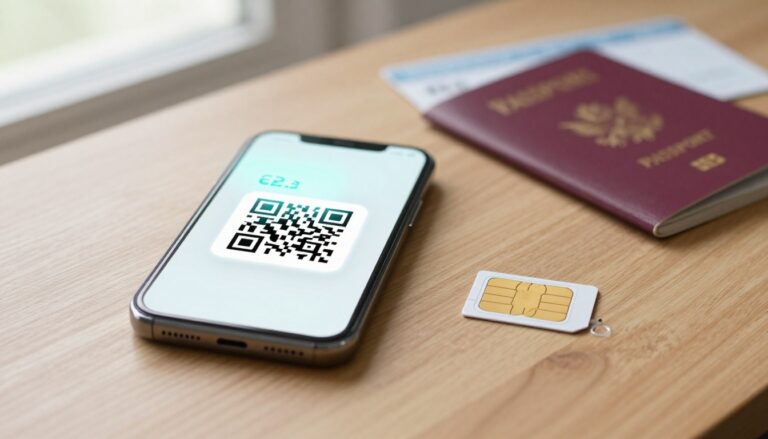
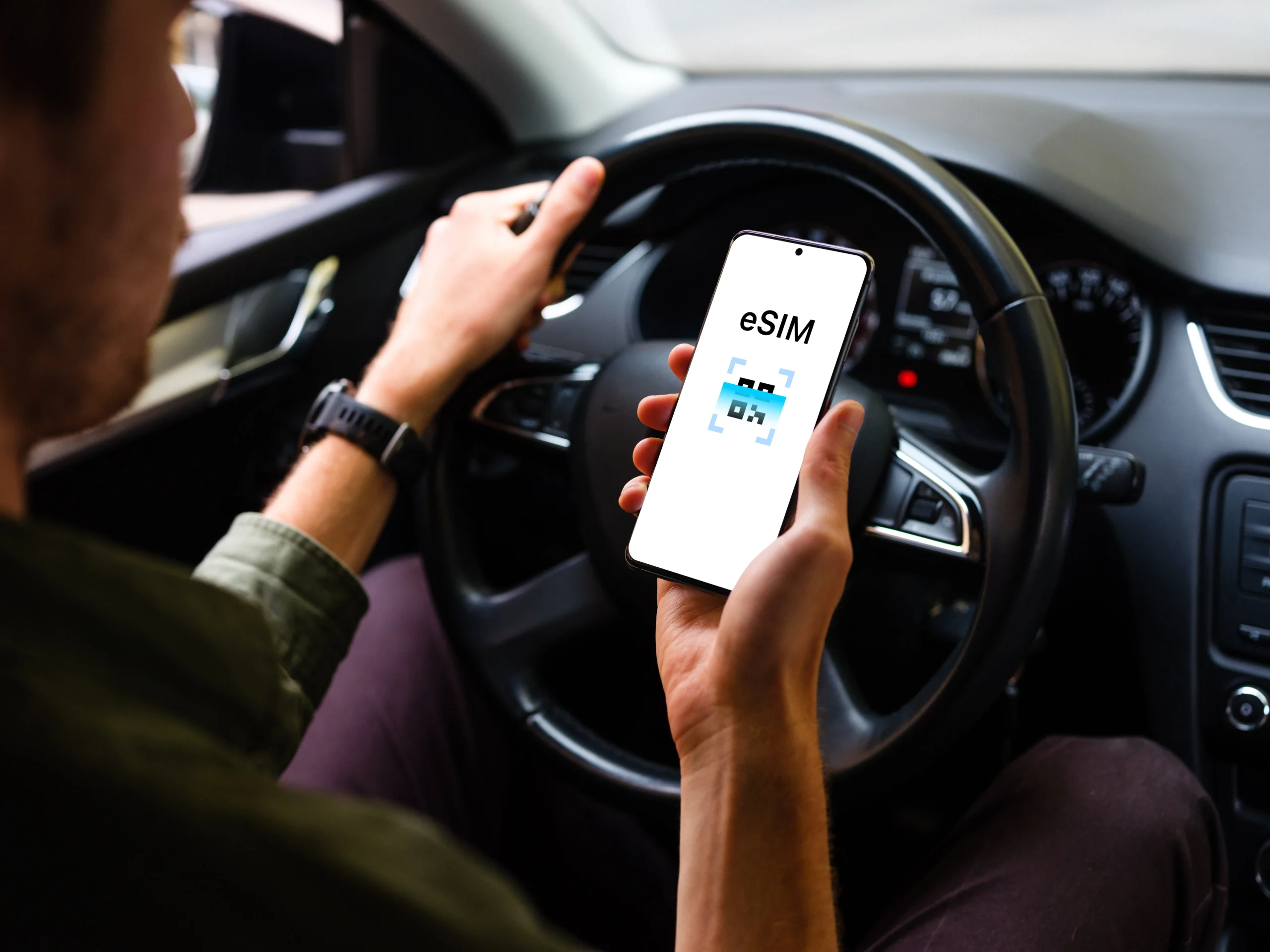
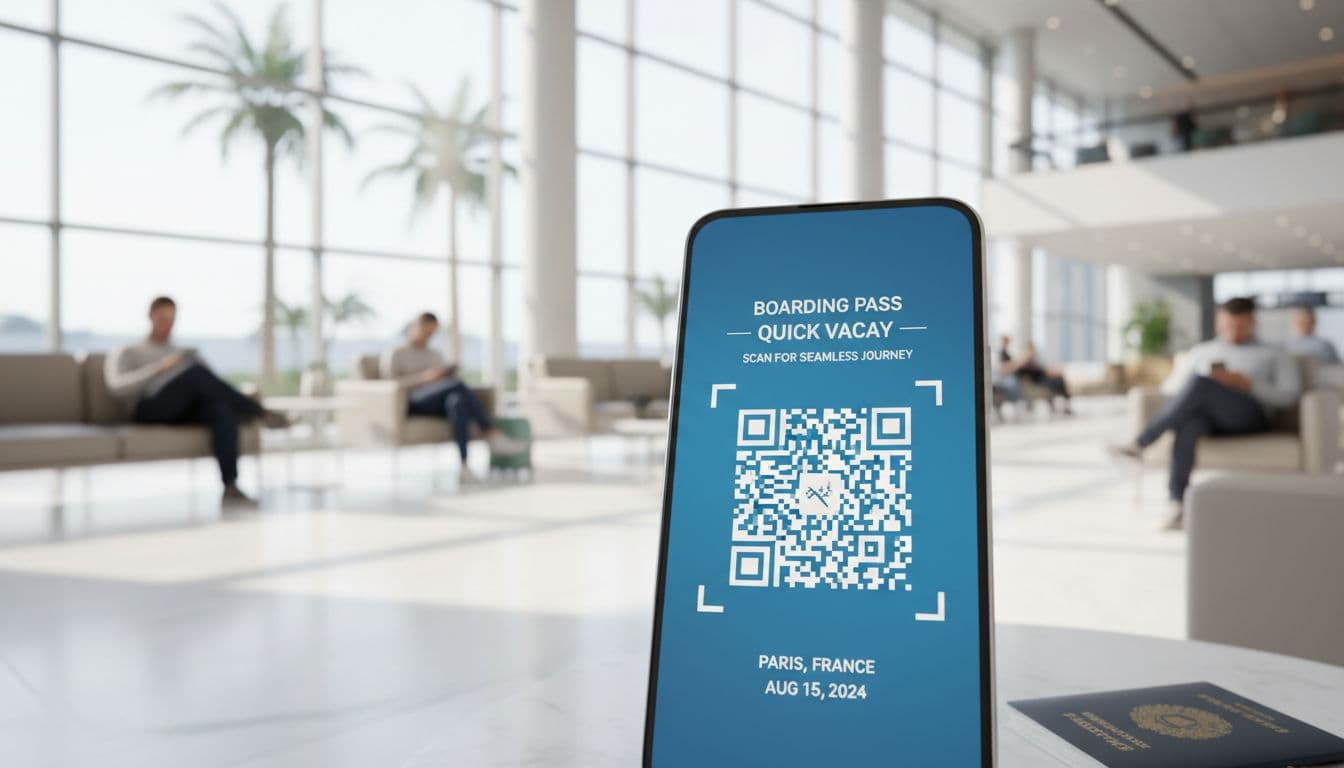
- Install the eSIM Profile at home: Use your stable home Wi-Fi to download the eSIM via QR code or manual entry at least 24 hours before departure.
- Label your SIMs clearly: In your cellular settings, rename your home SIM as “Primary” and your travel eSIM as “Travel” to avoid confusion when toggling data.
- Disable “Data Switching”: Ensure your phone doesn’t automatically hunt for data on your home SIM, which can trigger expensive “Day Pass” roaming fees from your home carrier.
- Set the eSIM as the Data Source: Once you land, go to Cellular/Mobile Data settings and select your travel eSIM as the active path for data while keeping your primary line active for critical texts.
- Turn off Primary SIM Roaming: Manually toggle “Data Roaming” to OFF for your home line. This is the ultimate safety net to ensure every kilobyte of data goes through your budget-friendly Canada travel eSIM or other regional plan.
While these steps work perfectly for quick weekenders, those planning longer stays might need to consider managing data costs for long trips to avoid cumulative expenses. For a short three to seven day jaunt, following this checklist ensures your connectivity is as crisp and efficient as your travel plans.
Conclusion
The best eSIM for your quick 3 to 7 day getaway is the one that offers instant activation and a cost-effective, small data package. Forget about chasing the lowest price per gigabyte; for brief travel, convenience directly maximizes your limited time on the ground.
Focus on providers that let you set up before you even leave. This means you land connected and ready to explore immediately. Plan your data use conservatively, select a provider known for a clean user experience, and enjoy the vacation you paid for without any connectivity delays.