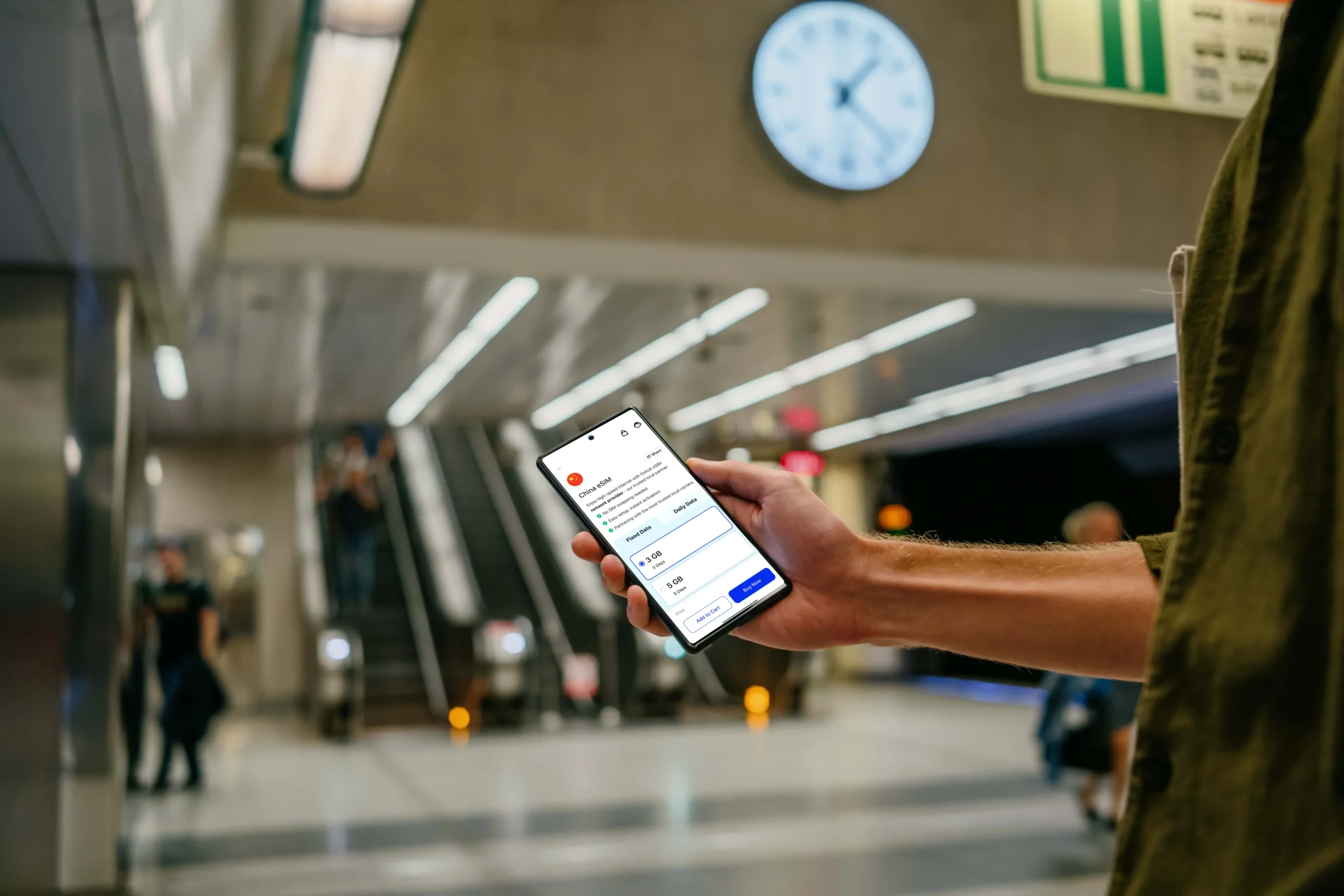
Cost Per GB Comparison: Which eSIM Provider Gives Best Value (2026 Guide)
Trying to figure out which eSIM provider gives the best value for your travel data stops being a guessing game today. You’re probably staring at pricing tables, wondering if that $1.50 per GB rate is actually a steal compared to the company next door charging $2.50. We get it; comparing the math across different providers like Saily, Airalo, and Nomad gets confusing fast, especially when plan sizes and network speeds vary so wildly.
The reality is that the best value isn’t just the lowest sticker price; it’s about balancing that cost with network speed, coverage quality, and how easy the activation process is. In fact, if you’re looking for the absolute lowest cost per GB, regional plans in 2026 are often the winners, sometimes dropping rates as low as $0.50 per GB for bulk data in competitive markets like Europe or Asia.
This guide breaks down exactly how to calculate your true data spend. We’ll compare the heavy hitters side-by-side, diving into the difference between regional and global plan pricing, and highlighting the hidden fees that can quietly inflate your bill. Whether you’re a data-hungry remote worker or a budget-conscious backpacker, you’ll learn how to spot the “budget kings” and when it’s actually worth paying a premium for better support and reliability.
Understanding eSIM Pricing and Why Cost per GB Matters
When you look at the sticker price of an eSIM, it is easy to get distracted by the total cost. A $30 plan might seem expensive until you realize it includes 30GB of data, while a $5 plan might actually be a ripoff if it only gives you 500MB. To find the true value, you have to look at the cost per gigabyte (CPG). This metric is the great equalizer that reveals whether a provider is offering a fair deal or just a low entry price for a tiny amount of data.
 Photo by Jacob
In early 2026, the global market has shifted significantly. We are seeing a “race to the bottom” where the standard for regional plans in places like Europe and North America has dropped to roughly $1.10 per GB. If you are paying much more than that for a high-volume plan, you are likely paying for convenience or premium features rather than just the raw data itself.
How Pricing Structures Vary Across eSIM Providers
eSIM companies generally use two distinct ways to charge you for connectivity: fixed data buckets and unlimited duration plans. Providers such as Airalo and Saily typically structure their tiers around prepaid credits. You buy a specific amount of data, such as 3GB or 10GB, which remains valid for a set window of time, usually 7 to 30 days. This is great for budget control because you cannot spend more than the upfront price, but it requires you to manually top up if you run out mid-trip.
Other providers are moving toward usage-based billing or daily data resets. For instance, some plans offer a daily data allowance of 1GB or 2GB that refreshes every 24 hours. While this ensures you never stay “picketed” without internet for long, it can be more expensive if you are a light user who only needs a few hundred megabytes a day. For those staying abroad for longer periods, evaluating mobile connectivity value for slow travelers is essential to see how these tiers stack up over 60 or 90 days.
- Fixed Buckets: Buy 10GB for $15; best for predictable users.
- Daily Resets: 1GB per day for $2; best for heavy social media users.
- Pay-as-you-go: Credits that never expire; best for infrequent travelers.
When Cost per GB Isn’t the Only Value Metric
It is tempting to just grab the cheapest $0.70 per GB plan you can find, but data is useless if it behaves like a dial-up connection. Value is a mix of price and performance metrics like latency and network priority. Cheap eSIMs often route your data through a “home” server halfway across the world. This creates high ping or lag, making it nearly impossible to use Google Maps smoothly or have a clear video call without that annoying three-second delay.
By 2026, top-tier providers use local breakout technology. This means your data connects directly to a local tower and hits the internet right there in the country you are visiting, which drops latency to a crisp 30–50ms. You also want to look for multi-network steering. This feature allows your phone to jump between different local carriers (like switching from T-Mobile to AT&T) to find the strongest signal.
When you are comparing United States eSIM carriers and costs, remember that paying an extra dollar for “Network Priority” is a no-brainer if you are in a crowded spot like a stadium or airport. In those high-traffic areas, standard data users get throttled, while priority users keep their 5G speeds. Cheap data that times out every time you try to book a Grab or an Uber isn’t a bargain; it’s a liability.
How eSIM Plans Are Priced by Region and Network
Figuring out the true price of travel data is where things get interesting, and frankly, where most travelers get misled. You see a price tag that looks great, but it is often for a tiny amount of data or a plan that only works in one country. In early 2026, the market has made it clear: where you go matters more than who you buy from when hunting for the best cost per GB.
The core difference in pricing comes down to Global versus Regional plans, and whether the provider leans on daily rates or strict data buckets. Data is useless if it is slow, so keep performance, not just the sticker price, in mind as you compare your options. Most top-tier providers now use local network steering to ensure you stay on the fastest available 5G signal, though this premium access sometimes carries a higher price tag in less developed regions.
Global vs Regional Plans and Impact on Cost
This is the biggest factor driving your overall data spend. Think of it like this: would you rather buy a single, versatile Swiss Army knife (Global Plan) or several specialized tools (Regional Plans)? The Swiss Army knife is convenient, but the specialized tools will always do their specific jobs better and cheaper.
A Global eSIM plan offers unmatched convenience, covering you across dozens, sometimes over 100, different countries with one single installation. Because the provider has to maintain agreements with many small and large carriers worldwide, that convenience comes with a high convenience tax. Real-time data shows that you can expect an average cost of $4.00 to $6.00 per GB on a standard global package right now. If you buy a tiny 1GB plan globally, that cost can spike even higher, potentially hitting $9.00 per GB, which is a massive price to pay for basic browsing.
Now look at the Regional Europe plan. Because Europe is a massively subscribed, highly connected market, the competition drives the price down significantly. We see providers offering excellent data rates here, often reducing the cost to roughly $1.20 per GB when you purchase a larger, say 20GB, package over 30 days. That single choice, choosing the regional plan over the global one for a European trip, can slash your data bill by 75 percent or more.
The price disparity forces travelers to make a trade-off every time they book.
- Choose Global If: You are doing a whirlwind, multi-continent trip where setting up new local options every few days is logistically impossible; you value zero setup time between countries above all else.
- Choose Regional If: You are spending significant time (more than five days) in one consolidated area, like all of Western Europe, Southeast Asia, or North America; you want the absolute lowest cost per GB available.
Generally, if you are only traveling within a specific continent or large region, avoid the global plan unless you have already checked out the great deals you can get with a smarter regional option. For many, finding the best prepaid global eSIM plans is only worth it for true world-traveling itineraries where crossing borders happens every few days.
Unlimited Versus Strictly Metered Plans
Once you decide on Regional or Global, the next big pricing structure fork in the road is how the data allowance is managed. This choice directly affects how you use your phone day to day. This decision is often between providers like Holafly advocating a daily rate versus established players like Nomad and Airalo sticking to fixed data buckets.
Providers that use daily rates, often marketed as unlimited, typically charge a fixed amount (like $7 per day) for you to use a set amount of high-speed data. The payoff here is peace of mind; you will not suddenly run out of data in the middle of mapping a route. You know your allowance resets every 24 hours.
However, you must be mindful of the Fair Usage Policy (FUP). This is the secret fine print attached to nearly every unlimited plan. In 2026, carriers most commonly implement a FUP that throttles your connection speed (think 2G speeds, which are barely usable for browsing) after you hit a threshold like 2GB per day. If you plan to watch hours of video or use your phone as a constant mobile hotspot for work, that 2GB limit will blow by quickly, rendering the rest of the unlimited data effectively unusable.
On the flip side, providers like Nomad and Airalo structure their offers as strictly metered data buckets. You buy exactly what you need: 5GB for 30 days, or 10GB for 90 days. This is far more predictable for the upfront budgeter. If you calculate that you need 15GB for a three-week trip, you buy 15GB, and that is all you get.
Which approach is better for you? That depends on your usage habits.
| Plan Type | Primary Model | Key User Benefit | Potential Drawback |
|---|---|---|---|
| Daily Unlimited | Fixed Daily Rate with FUP | Constant connectivity; predictable daily spend | Speed reduction after hitting the daily cap (often 2GB) |
| Data Bucket | Upfront Data Purchase | Precise control over total budget; no speed throttling | Data runs out completely; requires manual top-up |
If you are a light user who only checks emails and uses maps a couple of times a day, the daily plan feels wasteful. If you are a heavy media consumer, you must investigate the FUP threshold on the daily plans because 2GB per day is often the hard limit before you face the slow lane. For users who analyze every penny, the metered plan gives you maximum control over the final cost per GB. Before you buy, checking top eSIM providers for international travel can help you see which specific brands offer the best thresholds for their unlimited tiers versus their fixed buckets.
Head-to-Head: Cost per GB Benchmarking Framework
Calculating the true value of an eSIM requires more than just looking at the number on the digital price tag. To find the most efficient spend, you need a framework that treats mobile data like a utility, measuring the price against the volume and the actual final cost at the checkout screen. A plan that appears to be a bargain at $1.50 per GB can quickly lose its appeal if the provider tacks on service fees or if the regional network quality forces you to waste half that data on failed page loads.
When you benchmark these plans, you should categorize them into specific tiers based on your usage profile. For instance, a light traveler using under 3GB will almost always pay a higher unit price, often double what a power user pays for a 20GB bucket. In 2026, the benchmark for a “good” price in high-competition zones like Europe or the USA is roughly $1.10 to $1.30 per GB. If you are looking at plans in Asia, that benchmark drops even lower, sometimes reaching $0.80 per GB for larger bundles.
Adjusting for Taxes and Hidden Extras
 Photo by Erik Mclean
The most frustrating part of buying travel data is watching your total jump by 20 percent the second you hit the payment screen. Global pricing for digital services is a minefield of local regulations and corporate billing habits. It’s vital to recognize that the country where the eSIM provider is headquartered often determines how they display their prices.
US-based companies frequently use a “sticker price” model that excludes government sales tax until the final step. Depending on your billing address, you might see an extra 8% to 10% added for state and local taxes. Conversely, European and Hong Kong-based providers usually adhere to VAT-inclusive pricing. For these companies, the price you see in the catalog is the final amount you pay, as the 15% to 25% Value Added Tax is already baked into the quote.
Beyond taxes, you have to watch out for technical “maintenance” fees that vary by provider. Some companies implement “Install-Again” fees for one-time use eSIMs. If you accidentally delete your profile or switch phones, these brands charge you a fee (often around $1.00 to $2.00) to generate a new QR code.
When you compare USA data plans, always look for these potential surcharges:
- Payment Processing Fees: Small convenience charges of $0.50 to $1.00 applied to credit card transactions.
- Regulatory Recovery Fees: Costs passed to the consumer to cover the network access fees charged by local governments in countries like Turkey or Brazil.
- Currency Conversion Hits: If an app asks to convert your home currency at checkout, it’s usually a bad deal. Your bank’s native exchange rate is almost always better.
| Fee Type | Average Impact | Pro-Tip for 2026 |
|---|---|---|
| VAT / Sales Tax | 8% – 25% | Check if the provider is EU-based for “all-in” pricing. |
| Top-Up Premium | 50% – 100% | Buying 1GB extra is often twice as expensive as the initial rate. |
| Regulatory Fee | $1.00 – $3.00 | Common in strictly regulated markets; check the fine print. |
To find the absolute cheapest eSIM for USA travel, you have to account for these variables before you commit. A provider with a slightly higher base price might end up being the cheaper option if they include all taxes and don’t charge for profile re-installations. Always aim for “All-Inclusive” pricing models to keep your travel budget predictable.
Regional Price Breakdown for Common Travel Destinations
Getting the most out of your travel budget means knowing exactly where your dollars go the furthest. In the world of eSIMs, geography is the biggest factor in determining whether you pay a premium or snag a bargain. While the global average price for data continues to trend downward as we head into 2026, the cost per GB still fluctuates wildly depending on local infrastructure and market competition.
If you are planning a multi-stop journey, understanding these regional benchmarks helps you decide when to buy a massive data bucket and when to stick to a leaner plan. For instance, the price you pay for 10GB in London might buy you 50GB in Bangkok, but it could barely cover 3GB in some parts of North America. Knowing these baseline costs ensures you never overpay for a signal.
The Europe Edge: Why Data is Cheapest There
Europe remains the gold standard for eSIM value, primarily due to intense market competition and the “Roam Like at Home” regulations. Because mobile operators across the European Union have spent years perfecting cross-border connectivity, eSIM providers can purchase data in bulk at incredibly low wholesale rates. To you, this translates to some of the lowest retail prices on the planet.
In 2026, the benchmark for a solid European regional plan is roughly $0.70 to $1.20 per GB. This pricing usually applies to “Regional Europe” bundles that cover 30 or more countries, allowing you to hop from a cafe in Paris to a plaza in Madrid without changing your settings or paying extra.
The competitive landscape in Europe is so dense that providers often offer “bulk bias” pricing. While a 1GB plan might cost you $4.00, jumping up to a 20GB or 30GB plan can drop your effective rate below the $1.00 mark. If you are looking for affordable alternatives for travel data, focusing on these high-volume European bundles is usually the most efficient way to keep your cost per GB low.
North America and Asia Pacific Variance
When you cross the Atlantic or the Pacific, the pricing logic shifts dramatically. North America, specifically the USA and Canada, tends to sit on the higher end of the spectrum. This is due to the high cost of network maintenance and the dominant position of a few major carriers. In these regions, you should expect to pay between $2.50 and $4.00 per GB for a reliable 5G connection. Canada, in particular, often remains one of the most expensive markets for data in the developed world.
On the other hand, Southeast Asia is a budget traveler’s paradise. Countries like Thailand, Vietnam, and Indonesia have some of the most aggressive mobile data pricing globally. Local competition is fierce, and infrastructure is modern, leading to rates that often dip as low as $0.40 to $0.90 per GB in 2026.
- Southeast Asia: The absolute leader in value; large bundles often result in sub-dollar costs per gigabyte.
- North America: Higher entry costs; you pay for premium 5G infrastructure and wide-reaching coverage.
- Asia Pacific (Regional): Slightly more expensive than single-country plans but offers great value if you are visiting 10+ countries in the region.
If you are trying to find the best cheap travel eSIM options for an Asian itinerary, you’ll find that purchasing a regional “Asia” eSIM is often nearly as cheap as buying individual local cards, with the added benefit of staying connected the moment you land. This contrast highlights why it’s so important to check regional benchmarks before clicking “buy” on a global plan that might overcharge you for regions where data is naturally inexpensive.
How to Choose the Best eSIM Provider for Your Needs
Landing on the right eSIM provider requires looking beyond the flashy marketing and getting down to the brass tacks of value. You want a connection that stays strong when you are navigating a crowded city or trying to upload photos from a remote beach. To find that sweet spot, you have to weigh the total data volume against the price while keeping an eye on network priority and local breakout speeds. It is a balancing act; the cheapest option can often lead to frustrating lag, while the most expensive might offer features you simply do not need.
Step-by-Step: Calculating Your Own Cost per GB
Calculating your actual spend is the only way to avoid overpaying for “convenience” that isn’t actually convenient. Many providers bait you with low entry prices for small data amounts, but the math rarely checks out in your favor on those tiny plans. To find the true value of any eSIM offer, use this straightforward formula:
Total Price / Total GB = Cost per GB
For example, if you are looking at a 10GB plan for $15, your cost is $1.50 (1.39 EUR) per GB. If another provider offers 20GB for $22, that drops to $1.10 per GB. That extra $7 saves you significantly on the unit price and ensures you won’t be scrambling for a top-up mid-trip. When you are crunching these numbers, always double-check if mobile hotspotting is included. Some “budget” providers disable this feature or charge an extra fee to share your data with a laptop or tablet, which can effectively double your costs if you need to work while traveling.
Common Pitfalls and How to Maximize Value
One of the biggest mistakes travelers make is being “trigger happy” with their settings. You must never delete your eSIM profile from your phone settings until you are completely finished with your trip. Most eSIMs are designed for a single installation; if you delete it because you are having a minor connection issue, you usually cannot reinstall it. This forces you to buy a brand new plan, instantly doubling your cost per GB. Instead of deleting, try toggling your “Airplane Mode” or restarting your device to reset the connection.
Another value killer is buying for the short term when a longer view is cheaper. You might see a $5 plan for 1GB that lasts 7 days and think it is a safe bet for a week-long trip. However, a 10GB plan that lasts 30 days might only cost $12. By spending that extra $7, you get ten times the data and a much longer validity window.
- Avoid Small Caps: 1GB plans often have the highest markup; aim for at least 3GB to 5GB to get a better rate.
- Check Validity Windows: A “cheap” plan that expires in 3 days is useless if your trip is 10 days long; you’ll end up paying for multiple activations.
- Watch the Top-Up Premium: Some apps charge more for a 1GB top-up than the initial 1GB cost on the original plan; buy a bit more than you think you need upfront.
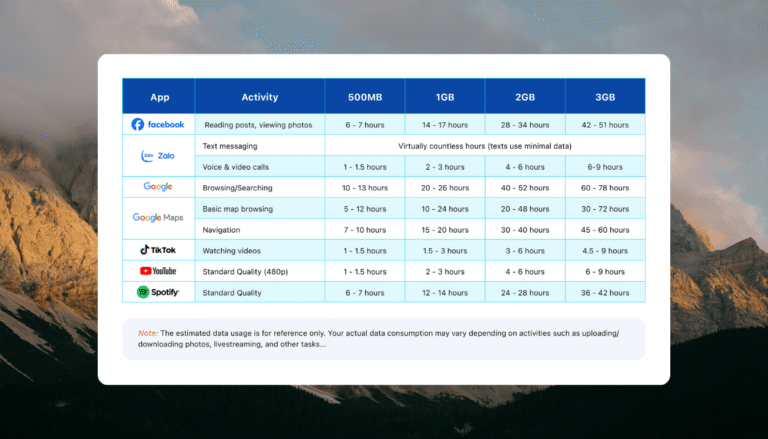
If you find yourself constantly hitting your limit, it’s a sign that your initial calculation was too lean. Most users find that 500MB to 1GB per day is the sweet spot for maps, social media, and occasional browsing. Planning for this average consumption from day one is the most effective way to keep your overall travel data expenses predictable and low.
Conclusion
Finding the ultimate return on your data investment comes down to matching your specific habits with the right provider’s strengths. Saily leads the pack for pure dollar-for-dollar value in high-demand zones; Airalo remains the gold standard for sheer reliability and ease of use; and Holafly serves as the heavyweight champion for those needing high-usage peace of mind.
To secure the best experience, always verify that your chosen plan includes 5G support (which is standard for top brands in 2026) to avoid paying premium prices for outdated speeds. By calculating the cost per gigabyte and steering clear of tiny 1GB bundles, you can travel with the confidence that your connection is as efficient as your itinerary.