Is eSIM Cheaper Than Roaming? Real Cost Comparison (2026)
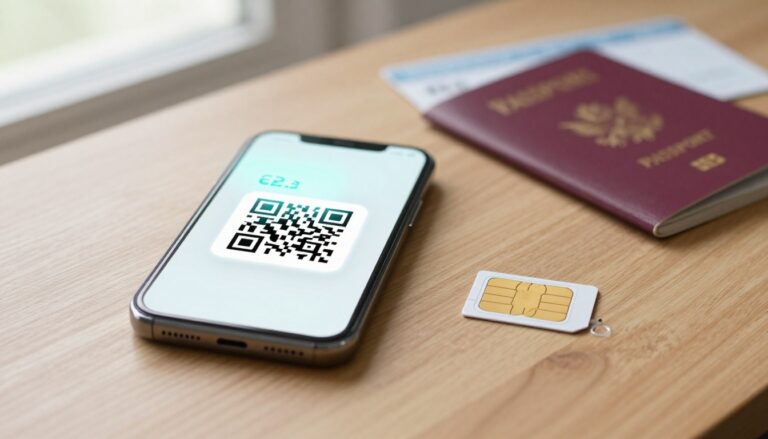
By 2026, the method you choose to connect your phone abroad defines whether you enjoy your trip or return home to a triple-digit bill. An eSIM is a digital version of the classic SIM card that you download directly onto your phone, eliminating the need to swap physical chips or visit a local kiosk. While traditional roaming allows you to keep your home number active with zero effort, the convenience comes at a steep price that most travelers no longer want to pay.
For roughly 80 percent of international travelers, switching to an eSIM is 50 to 80 percent cheaper than using a traditional roaming plan. While a home carrier might charge a flat rate of $10 to $15 per day, a dedicated travel data plan often costs as little as $2 to $3 for the same period. If you are looking for the best eSIM sites for travelers, you’ll find that the savings scale quickly over a week-long vacation.
This cost comparison breaks down the three core attributes that determine your total spend: convenience, hidden fees, and data limits. We’ll look at why roaming offers a “set it and forget it” experience while an eSIM provides better control and massive savings for those savvy enough to spend five minutes on an app. Whether you need budget-friendly USA data plans or a best prepaid global eSIM for a multi-country tour, understanding the math is the first step toward a stress-free journey.
What People Really Mean When They Ask if eSIM Is Cheaper
When most travelers ask if an eSIM is cheaper, they aren’t just looking at the price tag on a website. They’re actually asking about the end of “bill shock,” that sinking feeling you get when a carrier sends a $500 invoice for a week in Paris. By 2026, the perception of roaming has shifted from a premium service to a “lazy tax” paid by those who don’t want to spend three minutes on an app.
To a modern traveler, a cheaper option must provide more than a low price; it must provide price certainty. An eSIM offers a prepaid, fixed-cost model where you pay $15 or $20 upfront and know exactly when your data runs out. Traditional roaming is viewed as the bank account killer because it often involves daily fees that accumulate silently, even if you only check your email once.
The Daily Rate Trap vs Flat Fee Control
The most glaring difference in cost comes down to how carriers bill your usage. Most major home networks charge a daily roaming fee, often ranging from $10 to $15 per 24 hour period. While this sounds manageable for a weekend getaway, a 10 day trip quickly swells to $150 just for the privilege of using your own data.
In contrast, a dedicated travel eSIM usually operates on a flat-fee basis for a specific data bucket or duration. You might grab a 10GB plan for $20 that lasts thirty days. The math is simple: you are paying roughly $2 per day compared to the $10 or $15 daily roaming fee. This massive gap is why savvy travelers now treat eSIM installation as a standard pre-flight ritual.
Hidden Performance Costs and Latency Spikes
Price isn’t the only way you “pay” for a connection. Many travelers forget that roaming often routes your data traffic back through your home country. If you are a Chicago resident visiting Tokyo, your data might travel from Japan all the way back to Illinois and then back to Tokyo just so you can load a local map. This creates lag that makes even a fast 5G connection feel sluggish.
Because eSIMs connect you directly to local towers, you get a “cleaner” and faster signal. In 2026, time is money, and waiting thirty seconds for a translation app to load while standing at a train station is a frustration most people are willing to pay to avoid. When you choose an eSIM, you are often buying a better technical experience for a fraction of the roaming price.
Data Caps and the Throttling Headache
Nearly all “unlimited” roaming plans from home carriers come with a catch: a soft data cap. You might get 512MB or 2GB of high speed data per day before your speeds are throttled to a crawl that barely handles text messages. In an era where TikTok, Instagram, and high-resolution maps are travel essentials, these caps are hit within hours.
Travel eSIMs provide much better long-term travel data savings guide because they offer transparent, large data buckets. If you buy a 20GB eSIM, you have 20GB of full-speed data to use however you want. There’s no invisible hand slowing you down halfway through the day, making the cost-per-gigabyte significantly lower than the restricted “unlimited” plans offered by big telecom.
 Photo by Jacob
Cost Comparison Framework: eSIM vs. Roaming
To visualize the actual impact on your wallet, it helps to look at the numbers side-by-side. The table below represents a typical comparison for a traveler visiting a popular destination like Western Europe or Southeast Asia for two weeks.
| Feature | Home Carrier Roaming Plan | Dedicated Travel eSIM |
|---|---|---|
| Typical Daily Cost | $10.00 to $15.00 | $1.50 to $3.00 |
| Two-Week Total | $140.00 to $210.00 | $20.00 to $35.00 |
| Data Constraints | Daily limits with throttling | One large bucket of high-speed data |
| Hidden Fees | Taxes, “outside zone” fees | None; prepaid only |
| Activation | Automatic (danger of accidental use) | Manual installation (total control) |
When you look at these figures, the answer to the cost question is clear. Roaming provides extreme convenience for a huge premium, while an eSIM requires a few minutes of effort to save you over $100 per trip. For almost every person traveling in 2026, that trade-off is a total no-brainer.
Comparing Roaming Charges Versus Travel eSIM Costs
When you travel internationally, how you connect your phone to the internet becomes one of the biggest expenses you face, often rivaling accommodation or flights if you aren’t careful. Traditional carrier roaming is the old guard, relying on agreements with foreign networks to let you use your home plan. It is convenient, yes, but convenience right now comes with an unquestionably steep price tag.
The modern travel reality screams for the value and transparency offered by a travel eSIM. You need to look past the “it just works” factor and inspect exactly how these separate pricing models hit your bank account, especially focusing on daily fees versus fixed prepaid buckets. For most of us, choosing the right connection is about picking the smartest path for our wallet without sacrificing a crisp, fast connection.
How Mobile Roaming Is Priced by Home Carriers
Mobile roaming from your primary, home-based carrier operates on a model designed for maximum revenue, often feeling like a necessary evil for travelers who prioritize zero friction. The core of this structure boils down to two main, very expensive options: Daily Roaming Passes and Pay As You Go rates.
Daily Roaming Passes are pushed heavily by major carriers, usually charging a flat fee of $10 or $15 which unlocks your domestic allowance for 24 hours. The problem here is rate accumulation. A ten-day trip instantly costs you $100 to $150 before you’ve used a single megabyte, just for keeping the service on. If you forget to turn off data just once on day eleven, that cost keeps stacking up even if you only checked a single map.
The second pitfall, and this is where travelers get completely destroyed financially, is the Pay As You Go (PAYG) rate. If you miss buying a daily pass, or if you travel outside a specific roaming zone, your data defaults to PAYG pricing. These rates frequently hit $2 to $5 per megabyte (MB). To put that in perspective:
- Social Media: A quick scroll through an image-heavy feed can cost $20 in minutes.
- Email Attachments: Downloading a single large PDF could set you back $30 or more.
- Background Sync: Your phone’s automatic updates could drain $100 before you even leave the airport lounge.
To add insult to injury, carriers implement speed caps to manage their network costs. Many popular roaming packages will throttle your connection speed significantly once you cross a small threshold, often as little as 0.5GB of use. After that half-gigabyte vanishes, your speed drops to a level that makes loading a simple webpage feel like dial-up. You are paying a premium price for a performance experience that is essentially zeroed out until the next 24-hour window starts.
How Travel eSIM Pricing Actually Works
The travel eSIM model flips the script entirely. Instead of letting carriers dictate the price based on time, the eSIM model fixes the price based on data volume. This provides total spending certainty because you purchase exactly what you need upfront. There are no hidden fees or surprise invoices waiting for you when you land back home.
The core mechanism is the fixed data plan model. You go to a provider’s app, select a specific bucket of data, and pay a one-time fee. For example, you might grab 10GB for $20 that is valid for thirty days. This is wonderfully straightforward. If you use all 10GB in three days, you stop using data until you top up. If you use only 2GB, the remaining data stays waiting for you, but critically, you never incurred surprise charges or daily fees.
Providers often segment these plans into categories to help you maximize value. If you are hitting multiple countries, regional plans are a total no-brainer.
- Regional Plans: These cover specific areas like Europe, Asia, or North America. They offer the best value for collectors of multiple countries because you don’t have to buy a new plan every time you cross a border.
- Local Plans: These are country-specific and usually offer the lowest cost per gigabyte if you are staying in one place.
- Global Plans: These provide coverage across dozens of countries worldwide, which is perfect for long-term nomads.
For those curious about the specifics of managing these costs, you can learn more about how to top up travel eSIM plans if you run low. Because you are buying in bulk, the cost per gigabyte is often 80% lower than what a home carrier charges. You are paying for the data you consume, not the privilege of switching on your phone overseas. This fixed structure removes the anxiety associated with roaming charges and provides a superior, predictable experience for managing your travel budget.
Side by Side Cost Comparison: Real Travel Scenarios
When you are planning a getaway, the cost of staying connected can fluctuate wildly based on the length of your stay and how much data you consume. It is one thing to look at abstract prices, but seeing how these costs stack up in common travel situations makes the choice much clearer. For most travelers, the decision comes down to a trade-off between the absolute minimum effort of roaming and the massive financial savings of an eSIM.
By looking at specific timelines, you can identify exactly when the convenience of a home carrier “Daily Pass” stops being a luxury and starts becoming a major budget drain. Whether it is a lightning-fast weekend trip or a sprawling multi-week adventure, the math remains the most honest guide for your wallet.
One to Three Day Short Trip Example
For those very quick trips, like a weekend wedding or a 48-hour business meeting, the price gap between roaming and an eSIM is at its narrowest. Most major carriers charge roughly $30 for a three-day stint of roaming. In this specific scenario, you might find that the $30 fee is somewhat comparable to the effort of researching and installing a $15 eSIM, particularly if you have very light data needs.
If you are only using your phone to check a few emails or order an occasional ride, the convenience of not having to touch your settings might be worth the extra $15 to you. However, even in these short windows, the savings are still 50 percent in favor of the eSIM. If you already have a preferred eSIM app on your phone, that “effort” drops to about thirty seconds, making the $15 saving feel like a quick win before you even board the plane.
One Week Vacation and Two Week Adventure Plans
The financial landscape shifts dramatically once your trip extends beyond a few days. This is where the savings of an eSIM become completely undeniable and where roaming starts to eat into your actual travel experiences. When you stay for 14 days, a home carrier will likely bill you between $140 and $170 for a standard daily roaming plan.
Contrast that with a dedicated travel eSIM, which typically costs only $15 to $30 for a generous 14-day data bucket. If you are heading north, finding the cheapest mobile data for Canada can save you enough money to pay for a high-end dinner or an extra night in a boutique hotel.
To help you visualize the scale of these savings over longer durations, consider the following cost breakdown for common trip lengths:
- 7-Day Europe Trip: Roaming will cost you approximately $70 to $105, while a regional eSIM usually sits around $15 to $20.
- 10-Day Asian Adventure: Your home carrier will charge about $100 to $150, whereas a travel eSIM for the same period is often just $20.
- 14-Day Cross-Country Tour: Roaming peaks at $140 to $210, while a high-capacity eSIM plan peaks at roughly $35.
When you look at a two-week window, you are essentially looking at a $100 to $175 difference. For most travelers, spending five minutes to set up a digital plan is a small price to pay for keeping that much cash in their pocket. If you are a digital nomad or a frequent flyer, these savings compound over a year into thousands of dollars, making a top global eSIM provider an essential part of your travel toolkit.
Situations Where Roaming Can Be Cheaper Than eSIM
While eSIMs usually win on price, roaming can actually be cheaper in specific situations such as extremely short trips, exclusive carrier perks, or when you are visiting regions with regulated pricing. If you own a premium mobile plan, you might already have “free” international data that makes any extra purchase unnecessary. Most people assume an eSIM is always the budget play, but your home carrier might have a hidden ace up its sleeve that saves you from spending an extra dime.
Using High-Tier Premium Unlimited Plans
Many flagship mobile plans from major providers now include international roaming at no extra cost, making it the cheapest possible option because you spend exactly zero dollars. If you pay for a top-tier “Unlimited” plan, check your benefits before buying an eSIM. T-Mobile Go5G Next viewers or certain Verizon Ultimate users often get high-speed data in over 200 countries included in their monthly bill.
In these cases, the cost of an eSIM is an unnecessary expense. You get the convenience of keeping your number active for calls and texts while using a generous bucket of high-speed data. If your home carrier already covers your destination as part of your existing subscription, stick with roaming. It is the ultimate no-brainer for anyone who already pays for a premium service back home.
Short Business Layovers or Day Trips
When your trip lasts less than twenty-four hours, the math sometimes favors the convenience of a daily roaming pass. If you are just landing in London for a six-hour layover or driving across a border for a quick lunch, the $10 daily fee from your home carrier might be easier to swallow than the time spent setting up a new digital plan. While a $5 eSIM is technically cheaper, the five dollars you save might not be worth the effort of switching lines for such a short window.
This is especially true if you only need your phone for a quick GPS route or a couple of messages. Many people value their time at more than five bucks an hour. If you are in a rush and only need a tiny amount of data, the “automatic” nature of roaming wins. You don’t have to think about it, you don’t have to toggle settings, and you won’t miss a beat between the plane and your meeting.
Traveling Within the European Union
Thanks to strict government regulations, roaming within the European Union is effectively free for anyone with a SIM card from an EU member state. This “Roam Like at Home” policy means that if you have a French SIM card and you travel to Italy, you use your data exactly as if you were in Paris. In this specific region, buying an eSIM is usually a waste of money because you are already protected by law from extra charges.
This trend is starting to spread to other parts of the world, including parts of Africa and the Western Balkans, where countries are signing deals to lower fees for neighbors. Always check if your destination has a regional agreement with your home country. If they do, your current plan is probably the most cost-effective tool in your pocket.
Data Comparisons for Niche Scenarios
To help you decide when to stick with your current carrier, here is how the costs look when roaming actually makes sense.
| Scenario | Home Roaming Cost | Travel eSIM Cost | Winner |
|---|---|---|---|
| Premium Plan User | $0 (Included) | $5.00 to $15.00 | Roaming |
| 6-Hour Layover | $10.00 | $4.50 | Roaming (for time) |
| EU Resident in EU | $0 (By Law) | $10.00+ | Roaming |
| Emergency Use Only | $0 (If off) | $5.00 | Roaming |
If you fall into one of these categories, don’t feel pressured to buy extra tech. Sometimes the best way to save money is to use what you already have. However, once those specific conditions change or your trip grows longer, the savings will quickly shift back toward the digital alternative. Stay aware of your specific plan details, and you will never pay more than you absolutely have to.
When eSIM Is Almost Always the Cheaper Choice
For the vast majority of travelers, an eSIM isn’t just a slightly better deal; it is a financial necessity that prevents your phone bill from exceeding your flight costs. By 2026, the data indicates that using an eSIM is the cheaper choice in roughly 90 percent of international travel scenarios. While many users stick to roaming out of habit, switching to a digital data plan provides immediate savings that scale with every megabyte you consume.
The primary reason for this massive price gap is the elimination of middleman fees. When you roam, your home carrier pays a foreign network to use their towers, then adds a significant markup before passing that cost to you. Choosing a travel eSIM bypasses this corporate handshake, connecting you directly to local data rates that are often ten times lower than what your home provider offers.
The Mathematics Of Mid To Long Term Stays
If your trip lasts longer than four days, the daily fees of a traditional roaming plan become mathematically impossible to justify. Most home networks charge a flat $10.00 to $15.00 daily fee to access your domestic data plan abroad. Over a standard ten-day vacation, you are looking at a minimum expenditure of $100.00 just to keep your phone active.
In comparison, a 10GB travel eSIM for a popular destination like Japan or Italy typically costs between $15.00 and $25.00 and lasts for thirty days. This means your daily cost drops to about $1.50 or $2.50. You are essentially paying for an entire month of high-speed data for the price of just two days of roaming. For those looking for the best eSIM for international travel cost savings, the choice is clear: the longer you stay, the more roaming feels like a direct tax on your wallet.
Avoiding The Pay As You Go Nightmare
One of the most dangerous financial risks for travelers is accidentally falling into Pay As You Go pricing. In 2026, some carriers still charge upwards of $2.05 per MB if you do not have an active roaming pass. Since an average 1,000MB makes up 1GB, a single high-definition video or a few social media uploads could theoretically generate a bill over $2,048.00.
An eSIM acts as a financial firewall. Because it is a prepaid service, it is physically impossible to overspend. You buy a 5GB or 10GB bucket, and once it is gone, the data simply stops. This brings a level of peace of mind that roaming cannot match. You never have to worry about background apps or system updates quietly draining your bank account while your phone is in your pocket.
Frequent Border Crossers And Regional Savings
For travelers embarking on multi-country tours, such as a rail trip through Europe or a Southeast Asian island-hopping adventure, the costs of roaming can become erratic. Some home carriers change their daily rates or data caps depending on the specific country you are in, leading to a confusing and expensive final invoice.
Regional eSIMs solve this by offering a single flat rate for an entire continent. You can cross from Thailand into Vietnam and then into Singapore without ever changing your settings or paying a new fee. To see how specialized providers handle these diverse needs, you can compare travel eSIM performance and value to find a plan that covers your entire itinerary. By consolidating your data needs into one regional digital card, you avoid the “activation friction” and multiple daily fees associated with traditional roaming across several borders.
Hidden Costs and Factors People Forget to Compare
Most people look at the sticker price and stop there, which is a complete mistake when comparing eSIMs to traditional roaming. You are comparing a fixed, prepaid product against a service designed to bill you based on time and accidental usage. The real difference involves more than just a lower price per day; it includes performance hits, hidden usage locks, and the risk of a massive, unexpected invoice.
We need to check beneath the surface because that is where roaming providers hide their profit margins. Forgetting these factors means you are setting yourself up for bill shock, even if you believe you picked a cheaper daily roaming pass. By 2026, the savvy traveler looks for performance and transparency as much as the base rate.
Speed Throttling and Fair Use Policies
When you use your home carrier’s roaming service, understand that you are generally treated as a lower priority user on the foreign network. In fact, you are not actually their customer; you are a visitor whose carrier pays the local network for access. These data privileges often come with strict limitations that the dedicated eSIM user avoids.
Roaming often keeps you feeling like a VIP on your own network at home, but that courtesy rarely transfers overseas. Once you buy a roaming package, which might claim to offer unlimited data, there is almost always a Fair Use Policy lurking in the fine print. This policy often kicks in after a small amount of high speed data, perhaps as little as 512MB or 1GB per day. After you hit that limit, your speed tanks dramatically. Your connection slows to a crawl, making apps like Google Maps or social media painful to use until the next 24 hour reset.
Conversely, a travel eSIM provides a direct contract with the local infrastructure or a specialized provider. If you purchase a 10GB package, you get those 10GB at the best available speed the local network allows for that data tier. eSIM users use a clear bucket of data, and throttling only occurs when that bucket is entirely empty. If a foreign network experiences serious congestion, such as during a major public event, roaming users might see speed reductions first because the local network prioritizes its direct subscribers. A traveler using a high quality eSIM plan experiences the full, unthrottled local speed until their purchased data is gone. It is a major difference in actual performance.
Setup Convenience and Bill Shock Prevention
By 2026, the travel conversation has completely flipped. The gold standard for connectivity is the eSIM because it forces transparent, upfront pricing that respects your budget. Setting up an eSIM takes less than five minutes and usually happens before you even leave your stable home Wi-Fi zone. This simple action acts like an unbreakable financial safety net.
Think about returning from a long cruise or a multi leg international flight. With roaming, you often hold your breath until the first bill arrives, praying you did not leave data roaming on while your phone searched for signal in a high cost zone. That fear of a $1,000 bill mistake is completely eliminated with a digital prepaid plan. You pay twenty dollars for a set amount of data; when that data is gone, the service simply stops. It is a clean, digital transaction that offers total bill certainty.
This approach aligns perfectly with modern expectations for a better user experience. Travelers want control over their spending, especially for expenses incurred overseas. While traditional roaming offers the convenience of “set it and forget it,” that convenience is tied directly to accepting high, unquantifiable risk. The trade-off today, between a few minutes of setup on an app and avoiding a massive surprise charge, makes the eSIM a no-brainer choice for anyone who values their money. Honestly, it is the only way to travel now if you want to keep your peace of mind intact.
Is eSIM Cheaper Than Roaming for Your Specific Trip?
Deciding whether an eSIM is actually the bargain you need depends entirely on your travel behavior and the specific duration of your stay. While the broad answer is usually a resounding yes, the real value emerges when you look at the math for your personal itinerary. In 2026, staying connected doesn’t have to be a major line item on your budget, but you’ve gotta be smart about which digital path you walk.
To determine if an eSIM will save you money, you need to weigh the daily flat fees of your home carrier against the volume-based pricing of travel data providers. It’s about finding that sweet spot where you have enough data to post your favorite travel clips without paying for “convenience” that you don’t actually need. Let’s get into the specifics of how to spot the best deal for your next adventure.
How to Calculate Your Personal Savings Potential
The easiest way to see if an eSIM is cheaper is to look at your carrier’s daily roaming rate and multiply it by the number of days you’ll be abroad. If you move through this calculation, you’ll likely find that any trip lasting more than four days makes the eSIM an absolute winner. Most home carriers charge a standard $10.00 daily pass, so a simple ten-day vacation sets you back $100.00.
In contrast, a standard travel eSIM for a single country often costs between $5.00 and $20.00 for a week or more of service. You’re basically comparing a $100.00 bill to a $20.00 bill. That $80.00 difference is real money that’s better spent on a local food tour or a better hotel room. Unless you have a specific reason to keep your home line active for every single minute of the day, the savings are too large to ignore.
Data Consumption and Your Wallet
Your phone habits play a huge role in determining the final cost, and this is where eSIMs really shine for the data-hungry traveler. If you’re someone who relies on maps, streaming music, and social media, you’re going to burn through data fast. Roaming plans often come with a “soft cap,” meaning they slow your speeds to a crawl once you’ve used a certain amount each day.
With a travel eSIM, you buy a specific bucket of data, such as 5GB or 10GB. You get to use that data at the highest speed available on the local network without any artificial slowing from your home provider.
- Light User: Checking emails and occasional maps might only require 1GB per week (approx. $4.50 on eSIM).
- Heavy User: Uploading videos and streaming could require 5GB or more (approx. $15.00 on eSIM).
- The Roaming Alternative: Even a light user would still pay that $10.00 daily fee, totaling $70.00 for the week.
When the Convenience of Roaming Is Worth the Cost
There are a few niche moments where roaming might actually be the smarter, or at least the more logical, choice for your wallet. If you’re on a very short layover or a business trip lasting less than 24 hours, paying a one-time $10.00 fee is often easier than managing a separate digital plan. Your time has value, and if you only need a quick connection to order a ride or send a “landed safely” text, the extra five bucks you’d save on an eSIM might not be worth the setup time.
Additionally, if you’re lucky enough to have a premium plan that includes international data, sticking with your carrier is the definition of a no-brainer. Some high-end plans from major providers include high-speed data in over 200 destinations for free. In that case, an eSIM would be an unnecessary extra cost. Always check your plan’s “international benefits” page before you buy anything else; you might already be covered and not even know it.
Cost Breakdown by Trip Category
To give you a clearer picture of how these numbers look in the real world, check out this side-by-side view of common travel scenarios. It’s usually a binary choice, but seeing it laid out like this makes the path forward extremely clear for any budget.
| Trip Length | Typical Roaming Cost (Home Carrier) | Typical Travel eSIM Cost | Best Value Choice |
|---|---|---|---|
| Short Business Trip (1-2 Days) | $20.00 | $5.00 | Roaming (for speed/ease) |
| Standard Vacation (7 Days) | $70.00 | $12.00 to $18.00 | Travel eSIM |
| Longer Adventure (14 Days) | $140.00 | $22.00 to $30.00 | Travel eSIM |
| European Resident Traveling in EU | $0.00 (Standard) | $15.00+ | Home Plan (Roaming) |
If you’re looking for a way to slash your travel expenses, this is the lowest-hanging fruit available. Taking five minutes to set up a digital plan before you leave the house is probably the highest “hourly rate” you’ll ever earn for such a simple task. For almost every scenario, the eSIM is the leaner, faster, and more modern way to stay connected.
Conclusion
Choosing an eSIM is the most cost-effective solution for almost every traveler because it swaps expensive daily rates for transparent, low per-gigabyte pricing. You get total control over your spending without the fear of hidden fees or speed drops that usually come with carrier roaming. By paying for exactly what you need upfront, you can enjoy your trip while keeping your data fast and your budget intact.
Before you head out on your next adventure, take a moment to check your phone settings or search your specific model online to confirm your device is compatible with eSIM technology.