How Does a Travel eSIM Work? (And Why It’s Faster Than Airport SIMs)
Ever landed at a busy airport, jet-lagged and thirsty for data, only to realize you have to wait in a massive line at a plastic kiosk just to get online? It’s a total vibe killer. A travel eSIM changes that game entirely by acting as a digital chip built directly into your device, allowing you to bypass physical card swaps and expensive roaming fees. By 2026, this technology has officially become the standard for modern connectivity, moving us away from those tiny plastic pieces and toward a completely digital experience.
If you are looking for speed and savings, switching to a digital plan is a total no-brainer. Travelers today are saving nearly 60-70% compared to local airport kiosks, and because the connection is direct, you often get access to 5G speeds much faster than a standard local SIM. In this guide, I’ll walk you through how it works, why it consistently beats physical airport SIMs, the massive security benefits of going digital, and a quick-start setup guide to get you moving. Feel free to dive into our frequently asked questions about eSIM if you want to geek out on the tech specs before we get started.
What a Travel eSIM Actually Is
A travel eSIM is a digital version of the traditional SIM card that is already built into your smartphone’s hardware. Unlike the physical plastic chips we have used for decades, this “embedded” SIM is a small, programmable chip soldered onto your device’s motherboard. It performs all the same functions as a standard SIM, such as connecting you to cellular networks for data, calls, and texts, but it eliminates the need to physically swap hardware when you cross a border.
Think of it as the difference between a physical book and a Kindle. With a physical SIM, you have to go to a store, buy a specific piece of plastic, and manually insert it. With an eSIM, you simply “download” your connectivity. This technology allows you to store multiple cellular profiles simultaneously, making it incredibly easy to switch between your home provider and a local carrier in a foreign country without ever losing your primary SIM card or your paperclip tool.
The Hardware Behind The Digital Connection
The “e” in eSIM stands for embedded, which is the most critical detail to understand. Modern manufacturers like Apple, Samsung, and Google have moved toward this design to save internal space and improve water resistance by removing the need for a physical tray. Inside your phone sits a tiny, high-security microcontroller that can be rewritten with new network credentials over the air.
Because this chip is standardized globally, it can communicate with almost any carrier that supports the technology. When you purchase a travel plan, the provider sends a unique digital “key” (usually through a QR code). Once your phone scans that key, the embedded chip configures itself to act like a local subscriber on a network in London, Tokyo, or Paris.
How Digital Profiles Replace Plastic Cards
The real magic happens in the software management of these digital profiles. Traditional SIM cards are “locked” to a specific carrier’s identity, but the eSIM is like a blank slate that can be repurposed instantly. You can think of it as a digital wallet for your cellular plans; you can have your “Home” plan active for receiving texts from your bank, while your “Travel” plan handles all the heavy lifting for Google Maps and Instagram.
Standard industry practice now allows devices to manage these profiles with a simple toggle in your settings menu. This flexibility is why it’s so much faster to get a travel eSIM compared to traditional methods. You aren’t waiting for a physical product to be manufactured or delivered; you are simply authorizing your device’s existing hardware to talk to a new network.
Differences Between Physical SIMs and eSIMs
While both technologies connect you to the internet, their user experience and physical constraints are worlds apart. A physical SIM is a single-purpose tool, whereas an eSIM is a multi-network platform. If you are still on the fence about whether to make the switch, looking at the technical logistics helps clear up the confusion.
| Feature | Physical Nano-SIM | Travel eSIM |
|---|---|---|
| Physical Form | Plastic chip (12mm x 8.8mm) | Embedded internal chip |
| Installation | Manual swap with a tool | Digital download/QR scan |
| Storage | One network per card | Multiple profiles (usually 5 to 10) |
| Durability | Can be lost, bent, or damaged | Hardwired and protected |
| Acquisition | Retail store or shipping | Instant email delivery |
| Security | Easy to steal and swap | Hardware-bound and encrypted |
Because there is no physical port involved for the travel profile, the risk of losing your original SIM card while abroad drops to zero. You don’t have to tape your home SIM to the back of your passport or hide it in your wallet anymore. You simply keep your home line “On” for emergencies and set your travel eSIM as the primary source for cellular data. For a smooth transition, I highly recommend checking out a step-by-step eSIM setup guide to see exactly how these profiles sit side-by-side in your phone’s settings.
How a Travel eSIM Works Step by Step
Getting a travel eSIM up and running is a streamlined digital experience that bears almost no resemblance to the old way of hunting down local vendors in a crowded terminal. Since the hardware is already nestled inside your phone, the entire “activation” is just a software handshake between your device and a local network. It follows a logical flow that emphasizes speed and security while keeping your primary number active.
By 2026, experts predict over 5 billion eSIM installations globally as physical SIM slots begin to disappear from flagship devices. This shift isn’t just a trend; it’s a fundamental change in how we access the web while moving across borders. When you use an eSIM, you are essentially telling your phone’s internal chip to download a new set of credentials that identify you as a valid user on a network in London, Tokyo, or Sydney.
Step 1: Purchasing and Receiving Your Digital Profile
The journey begins before you even leave for the airport or while you are still using the plane’s Wi-Fi. You simply browse a provider’s website and select a data plan that fits your destination and duration. Unlike physical cards, there is no shipping wait or retail store visit. Once you complete your purchase, the provider generates a unique eSIM profile linked specifically to a digital “key.”
This key most often arrives in your email inbox as a QR code or a short string of alphanumeric characters. This is the “ID” for your new travel plan. Because this delivery is digital, it happens in seconds, allowing you to secure your connection for a trip to Italy while you are still packing your bags in New York. If you are curious about the logistics, it helps to check eSIM activation timeframes to see how quickly this happens in real-world scenarios.
Step 2: Installing the Profile via QR Scan or Manual Input
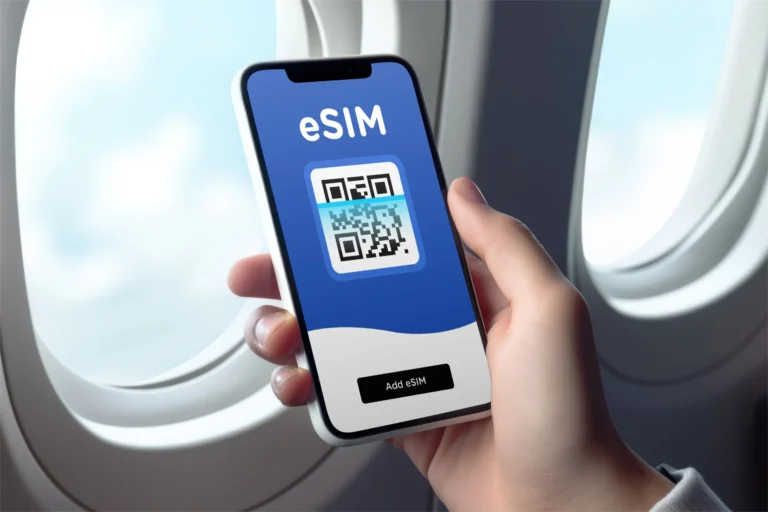
Once you have your QR code, you head into your phone’s settings menu. On most modern devices, you will find a section for “Cellular” or “Mobile Data” where an option to “Add eSIM” lives. When you select this, your phone’s camera opens, and you point it at the QR code you received. Your phone then reads the code and communicates with the provider’s server to pull down the necessary network configurations.
If you can’t scan a code, perhaps because you are viewing it on the same device you are trying to activate, most providers offer a manual activation code. You simply copy and paste this “LPA” string into your settings. The device’s internal chip, the eUICC, then securely stores this information as a new, inactive profile. It is a clean process that doesn’t involve any tiny tools or the risk of dropping a plastic chip into a seat crevice.
Step 3: Configuring Your Dual SIM Settings
After the profile is installed, your phone treats it as a second line. This is where you get to play traffic controller for your data. You will see both your “Primary” (home) SIM and your new “Travel” eSIM in your settings. To avoid massive roaming bills from your home carrier, you simply go into your mobile data options and select the travel eSIM as the dedicated source for data.
Crucially, you should keep your primary line “On” for calls and texts if you need to receive two-factor authentication codes from your bank, but ensure “Data Roaming” is specifically toggled on for the travel eSIM and off for your home line. This dual-active setup is a major advantage for modern travelers. For those using specific hardware, you might want to look at a Vivo phone eSIM activation tutorial to see how these menus look on different Android skins.
Step 4: Final Activation Upon Arrival
While you can install the profile anywhere, the “handshake” with the local cell towers usually happens the moment you land and turn off airplane mode. When your phone finishes searching for a signal, it uses the digital credentials you downloaded to authenticate with a local partner network. Within about 30 to 60 seconds, you should see the signal bars fill up and a 4G or 5G icon appear at the top of your screen.
If the connection doesn’t pop up immediately, a quick toggle of airplane mode or a simple device restart usually forces the chip to re-scan for local towers. Once that light turns green, you are fully connected. You can start using Google Maps to find your hotel or text your family to say you’ve arrived, all while the rest of the passengers are still standing in line at the airport SIM kiosk.
Why Travel eSIMs Are Faster Than Airport SIM Cards
That feeling of urgency to get connected right after landing is very real; you need maps, a ride-share app, and confirmation that your hotel is ready. The traditional way of fighting airport queues for a physical SIM card is a serious drag on your arrival experience. This is where the travel eSIM completely changes the pacing of your journey.
The speed advantage of digital connectivity isn’t just about the raw download rate; it is mostly about connection responsiveness. When you use an eSIM, you use your phone’s existing, trusted hardware configured instantly for a local network, bypassing all the friction associated with physical goods. This instant setup and superior data routing mean your connection feels cleaner and snappier almost immediately. It’s about getting to the utility of the internet faster than the person still standing in line at a plastic kiosk.
Data Routing, Latency, and Why It Matters
You’ve probably heard talk about Mbps or 5G speeds, but the real indicator of a “fast” connection, especially when you are relying on navigation or real-time communication, is latency. To put it simply, latency is the slight pause, the lag, that happens between you sending a command and the network receiving and acting on it. Think of it like this: download speed is how wide the highway is, whereas latency is the reaction time of the driver.
The factor determining your latency is how your data is routed through the internet infrastructure. We see two main methods at play when traveling.
- International Routing: This is the old standard, often used by default when using home carrier roaming. With this setup, your data travels from your phone, across the local network, back across the ocean to your home carrier’s server for security checks, and then finally to the destination website. This physical distance creates high latency, often sitting between 60ms and 150ms.
- Local Breakout: The superior method used by top-tier eSIM services. Because the eSIM profile is programmed to act like a local client on the foreign network, your data doesn’t need that round-trip journey home. It breaks out onto the internet locally within the country you are visiting. This local integration is what makes the technology feel so significant.
A lower latency, ideally under 40ms, makes such a difference even if your download speed is identical to a slower connection. When your latency is low, every digital interaction feels instantaneous.
- Maps Navigation: With low latency, map applications load new street tiles without delay as you move. There is no noticeable stutter or blank patch while the system waits for instructions to finalize.
- Video Calls: This is key for a great call experience. Without it, you get that annoying speaking-over-each-other effect or constant freezing. Sub-40ms latency keeps conversations fluid and natural.
- App Responsiveness: Every tap or refresh button push is checked against a server. Low latency means those checks execute immediately, making all applications feel crisp and modern.
Airport SIM cards are only fast if they happen to partner with a provider that uses local breakout. Often, the budget plans sold at kiosks end up routing traffic internationally to simplify network management. The travel eSIM is inherently designed for that low-latency digital path because its entire purpose is to integrate you as locally as possible, making the connection high-performing right out of the gate. If you are a traveler seeking modern reliability, this efficiency in routing is a major reason why an eSIM vs physical SIM cost comparison usually leans in favor of digital profiles. For those on a strict budget, exploring affordable eSIM plans for USA or other regions shows that speed doesn’t have to cost a premium.
Airport SIM Cards: What You’re Really Getting
The minute you step off the plane, you feel that familiar travel anxiety: the need to connect. For years, the only real solution involved finding a small, often hidden kiosk in the crowded arrivals hall, standing in line behind a dozen other jet-lagged people, and then haggling over a tiny piece of plastic. That airport SIM card, the traditional traveler’s lifeline, is a known quantity, but it’s quickly becoming the slower, more cumbersome alternative to modern digital connectivity. When you buy one of those physical cards, you are essentially buying convenience at the counter, but you are trading away setup speed and flexibility. We need to look past the plastic packaging to understand what benefit you actually gain, and more importantly, what you lose compared to a digital profile. In fact, current data shows that travelers are increasingly seeking solutions that eliminate physical wait time, preferring connectivity that activates before the plane even lands.
The Physical Transaction: A Study in Friction
Buying a SIM card at an airport is a process, and processes breed delay. You arrive tired, yet you are immediately required to become a mobile network expert. The entire transaction is built around physical inventory and manual activation, which introduces multiple points of failure and slowness. Think of it as having to buy a movie ticket from a vending machine that only accepts cash and requires you to memorize a complex network code. You stand there holding a paper receipt while the person next to you is already streaming.
Here are the core elements you interact with when stopping at the airport kiosk:
- Inventory Check: The attendant must physically check stock for the right size (Nano, Micro, or Standard) and the correct country plan. If they only stock a 7-day plan and you are staying for 10 days, you are immediately forced into buying too much or too little.
- Physical Insertion: You must open your phone’s tray, which requires finding the specific ejector tool or a flimsy paperclip. If you lose that tool, you are essentially stuck with the SIM already in the device until you return home.
- Manual Registration: Many countries require you to register a physical SIM with a passport or national ID, which means the agent must manually key in your details and scan documents. This adds significant overhead to the transaction time.
- Activation Delays: Sometimes the card needs to be registered on the network from their terminal, meaning you are dependent on their computer system working correctly at that very moment.
This physical exchange is the primary source of the delay that eSIMs completely erase. You’re not just buying data; you’re buying a small piece of administrative paperwork tied to a plastic chip that has to be handled.
Data Quality and Network Partnerships
When you purchase a SIM card at a reputable airport kiosk, the provider is usually a reseller or a partner of one of the country’s major network operators. They buy these SIMs in bulk and mark up the price significantly; that markup is where the airport pays for its real estate and staffing. The key issue here is that sometimes the cheapest plans don’t even connect you to the best local network. They might connect you to a secondary tier partner, or worse, they might default to an international routing path to save their own administrative complexity, which drives up your latency.
If you are looking for high-speed data, you must understand the underlying network. For instance, in popular destinations, the top providers often use the same primary infrastructure. However, an unknown reseller at a kiosk might not have the best priority on that network, or their specific SIM package might be configured with less favorable Quality of Service (QoS) tags.
Consider the security implication; you are handing your expensive device and sometimes your passport details to an unknown operator behind a temporary desk. This lack of vetting contrasts sharply with using established, trusted digital eSIM platforms which operate under stringent global security standards for data transfer. Finding out the best data options for destinations like Vietnam or the USA is much easier when you can search for a Vietnam travel eSIM plans or check out the best travel eSIM for USA before you leave, rather than relying on the three pamphlets sitting on the airport counter.
The Hidden Costs of Local Airport Data
People buy the airport SIM because they believe it offers local rates, which is usually true in principle. You avoid the extreme cost of your home carrier’s roaming, which most travelers know is predatory. However, the perceived benefit often disappears when you look closely at the total value proposition. You pay a premium for the immediate availability, but that premium buys you very rigid purchasing terms.
For a traveler, data purchase efficiency is everything. Airport SIMs are typically sold in fixed blocks with fixed validity periods.
- Fixed All-or-Nothing Validity: If you need 10 days of service and the only plan they offer is a 30-day plan with 15GB, you pay for 20 days of service you won’t use. This is poorly optimized usage.
- Limited Top-Up Options: If you use up a small 5GB allowance quickly because you spent a couple of days streaming, you might have to return to that same kiosk or hunt down a specific local convenience store that stocks that exact brand of SIM card to top up. This defeats the purpose of quick travel.
- Data-Only Limitations: Many aggressively priced airport SIMs are data-only. If you need to call a hotel or a local taxi company directly, and you don’t want to rely on WhatsApp or a complicated VoIP setup, you need a local number. Getting a voice-enabled SIM at the airport often means buying a more expensive package or dealing with more aggressive registration requirements.
In contrast, digital solutions allow travelers to download a mobile data plan digitally, often letting them choose plans that align perfectly with their exact trip length. This adaptability is something a physical, pre-packaged card simply cannot offer you once it’s been activated on the network. For those heading to Southeast Asia, reviewing a comprehensive Thailand eSIM guide can show you exactly how much simpler it is to manage these digital profiles on the go.
Security and Reliability Benefits of Travel eSIMs
Switching to a travel eSIM isn’t just about avoiding those slow airport lines; it unlocks a completely different tier of security and connection reliability compared to the old plastic SIM game. Once you understand the hardware differences and how your data is handled digitally, choosing an eSIM feels like the only sensible path forward for contemporary travel. To me, the biggest upside isn’t the instant connectivity, but the peace of mind you get knowing your primary identity and accounts are safer when you’re thousands of miles from home. Modern eSIMs are built with security as a core feature, not just an afterthought bolted onto a physical component. This digital approach simplifies life and hardens your connection against common travel risks.
Protecting Your Identity: The Unremovable Security Chip
The core security advantage of the travel eSIM is right there in the name: it’s embedded. This isn’t something you can fumble with while trying to find a paperclip in a dark taxi. Because the chip is soldered directly onto your phone’s motherboard, it offers fundamental protection against physical tampering. If someone manages to steal your phone, they can’t simply pop out your SIM card and immediately start running up your bill or rerouting your critical security texts. That’s a huge layer of defense that a physical card immediately lacks.
As of 2026, eSIM technology actively combats identity risks that physical cards are vulnerable to. Thieves often rely on physical access to hardware to compromise phone numbers, but the digital nature of the eSIM makes that process substantially more difficult.
- Resistance to Physical Swap: A thief cannot insert your eSIM profile into another device. It’s bound to your phone’s unique hardware identifier, making unauthorized use nearly impossible without your device passcode.
- Stronger Digital Authentication: Modern eSIM platforms use sophisticated digital signatures. Moving or cloning a profile requires much stricter security protocols than swapping a piece of plastic.
- No Lost Hardware Risk: You eliminate the chance of losing your home SIM card under a hotel bed or dropping it while inserting it in a crowded station.
It’s about keeping your digital life locked down where it belongs: inside your protected device.
Countering SIM-Swap Fraud with Hardware Security
One topic that always makes travelers nervous is SIM-swap fraud. That’s where criminals trick a mobile provider into moving your phone number (and access to all your sensitive text messages) onto their device. This is often the weak link that allows fraudsters to reset passwords for email, banking, and social media accounts. Travel eSIMs significantly raise the bar against this type of attack because they are designed around high-security hardware standards.
When you use a dedicated travel eSIM service, the verification process is typically encrypted and device-specific. If you need to activate a new profile, the steps usually involve scanning a secure QR code or entering a complex string, which is verified remotely. This process often requires biometrics or secure codes, rather than involving a customer service agent who might be tricked over the phone.
Think about the administrative overhead of the physical process. With a traditional card, an agent has to manually check your ID and enter data. That manual step presents an opportunity for error or manipulation. The eSIM bypasses this human element for activation, relying instead on cryptographically sound keys stored securely within your device’s hardware. This superior method of authentication keeps your access credentials locked down. For travelers moving between countries, this high baseline of security is essential for true peace of mind. Finding the top eSIM providers for global travel often involves looking closely at the provider’s security verification methods, not just their data rates.
Instant Control Over Your Connection Status
Reliability in travel connectivity is directly tied to how quickly you can react to a situation, especially a bad one, like realizing you’ve entered the wrong country or need to conserve data fast. The travel eSIM shines here because management is immediate and software-driven. If you get a notification that you’ve used more data than expected, you don’t need to race back to the airport counter.
You can jump into your phone’s settings, and with a simple flick of a digital switch, you can manage your connection in real-time.
- Disable Data Usage: Immediately halt all data consumption on the travel eSIM to stop unexpected charges while keeping your home number active for emergency calls.
- Verify Status Remotely: If your phone is misplaced, you can often log into the provider’s portal from another device and instantly suspend the eSIM service, preventing unauthorized tracking or data use.
- Add Data Instantly: If you planned poorly and need more gigabytes to finish your trip, you can purchase a top-up bundle from the provider’s app and install it in seconds, securing more data without physically changing anything.
This level of immediate, remote control isn’t possible with a plastic SIM card that might require a shop visit or a phone call back to a support line. This responsiveness transforms connection management from a frantic chore into a simple task you can handle while waiting for your coffee.
Enhanced Privacy Through encrypted Digital Installation
Setting up a physical SIM often involves a direct, human-to-human exchange where you hand over sensitive documents. For anyone concerned about privacy, this transaction at a busy airport counter feels inherently risky. You are giving a temporary vendor a snapshot of your passport, and you have no clear idea where that copy ends up or how long they keep it stored on their local system.
The travel eSIM model flips this script entirely. The installation process is largely automated and encrypted. The installation key, usually a QR code, is a one-time-use token that activates the secure chip for your profile. Data transfer happens directly between the provider’s secure server and your phone’s certified eUICC (embedded Universal Integrated Circuit Card).
Your passport details, if verification is required, are uploaded through a high-security channel, often involving biometric checks within the secure app environment. This is a much cleaner, more controlled interaction than handing paper documents across a counter. This focus on privacy is a major draw for travelers who value keeping their personal identification documents secure at all times. If you’re an organization looking to deploy connectivity for teams, knowing how providers handle data transmission can help you choose the best eSIM for business travelers in Japan or other major hubs.
How To Set Up A Travel eSIM The Right Way
Getting your travel eSIM set up correctly is the difference between enjoying affordable connectivity the moment you land and accidentally racking up huge roaming fees on your primary line. Since the entire premise of the eSIM is to place a digital profile onto your phone’s existing hardware, you need to treat the configuration process with detailed attention. We aren’t just downloading a plan; we are configuring dual SIM behavior, which requires careful menu management so that local data usage routes correctly through the new digital line while your lifeline home remains open for critical verification texts.
You really want to set these parameters before you leave; messing with phone settings while standing in an international arrival queue is a recipe for frustration. By managing the digital handshake between your home carrier and your travel data provider, you create a dedicated “travel lane” for your internet usage while keeping your primary identity intact.
Managing Dual SIM Settings While Traveling
When you install a travel eSIM, your phone recognizes it as a second active line. This is fantastic for flexibility, but it means you have two services vying for your phone’s attention. The biggest mistake travelers make is allowing their device to use the expensive home SIM for data while the travel eSIM sits idle. You must explicitly tell the phone which line handles which task. This setup allows you to maintain the convenience of two numbers on one device, but it is wise to learn the benefits of using eSIM and physical SIM together to truly maximize this hardware capability.
To keep your home number active for bank OTPs and iMessage while using travel data for everything else, follow these requirements:
- Disable Data Switching immediately: This is the most vital setting in your cellular menu. If you leave “Allow Cellular Data Switching” on, your phone might sneakily use your home plan’s expensive data if the travel signal gets weak. Turn this OFF to lock your data usage to the travel eSIM.
- Set the Travel eSIM as the Primary Data Source: Go into your phone’s settings and designate the travel eSIM as the line for cellular data. This ensures that every map refresh or social media scroll happens on your prepaid travel bucket rather than your home carrier’s roaming rates.
- Keep the Home Line “On” for SMS: Many travelers think they need to turn off their home SIM entirely, but this is a mistake. Keep the line active but turn off Data Roaming for that specific home line. This allows you to receive incoming texts (like banking codes) which are usually free to receive on most international plans.
- Maintain your iMessage identity: By keeping your home number active in a dual SIM configuration, your iMessage and FaceTime settings will stay linked to your primary number. This means your “blue bubbles” continue to work exactly as they do at home, and your contacts won’t see you as a random unknown number.
This precise configuration provides a safety net for your wallet while ensuring you never miss an important security alert from home. If your journey involves multiple stops, knowing how to switch between eSIM plans will help you jump from one local profile to the next without breaking this secure dual SIM balance. Keeping your home line active for voice and text while the travel eSIM handles the heavy lifting of data is the gold standard for modern mobile travel.
Are Travel eSIMs Replacing Airport SIMs for Good
The shift toward travel eSIMs is no longer just a trend for tech enthusiasts; it is a fundamental move that is making the traditional airport SIM kiosk look like a relic of the past. As we move closer to 2026, the data suggests that physical SIM cards are heading for the same fate as physical maps and bulky cameras. Travelers are tired of the friction, the paperwork, and the literal paperclips. They want connectivity that matches the pace of their trip.
When you look at the convenience of downloading a profile while you are still in the taxi to your home airport, compared to standing in a fluorescent-lit line while jet-lagged, the winner is clear. Digital adoption is skyrocketing because the hardware in your pocket is finally being used to its full potential. The days of hunting for a local shop are being replaced by a few taps on a screen, and for most of us, there is simply no going back.
The Death of the Physical Kiosk Queue
We have all been there: landing after a long-haul flight and seeing a massive line at the one open mobile provider desk. It is the ultimate bottleneck. The physical kiosk exists because plastic cards require physical inventory and manual distribution. When you switch to a digital model, that entire layer of logistics vanishes. You are not just saving ten minutes; you are reclaiming the first hour of your vacation.
The friction of a physical transaction is often why SIM cards go bad or fail to work as expected. Between the manual registration of your passport and the physical insertion of a tiny chip, there are a dozen things that can go wrong. By opting for a digital setup, you remove the human error of a rushed kiosk agent and the physical vulnerability of a fragile piece of plastic.
Why Digital Adoption Is Now The Global Standard
If you look at the latest hardware releases, such as the iPhone 16 eSIM-only model, it is obvious where the industry is heading. Manufacturers are reclaiming the internal space used by the physical SIM tray to fit bigger batteries and better sensors. This hardware evolution is forcing the hand of carriers who previously clung to the physical card model.
By 2026, it is estimated that over 5 billion devices will be eSIM-ready. This mass adoption means that local providers at your destination are prioritizing digital infrastructure over physical retail. It is easier and cheaper for them to serve you a digital profile than to rent expensive airport real estate and hire staff to sell you plastic. This shift is driving down prices and increasing the quality of the data plans available to you.
Comparative Value: eSIM vs. Airport Physical SIM
When you weigh the two options, the “local” price advantage that airport SIMs once held is rapidly evaporating. Digital providers now negotiate bulk rates that often under-cut the tourist prices found at arrival desks. Plus, you have the advantage of transparency. You can compare plans from your couch instead of being pressured by a salesperson who just wants to get to the next person in line.
| Feature | Airport Physical SIM | Digital Travel eSIM |
|---|---|---|
| Availability | Only during kiosk hours | 24/7/365 instant access |
| Setup Space | Crowded airport terminal | Your home or airplane seat |
| Paperwork | Physical passport scan | Secure digital verification |
| Sustainability | Plastic and packaging waste | Zero physical waste |
| Reliability | Susceptible to chip damage | Secure internal hardware |
The reliability factor is a huge deal for me. A digital profile cannot be scratched, lost, or bent. If your phone is compatible, a complete beginner guide to eSIM will show you that the internal chip is far more robust than any plastic card you could buy at a terminal.
The Verdict on Modern Travel Connectivity
Are they replacing airport SIMs for good? In my book, the answer is a resounding yes. While you might still see kiosks in a few lagging markets or for travelers who aren’t comfortable with new tech, the efficiency of the digital model has already won. The ability to land, turn off airplane mode, and instantly have a 5G connection is a “no-brainer” for anyone who values their time.
If you are still holding onto that SIM tool, it’s time to let it go. Embracing a digital SIM on the latest iPhone or Android device is the most practical upgrade you can make to your travel kit. It’s faster, safer, and keeps you focused on the destination instead of the logistics. The plastic era is over, and honestly, we should all be pretty happy about it.
Conclusion
Travel eSIMs provide a significant advantage in speed, security, and savings, effectively outclassing the dated airport kiosk model. By utilizing internal hardware and local data breakout, these digital profiles offer the lowest possible latency for a snappier, more reliable connection. You also gain peace of mind through encrypted installations and a hardware-bound identity that a plastic chip simply cannot replicate.
Remember that the best digital experience starts before your flight by installing and configuring your profile in a low-stress environment. This proactive approach ensures you land with an active connection, avoiding the high costs and long queues associated with physical retail stores.
For your next international journey, prioritize a provider that offers flexible data bundles and local breakout to ensure you get the best performance for your specific destination. To make the most of your plan, be sure to monitor and refill eSIM data through your provider’s app to stay connected without interruption.